Understand any stock in simple English
Enter a ticker to learn what the company does and how it makes money.
Ottobock SE & Co. KGaA
Ottobock makes prosthetic limbs, braces, wheelchairs, and bionic exoskeletons that help people with limited mobility move and live more independently.
Ottobock is a German company that builds the replacement parts and support gear for human bodies. If someone loses a leg, Ottobock might make the artificial one. If someone needs a brace to stabilize a knee or a wheelchair to get around, Ottobock sells that too. Its most eye-catching products are bionic exoskeletons — motorized frames that help people with limited mobility stand up, walk, or climb stairs.
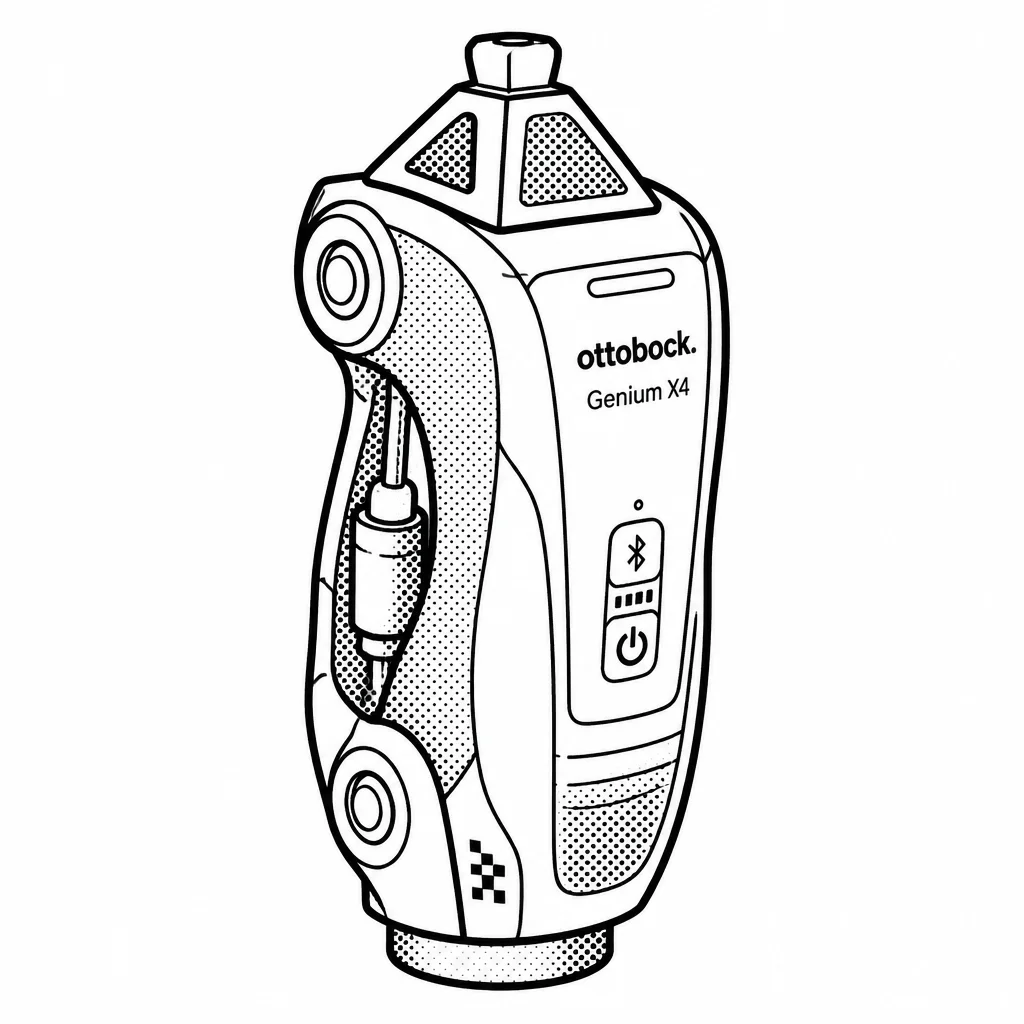
The company makes money by selling these devices to clinics, hospitals, and trained prosthetists and orthotists, who fit them to individual patients. Those professionals are the real customers, and they choose Ottobock because the products are engineered well and backed by decades of clinical trust. Ottobock also runs a patient care network that fits and services its devices directly. The business is headquartered in Duderstadt, a small town in Germany, and it has grown into one of the world's leading makers of prosthetics and orthotics. It has been family-controlled for generations and only recently sold shares to the public on the Frankfurt exchange. What makes Ottobock hard to copy is not one clever gadget but the slow accumulation of fit, comfort, and reliability. A prosthetic limb is a deeply personal product — if it rubs, pinches, or fails, the patient feels it every hour of the day. That pushes customers toward brands with proven track records. Ottobock also spends heavily on research, which is how it turned science-fiction ideas like a mind-controlled bionic hand into real products.
The business is not without risk. It relies on health insurers and public health systems to pay for expensive devices, so reimbursement rules and budget pressure matter a lot. Competitors like Össur and Hanger fight for the same clinical customers. Still, Ottobock's combination of engineering depth, family ownership, and a global fitting network gives it a durable position in a market that grows as populations age and more people survive injuries that once would have been fatal.
Saved answer · last researched 12 Nov 2026