Understand any stock in simple English
Enter a ticker to learn what the company does and how it makes money.
NTG Nordic Transport Group A/S
NTG is a freight forwarder that arranges the movement of goods by road, rail, air, and ocean for businesses around the world.
NTG is a freight forwarder — a middleman for moving stuff. When a company needs to send goods from one country to another, NTG doesn't own many trucks, planes, or ships itself. Instead, it buys space from carriers, stitches together the best route, handles the customs paperwork, and makes sure the cargo actually shows up. Customers pay for that coordination, and NTG keeps the difference between what it charges them and what it pays the carriers.
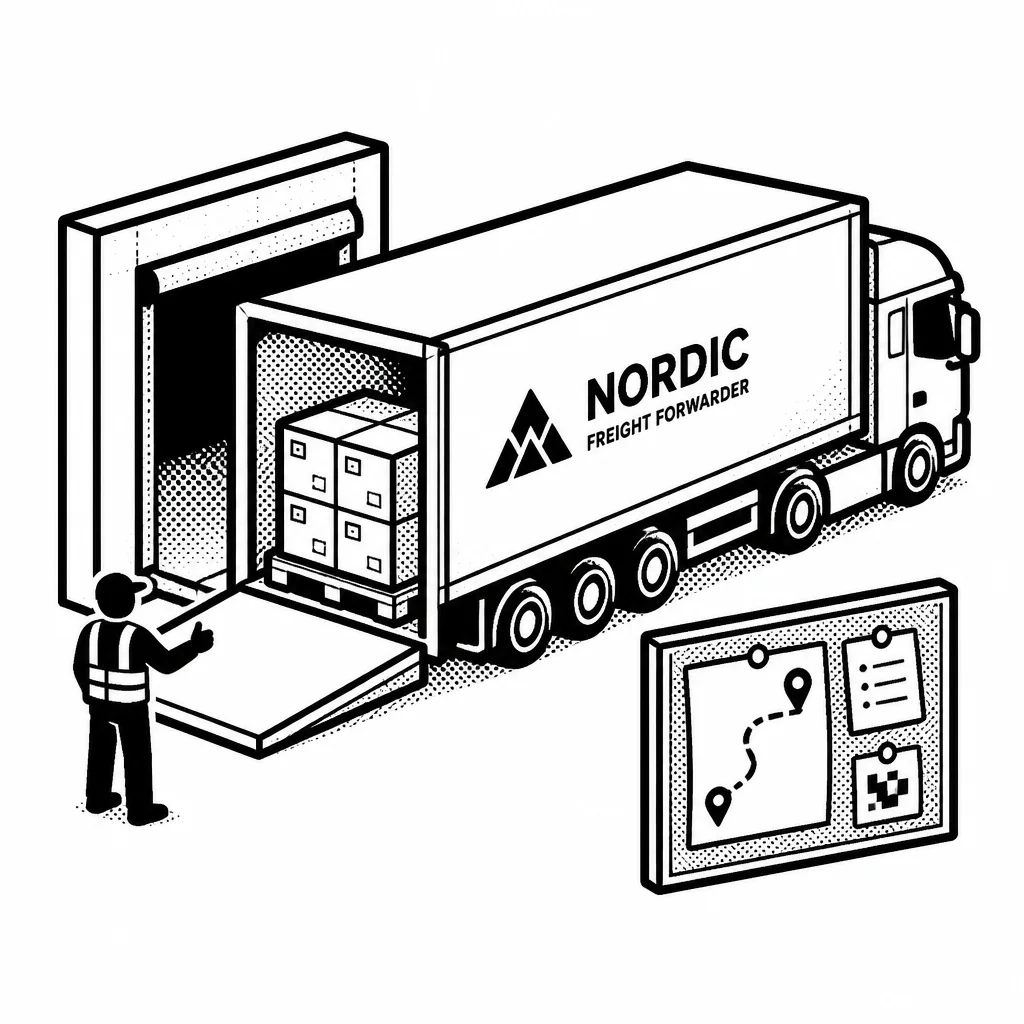
The "asset-light" part is the heart of the model. NTG owns very little of the physical equipment, which means it can grow without spending huge sums on trucks or warehouses. It leans on subcontractors and partners to do the actual hauling. That keeps costs flexible: when demand falls, NTG isn't stuck paying for idle trucks. The trade-off is that it lives on thin margins and depends on tight execution — a freight forwarder's profit is a small slice of every shipment, so volume and discipline matter enormously. NTG runs two main divisions. The Air & Ocean arm handles the long international legs — the containers crossing seas and the cargo flying between continents. The Road & Logistics arm handles trucking and ground transport, mostly within Europe. Road is the bigger and steadier piece, while Air & Ocean is more cyclical and exposed to global trade swings. The company has grown largely by buying up smaller forwarders and letting their local teams keep running their own businesses, a roll-up strategy that has expanded it across Europe and beyond.
The business is cyclical and brutally competitive. Freight rates soared during the pandemic shipping crunch, then collapsed as capacity returned — a swing that hits forwarders hard because their revenue rises and falls with rates they don't control. Rivals include giant global forwarders like DSV and Kuehne+Nagel, plus countless regional players. NTG's edge is its local entrepreneurship and low overhead, not scale. So the real question for investors is whether it can keep acquiring and integrating small forwarders without losing the discipline that makes the model work.
Saved answer · last researched 12 Nov 2026