Understand any stock in simple English
Enter a ticker to learn what the company does and how it makes money.
Mundoro Capital Inc.
Mundoro Capital is a small mining company that finds and explores for copper, gold, and other metals, mostly in Serbia and Bulgaria, and earns money by partnering with bigger mining companies who pay to dig on its land.
Mundoro Capital is a small mining company that does the early, risky work of finding metals in the ground. It explores for copper, gold, and related metals, with its main focus on Serbia and Bulgaria, plus some projects in the United States. It doesn't run big mines or sell metal itself. Instead, it stakes out promising land, studies the rocks, and tries to prove there's something valuable buried there.
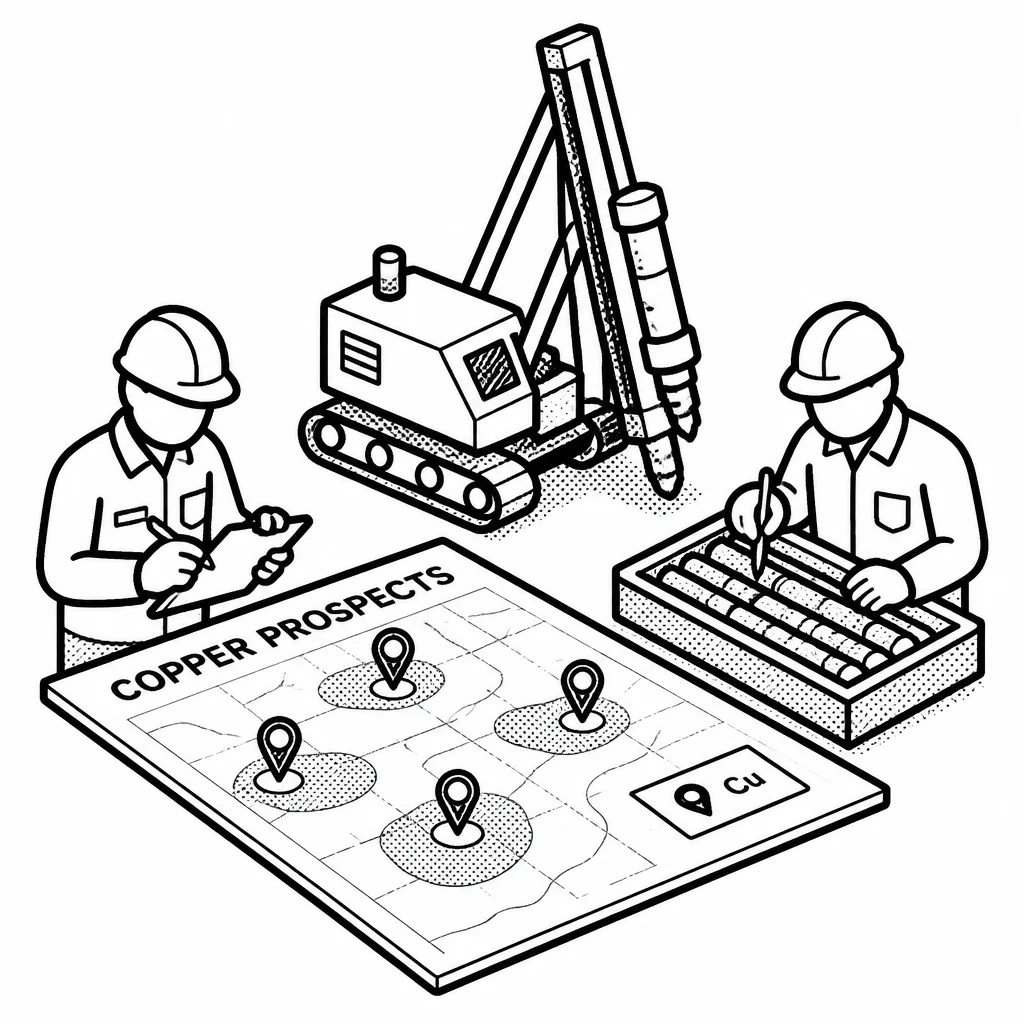
The business is really about making a good prospect look attractive enough that a bigger mining company wants a piece of it. Mundoro signs deals where a partner pays for the expensive drilling and exploration work in exchange for a share of the project. That way, Mundoro can keep hunting for the next deposit without spending mountains of its own cash. The partners bring the money and the muscle; Mundoro brings the land and the local know-how. Serbia is the heart of the story. The company has built a cluster of projects there in a region known for big copper and gold deposits, and it has struck partnerships with several larger miners who fund the work. This "partner-funded" model is common among tiny explorers because drilling holes in the ground is expensive and most holes come up empty. For investors, Mundoro is essentially a bet on whether its land hides a major discovery—a high-risk, high-reward proposition.
It's a micro-cap stock, meaning it's small and thinly traded, and its shares also trade in Frankfurt alongside its Canadian listing. The company makes no money from selling metal today; its value rises and falls on exploration results and the quality of its partners. If a partner hits a big deposit, Mundoro's stake could become very valuable. If the drilling disappoints, the story fades. That's the simple, honest truth of a junior explorer.
Saved answer · last researched 14 Nov 2026
Timeline
Mundoro Is Born to Own Maoling
Mundoro started in 2008 for one reason: to buy all the shares of Mundoro Mining, a company whose whole world was the Maoling Gold Project in China, one of the largest gold deposits nobody had built yet. The idea was simple: hold the big prize, then find a way to pay for it.
Selling Maoling to China National Gold
Rather than spend years and piles of cash developing Maoling alone, Mundoro sold 95% of Mundoro Mining to China National Gold Group Hong Kong for C$13.8 million and kept a small slice. China National Gold took control of the project, and Mundoro walked away well funded to hunt for gold somewhere else.
A Move to the Venture Exchange
Soon after, Mundoro moved its listing from the Toronto Stock Exchange down to the TSX Venture Exchange, saying the smaller exchange was cheaper and easier to run while still giving investors a real place to trade. It was a sign the company now saw itself as a nimble explorer, not a big developer.
A Small Stake in Bulgaria
Mundoro bought a small piece of a private gold producer in Bulgaria that was operating right next door to Mundoro's own Zvezda license. It was a modest bet, but it pulled the company into Bulgaria alongside its exploration ground in Serbia and Mexico.
JOGMEC Pays for the Drilling
Then came a new way of doing business: Mundoro signed an earn-in deal with JOGMEC, Japan's state metals agency, on four Serbian licenses. JOGMEC could earn just over half of the projects by spending US$4 million on exploration by 2019, which meant Mundoro could explore without burning its own cash.
Freeport Backs the Serbian Ground
The model got a big vote of confidence when Freeport-McMoRan signed on for two more Serbian licenses, Savinac and Bacevica, and could earn up to 75% by spending up to US$45 million in two phases. A major miner was now paying to test Mundoro's ideas, which was exactly the point of the partner-funded model.
BHP Signs On at Central Timok
In 2025, the biggest partner yet arrived: BHP agreed to cover seven Central Timok licenses and could earn 100% by funding US$35 million over ten years. Mundoro would keep a 2% royalty plus other payments, making BHP its principal partner and putting the company's project-generation model on its largest stage.
BHP Hands Back Eight Licenses
The BHP story then took a turn. BHP walked away from its options over the Central Timok and Borsko projects and handed 100% of eight licenses back to Mundoro, after spending about US$5.7 million on the ground. BHP kept its options over Trstenik and South Timok, and Mundoro set out to find new partners for the returned targets, which were already drilled and ready for the next step.
Centerra Buys a Stake
Centerra Gold then agreed to put C$4.08 million into Mundoro by buying new shares at 33 cents, giving it 9.9% of the company. The money was earmarked for exploration on the projects without partners and for working capital, a fresh boost as Mundoro kept shopping its ground to new backers.