Understand any stock in simple English
Enter a ticker to learn what the company does and how it makes money.
Nexi S.p.A.
Nexi runs the digital plumbing that lets European merchants accept card and digital payments and lets banks issue cards and handle transactions.
Nexi is one of Europe's biggest payment companies, a quiet middleman sitting between your bank, the shop, and the shop's bank. When you tap your card at a café in Milan or pay for something online from a German retailer, there's a good chance Nexi's systems are checking the payment, approving it in about a second, and moving the money along. The company makes its money by taking a small slice of each transaction it handles, multiplied across billions of payments a year.
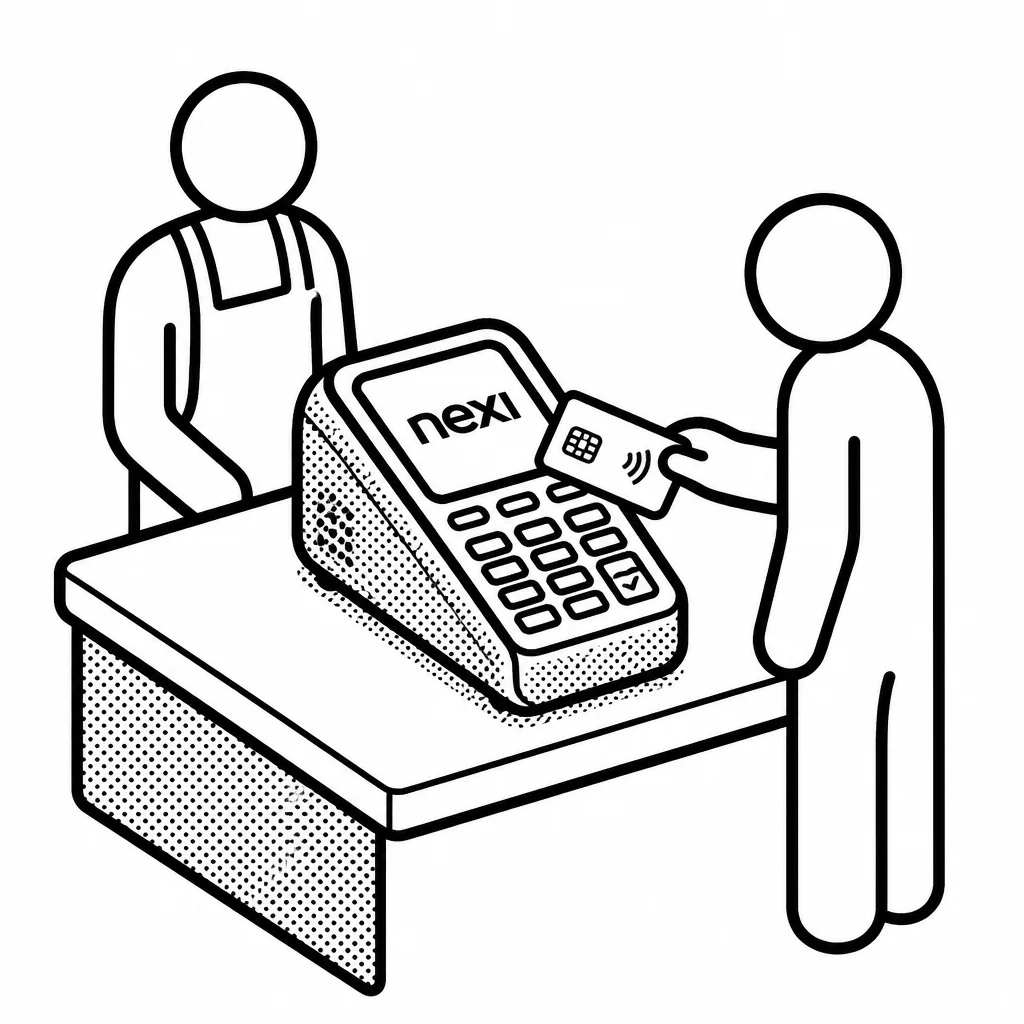
Its business has two main engines. On the merchant side, Nexi sells the card terminals you see on shop counters and the software behind them, and it processes the payments those terminals accept — this is called merchant acquiring, and it is the company's biggest growth area. On the banking side, it issues and manages payment cards for banks and runs the digital banking services that sit behind them, so a bank can offer modern card products without building the whole system itself. It also runs network and clearing services that connect the various pieces of the payment chain. The big strategic story at Nexi is consolidation. Europe's payment market has long been fragmented, with different national players handling their home turf, and Nexi has spent years buying rivals to build scale. It merged with the Italian processor SIA, and it bought the Nordic payments group Nets, turning itself into a genuinely pan-European operator spanning Italy, the Nordics, Germany, and Central and Eastern Europe. The logic is scale: the more transactions flow through one set of systems, the more profit falls to the bottom line.
Nexi faces real pressure. It competes with global giants like Adyen, Worldline, and Fiserv, as well as big banks and fintech newcomers, and its home market of Italy has proved slower to shift from cash to cards than many investors hoped. Like most payment processors, it must keep spending on technology and security while fending off price competition. The bet is that Europe's shift toward digital payments keeps growing, and that Nexi's size and breadth let it capture that wave across many countries at once.
Saved answer · last researched 12 Nov 2026