Understand any stock in simple English
Enter a ticker to learn what the company does and how it makes money.
National CineMedia, Inc.
National CineMedia sells advertising that plays on movie theater screens and in lobbies before the film starts.
National CineMedia is a cinema advertising company. It doesn't make movies or run theaters. Instead, it sells the ad time and screen space that theaters have but don't want to sell themselves, and it puts advertisers' messages in front of people who are already sitting in their seats waiting for the movie to begin. Its customers are the businesses that buy those ads — national brands, regional chains, and local outfits like a nearby car dealer or restaurant.
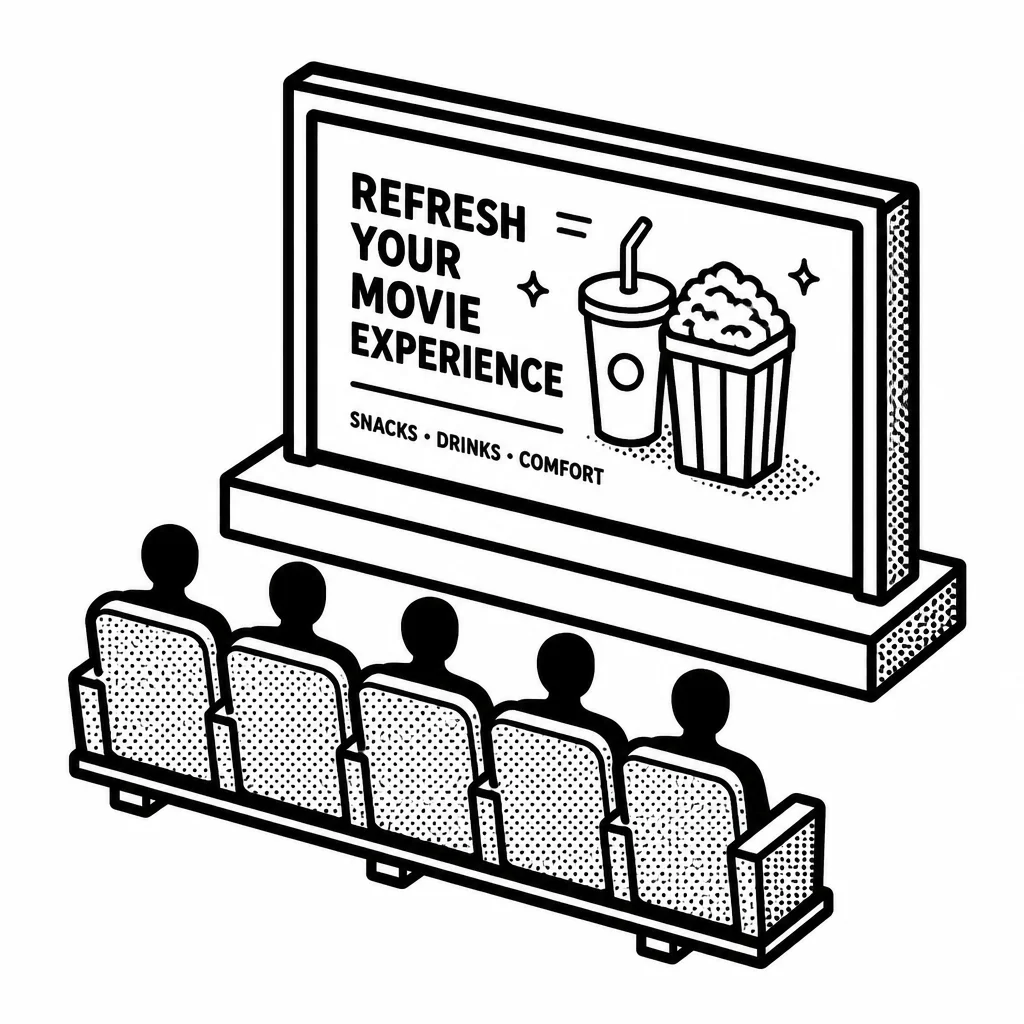
Here's the basic problem it solves. A theater chain has a captive audience: hundreds of people staring at a blank screen for a few minutes. Selling that space to advertisers one theater at a time would be a nightmare, so the chains hand the job to National CineMedia. It bundles screens across many theaters into one big audience, then sells that audience to advertisers in one deal. The theaters get a cut of the money, the advertisers get eyeballs that can't easily skip or scroll past, and National CineMedia keeps a slice for putting the whole thing together. The company's reach comes from its network of theater partners, which include major chains. For a long time its biggest partner was AMC Entertainment, and it also worked with Cinemark and others. That partner relationship is both its strength and its weak spot: the more screens it controls, the more valuable it is to advertisers, but if a big chain walks away or builds its own ad business, National CineMedia shrinks fast. The business also rises and falls with movie attendance — blockbuster years are great, and pandemic-era empty theaters were brutal.
The company went through a rough patch recently. It filed for bankruptcy protection in 2023 after the box office slump and a legal fight with a major theater partner, then emerged in 2024 with a cleaner balance sheet and a restructured set of theater relationships. Since then it has been trying to grow beyond the pre-show slides, pushing into new ad formats and data-driven targeting to make cinema advertising look more like the digital ads big brands already buy. The core bet stays the same: a room full of people who can't fast-forward is still a rare and valuable thing for an advertiser.
Saved answer · last researched 16 Nov 2026