Understand any stock in simple English
Enter a ticker to learn what the company does and how it makes money.
Myriad Genetics, Inc.
Myriad Genetics sells genetic and molecular diagnostic tests that help doctors assess cancer risk, guide treatment decisions, and manage women's health.
Myriad Genetics is a genetic testing company. It sells lab tests that read a person's DNA and other molecules to answer medical questions, mostly about cancer. A doctor orders a test, a patient's blood or tissue sample goes to a Myriad lab, and the result comes back as information the doctor uses to make decisions.
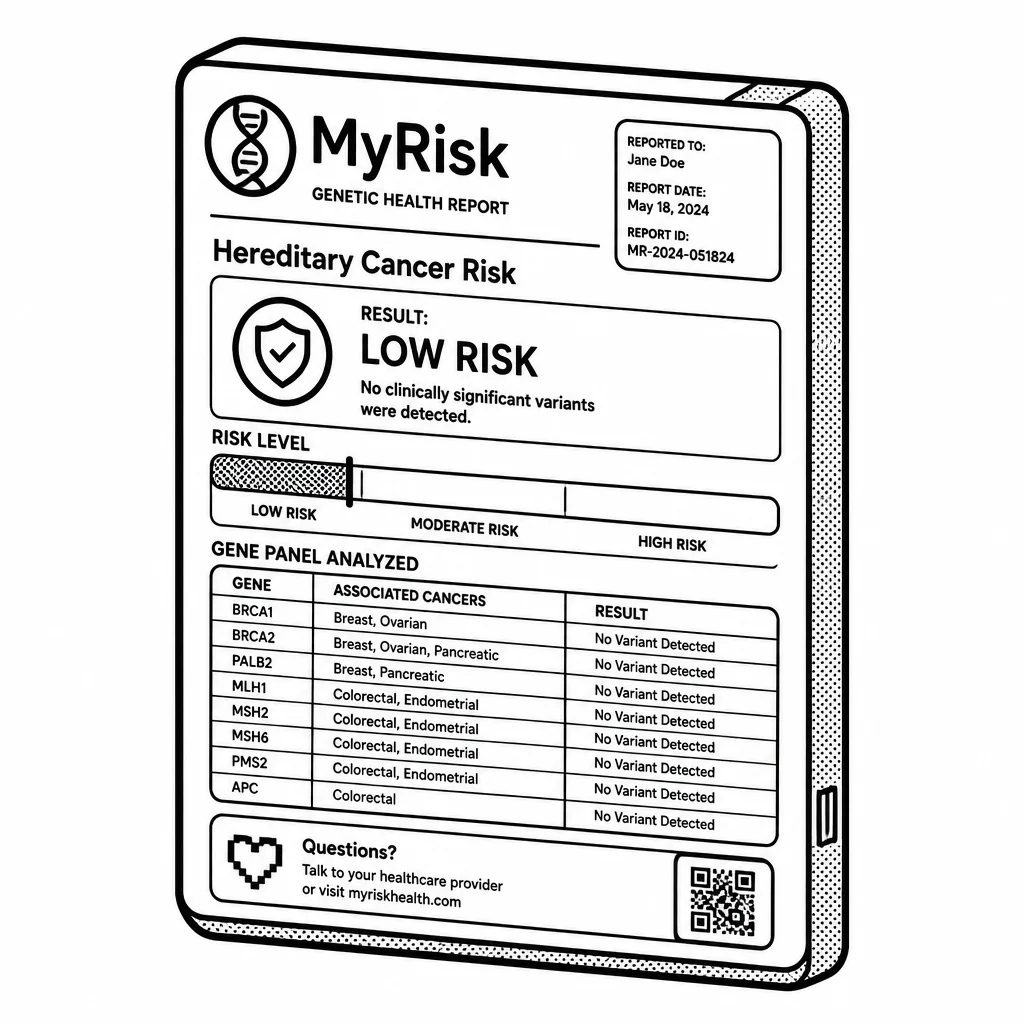
The core idea is that your genes can hint at your future. A woman with a certain inherited mutation in a gene called BRCA1 faces a much higher lifetime risk of breast and ovarian cancer, and Myriad's test can reveal that. Cancer patients also get tests that help predict how aggressive a tumor is or whether a particular drug is likely to work, which can spare people from treatments that won't help them. This is a business with real science and real sticking power behind it. Once a test is ordered, the doctor reads a report and makes a call, and switching labs isn't casual — clinicians tend to trust tests they know and insurers tend to cover them. Myriad has spent years building that trust and a large menu of tests, and it makes money by getting paid per test, largely by health insurers and government programs. But it's not a fortress: competitors offer overlapping tests, especially in hereditary cancer, and payers keep pushing back on price.
The company has had a rocky ride. Myriad once held patents on the BRCA genes and enjoyed a near-monopoly on that testing, until a 2013 Supreme Court ruling struck down those gene patents and competitors flooded in. Since then it has fought to stay relevant by broadening its test menu, cutting deals with drugmakers, and pushing into new areas. The bet is that a wider portfolio and deep relationships with doctors keep it in the room even when any single test is easy to copy.
Saved answer · last researched 16 Nov 2026