Understand any stock in simple English
Enter a ticker to learn what the company does and how it makes money.
Metalla Royalty & Streaming Ltd.
Metalla buys the right to a slice of the gold, silver, and copper that mines produce, and collects that metal — or cash for it — without ever running a mine itself.
Metalla Royalty & Streaming is a small Canadian company that owns pieces of other companies' mines without operating any of them. It buys two kinds of deals: royalties, where it gets a percentage of the metal a mine produces, and streams, where it pays a big sum up front for the right to buy metal later at a steep discount. Either way, Metalla sits off to the side while the miners dig, blast, and haul. When gold, silver, or copper comes out of the ground, Metalla gets its cut.
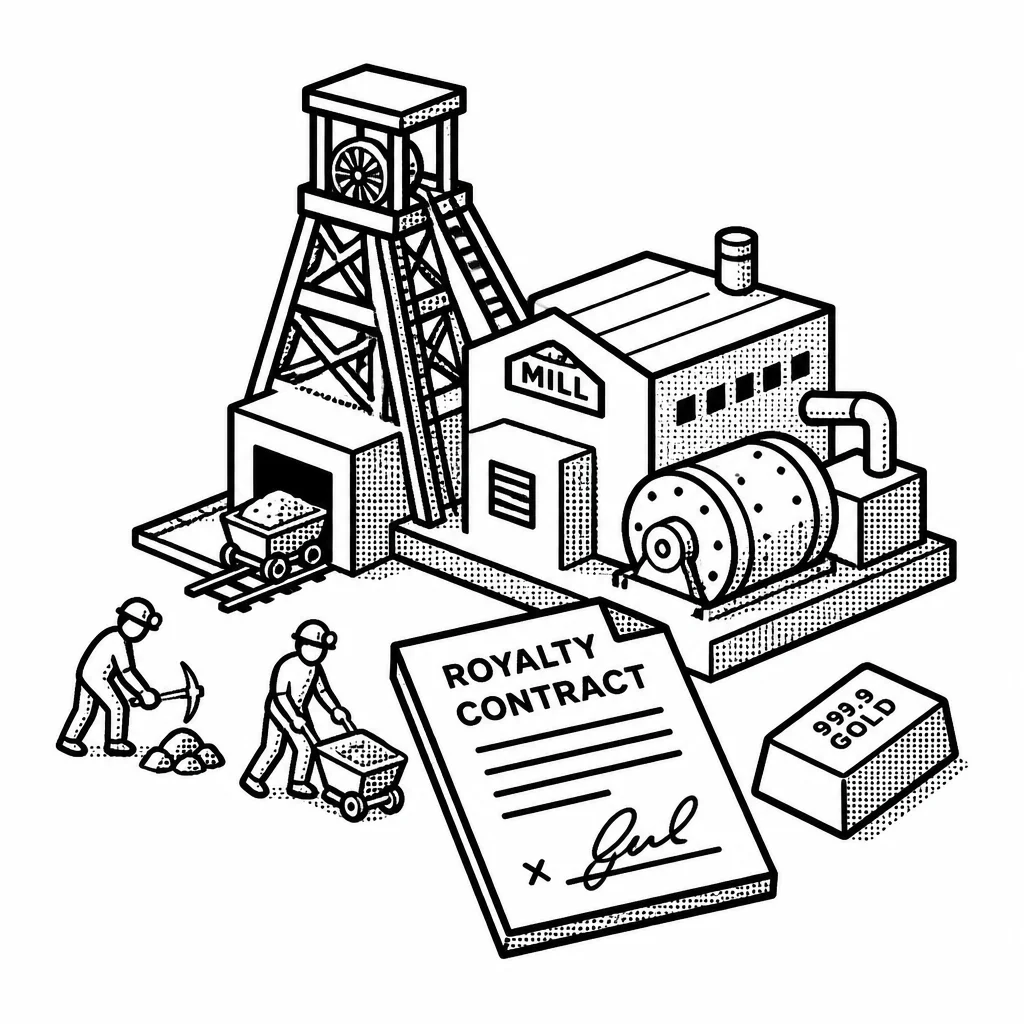
The appeal is the shape of the business. Miners carry the enormous costs and headaches of actually running a mine — labor, fuel, equipment, accidents, environmental cleanup. Metalla mostly carries none of that. Its costs are largely fixed once a deal is signed, so when metal prices rise, a royalty or stream can throw off far more cash. That structure is why mining investors like royalty companies: they get exposure to gold and silver with less operational risk. The catch is that Metalla is tiny next to the giants of this niche, Franco-Nevada and Wheaton Precious Metals, so it depends heavily on a handful of mines and on raising money to keep buying new deals. Metalla's portfolio is spread across dozens of royalties and streams on mines at different stages — some producing today, many still being built or explored. That's a bet on the future: an early-stage royalty often costs little, but pays off only if the mine actually gets built and runs. One notable asset is a royalty on the Tocantinzinho gold mine in Brazil, which started production in 2024 and is now a meaningful source of cash. The company has grown largely by acquiring smaller royalty firms and deals, funded by issuing shares — which means shareholders get diluted along the way.
The honest picture is a small, young player in a smart corner of the mining world, still proving it can build a portfolio big enough to matter. It offers leverage to precious metals prices and a tax-efficient structure, but carries real concentration and financing risk. The name is a bet on management's deal-picking more than on any single mine.
Saved answer · last researched 15 Nov 2026