Understand any stock in simple English
Enter a ticker to learn what the company does and how it makes money.
Everspin Technologies, Inc.
Everspin makes specialized memory chips that keep data even when the power is cut, selling them for use in cars, factories, and data centers.
Everspin Technologies makes a special kind of computer memory chip that remembers what it stored even after the power goes off. Most memory in your phone or laptop forgets everything the instant it loses power, which is why it saves to slower storage before shutting down. Everspin's chips, called MRAM (magnetoresistive random-access memory), store data using tiny magnetic states instead of electric charge, so the data survives a power cut and can be written to very fast, very often, without wearing out.
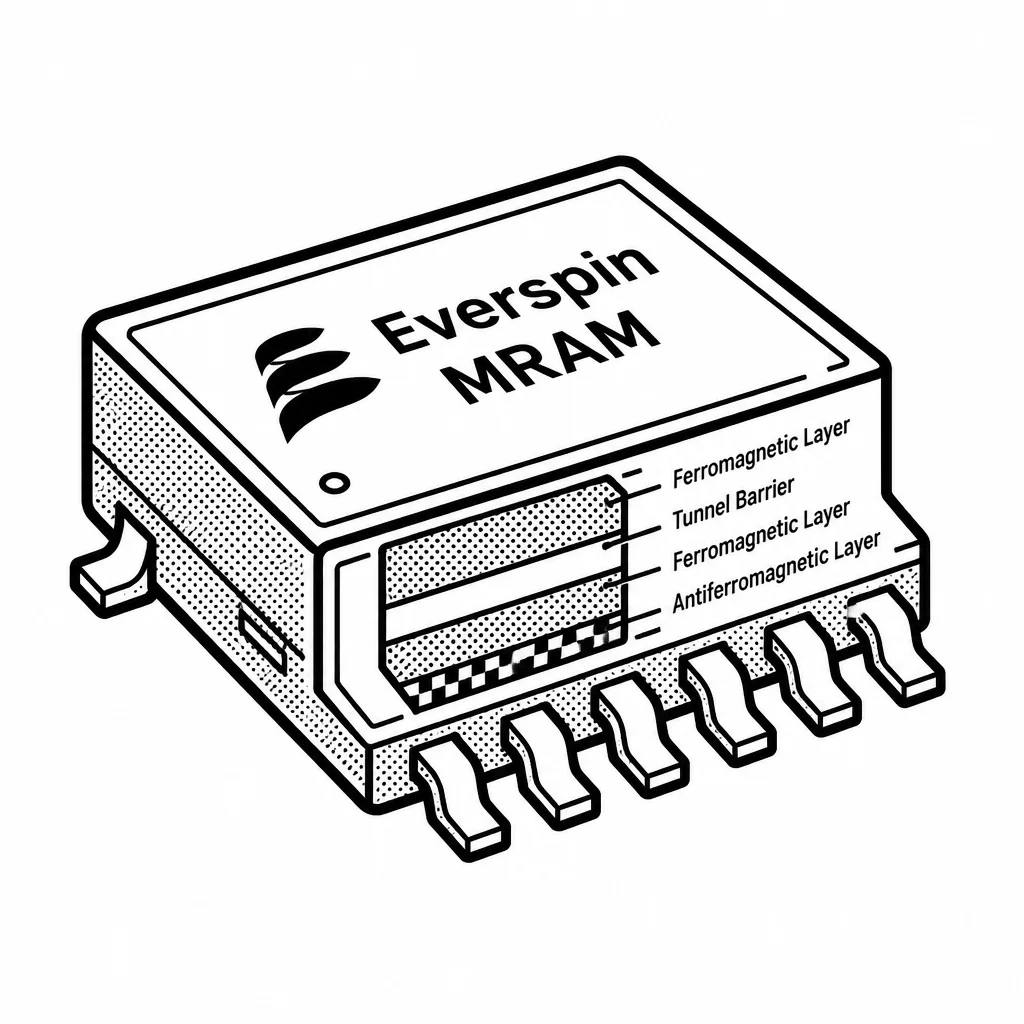
Its customers are the companies building things that must not forget: cars that need to remember sensor readings and settings, factory machines that log data through dirty-power moments, and data centers that need a fast, durable scratchpad. Everspin sells the chips themselves and also licenses its technology and design work to bigger partners. The appeal over alternatives like flash memory is speed and endurance — flash wears out after a limited number of writes, while MRAM is built to take a beating. The company is small and sells into niche, technical markets, which makes it a battler rather than a giant. Its competitors include big memory makers and flash-memory suppliers such as Micron Technology, and its fortunes swing on whether carmakers, industrial firms, and data-center operators adopt MRAM in volume. Everspin has been around since the mid-2000s and was a pioneer in commercializing MRAM, but turning that early lead into steady profits has been the hard part.
Its headquarters are in Chandler, Arizona, part of the cluster of chip companies in the American Southwest. The core question for investors is simple: does the world need a tougher, faster memory enough to pay Everspin for it, and can the company grow fast enough to matter before bigger players muscle in?
Saved answer · last researched 9 Nov 2026