Understand any stock in simple English
Enter a ticker to learn what the company does and how it makes money.
Moog Inc.
Moog makes precision motion and fluid control systems that move and steer things in aircraft, defense equipment, industrial machines, and medical devices.
Moog builds the parts that make machines move with precision. When a fighter jet tilts its wing, a rocket steers its nozzle, or a factory robot moves an arm exactly where it should, tiny valves and actuators made by Moog are often doing the pushing. The company designs and manufactures motion control and fluid control systems — essentially the muscles and nerves of machines that need to move accurately and reliably.
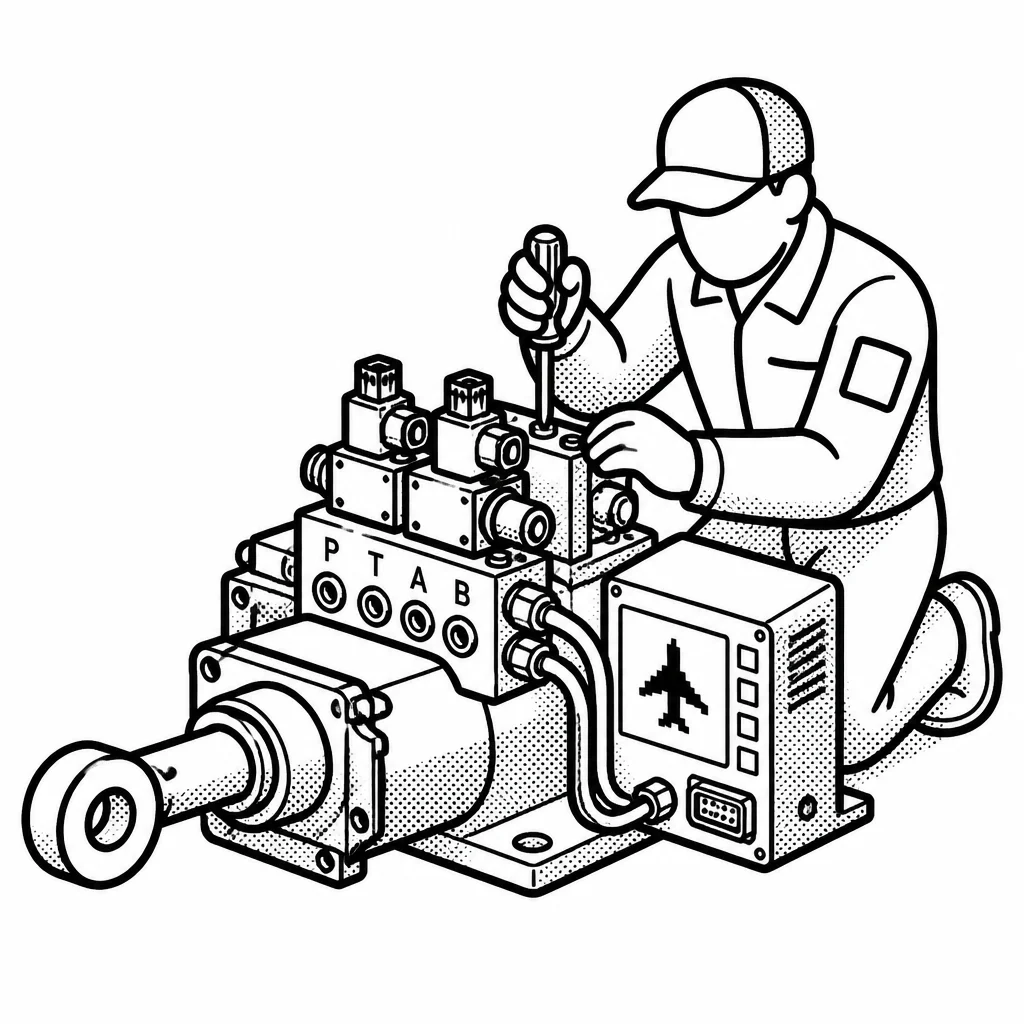
The business splits into a few main pieces. Aerospace and defense is the biggest and most famous: Moog supplies flight control systems, engine controls, and actuation for commercial jets, military aircraft, and space launch vehicles. Industrial markets come next, where Moog's valves and controls keep heavy machinery, turbines, and factory equipment running smoothly. Medical is the smallest but growing piece, where the company makes components for devices like infusion pumps and surgical equipment. Customers are mostly aircraft makers, defense contractors, and equipment manufacturers, and they pay Moog because precision and reliability matter enormously — a failing valve on a plane is not an option. Moog is headquartered in East Aurora, a small town near Buffalo, New York, which is unusual for a company selling to global aerospace giants. It began as Moog Valve Company making servovalves, and it still holds a strong reputation for engineering-driven, high-margin niche products. Its main competition comes from larger aerospace suppliers such as Parker Hannifin and Eaton, plus major aircraft systems integrators, but Moog's specialized know-how keeps it embedded in programs that are hard for rivals to displace.
The company generates steady cash from long-lived aerospace and defense contracts, and it uses that money to fund research, make selective acquisitions, pay a modest dividend, and buy back shares. The business is cyclical — when aerospace orders slow or defense budgets tighten, Moog feels it — but its mix of commercial, military, industrial, and medical customers spreads the risk. Recent years have seen growing demand for space and defense actuation, a meaningful tailwind for a company whose small precision parts sit inside some of the world's most demanding machines.
Saved answer · last researched 16 Nov 2026