Understand any stock in simple English
Enter a ticker to learn what the company does and how it makes money.
Meesho Limited
Meesho runs an Indian online marketplace where small sellers sell cheap goods to shoppers, with delivery and payment help built in.
Meesho is an Indian shopping app for people who want things cheap. It connects millions of small sellers — many of them housewives, tiny shopkeepers, or first-time entrepreneurs — with buyers across the country, and it handles the messy parts in between: payments, shipping, and returns. The company makes money mainly by taking a small cut of each sale and by charging sellers for extras like faster delivery or advertising inside the app.
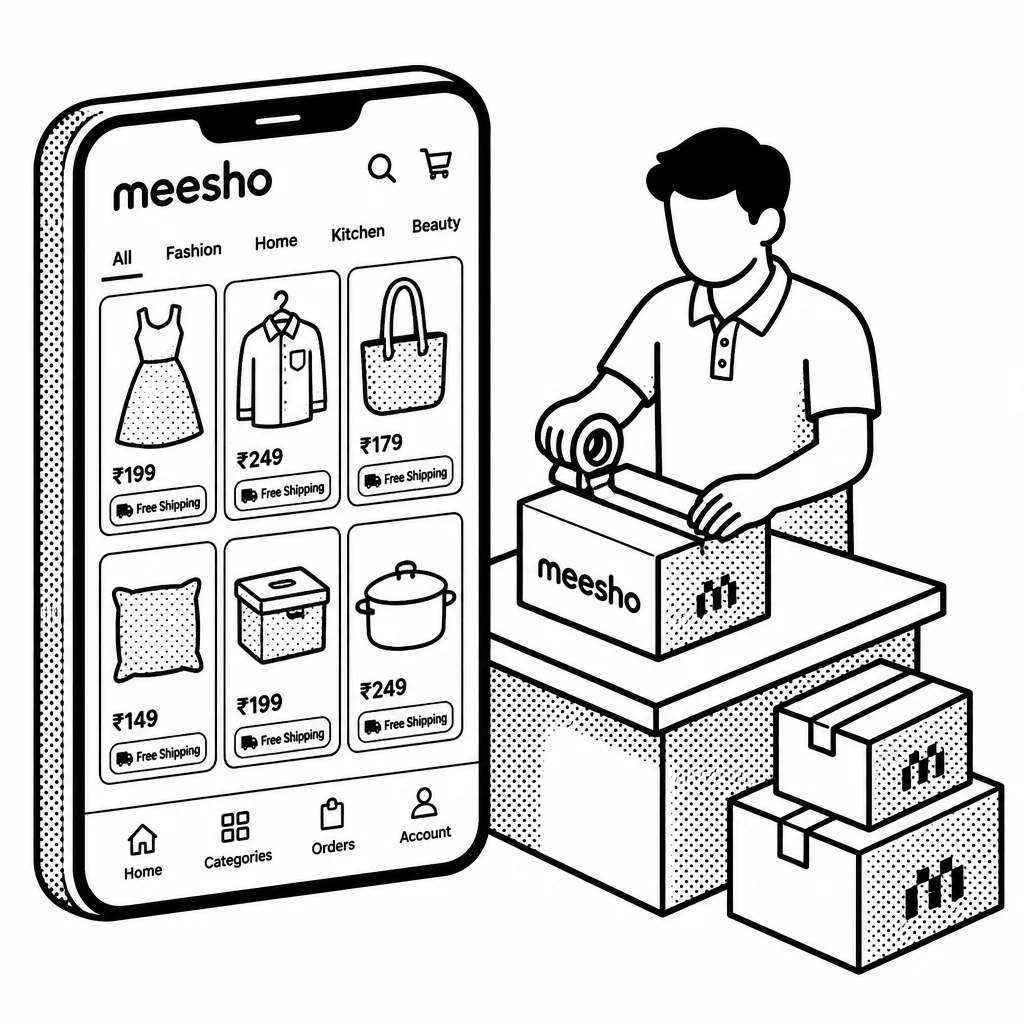
What makes Meesho different from Amazon or Flipkart is that it was built for the bargain end of the market. It pioneered "social commerce" in India, where resellers would share product links on WhatsApp and Facebook and earn a commission. That model faded, and Meesho pivoted to a plain marketplace selling low-priced fashion, home goods, and electronics. Its real edge is its seller base: most are small businesses in smaller towns, and many sell items under 300 rupees. The app is also one of India's most downloaded, and it has no commission on most listings — sellers pay for services instead. The company was founded in 2015 by Vidit Aatrey and Sanjeev Barnwal, both IIT Delhi graduates, originally as Fashnear Technologies. It became one of India's most valuable startups and listed on the NSE in December 2025. It turned profitable on an adjusted basis in 2024, a big deal for a company that once burned through cash to grow. Getting to profit was hard fought, and the shift away from reseller commissions toward a straightforward marketplace was a big part of it. Its customers are price-sensitive shoppers, many in smaller cities, who want the cheapest possible deal. Its main rivals are Flipkart (owned by Walmart), Amazon, and Snapdeal, though Meesho positions itself at a lower price point than most. Beyond shopping, it also runs a logistics arm and a lending business that offers small loans to sellers. The company's big bet is that India's next wave of online shoppers will come from small towns, and that whoever offers them the cheapest goods with easy returns wins.
The risks are real. Thin margins mean a small misstep on delivery or returns can wipe out profit. Competition from deep-pocketed rivals is relentless. And the low-price customer base can be fickle. Still, Meesho has something valuable: a massive, hard-to-copy network of small sellers and a brand that means "cheap and convenient" to a huge swath of India — a position that is difficult to dislodge once it takes root.
Saved answer · last researched 12 Nov 2026