Understand any stock in simple English
Enter a ticker to learn what the company does and how it makes money.
iShares MSCI China ETF
An exchange-traded fund that lets investors buy a broad basket of large and mid-sized Chinese stocks in a single trade.
The iShares MSCI China ETF is a simple way for anyone with a brokerage account to own a slice of China's biggest companies without picking individual stocks. It trades on NASDAQ and holds a wide basket of large and mid-sized Chinese firms that outside investors can actually buy — names in internet, e-commerce, financials, and consumer businesses. When you buy a share, you're essentially buying a pre-packaged portfolio of those companies in one click.
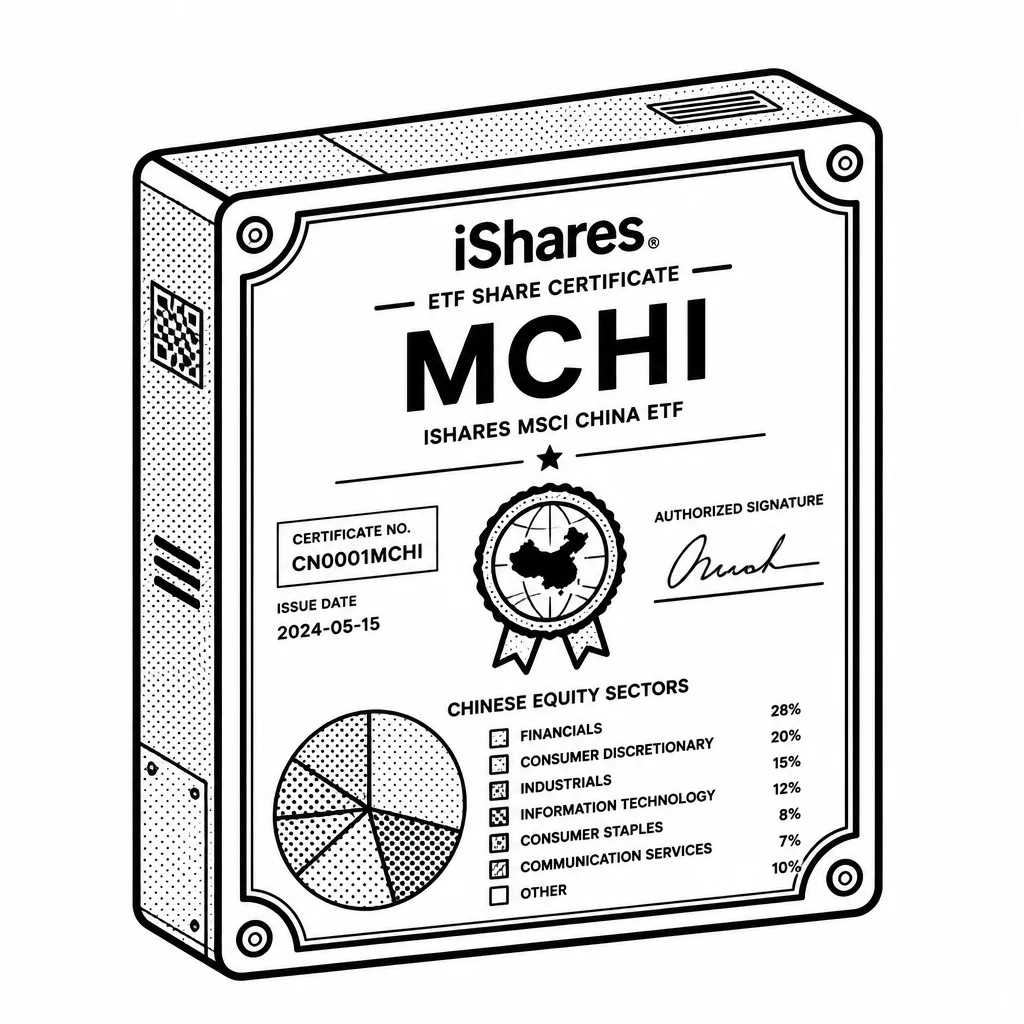
The fund tracks an index built by MSCI, the same firm behind many of the benchmarks that global investors use to measure markets. MSCI decides which Chinese companies qualify and keeps the list updated as companies grow, shrink, or change. The fund then mirrors that list, so its performance rises and falls with Chinese large and mid-cap stocks overall rather than with any single company. Owning this fund is really a bet on the whole Chinese equity market, not on one business. That cuts the risk of any single stock blowing up, but it also means you carry China-specific risks all at once: government policy shifts, tension with the US, a slowing property sector, and the chance that some companies get delisted from American exchanges. In recent years those worries have whipsawed the fund's price, which makes it a fairly volatile holding, not a sleepy one.
iShares, run by BlackRock, earns money through a small annual fee charged as a percentage of the money invested, taken quietly out of the fund's assets. That fee is one reason the fund appeals to people who want cheap, diversified China exposure instead of paying a manager to hand-pick stocks. It pays out any dividends it collects from the Chinese companies it holds, which investors receive in cash.
Saved answer · last researched 16 Nov 2026