Understand any stock in simple English
Enter a ticker to learn what the company does and how it makes money.
A.P. Møller - Mærsk A/S
Maersk moves goods around the world, mostly in giant container ships, and handles the logistics of getting cargo from factory to doorstep.
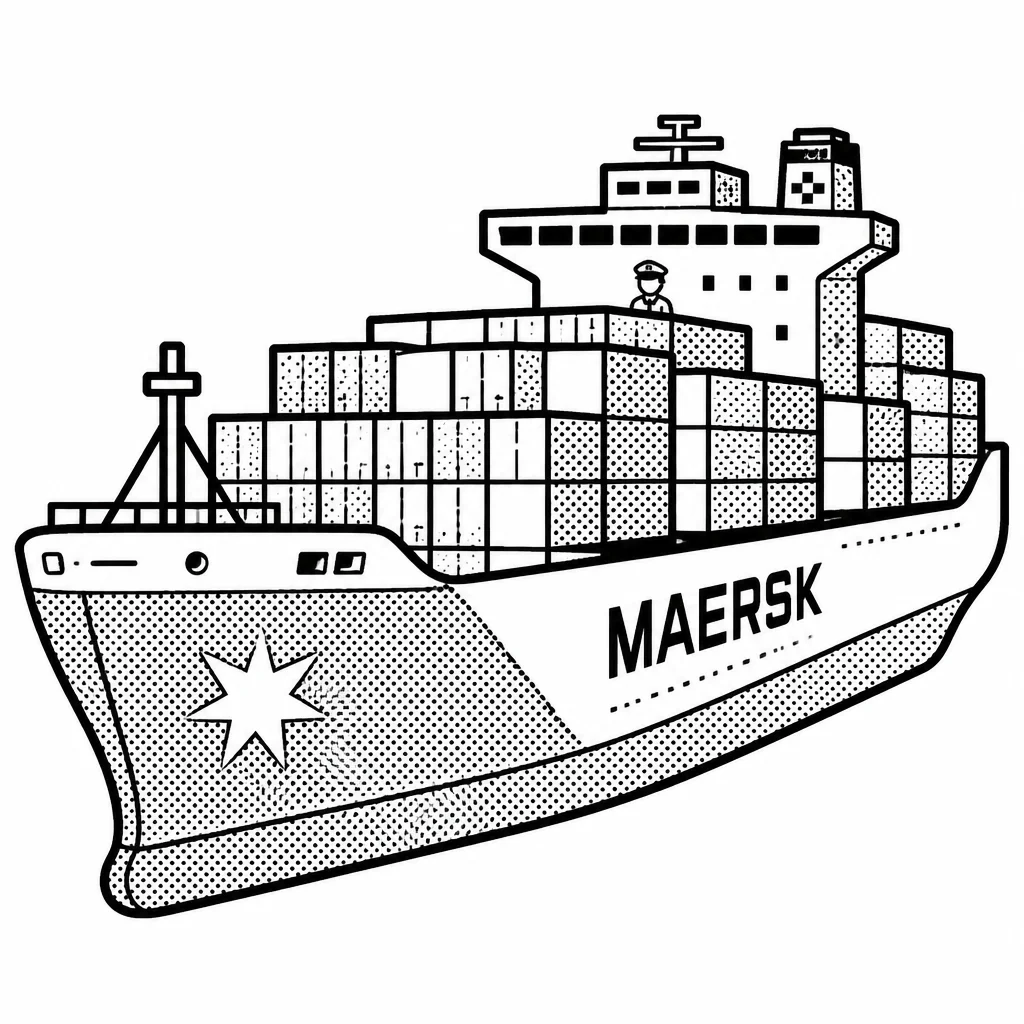
Maersk is the world's biggest container shipping company. It owns and operates a fleet of enormous ships that carry metal boxes full of stuff — clothes, electronics, furniture, car parts — across the oceans, and it also runs the port terminals where those boxes get loaded and unloaded, plus the trucks, warehouses, and software that move cargo the rest of the way. If you buy something made in Asia and sold in Europe or America, there's a decent chance Maersk carried it at some point.
Here's the basic problem it solves. A factory in Vietnam needs to sell 5,000 sofas to customers in Germany. The factory doesn't own a ship, doesn't know how to clear customs, and has no idea how to get a container from a port to a warehouse in Munich. Maersk sells the whole chain: it picks up the box, puts it on a ship, sails it across the world, unloads it, and delivers it. Customers pay for that convenience — and they choose Maersk because its network is huge and reliable. Rivals like MSC (privately held) and CMA CGM (private) compete hard on the same routes, so price and reliability matter enormously. The business is brutally cyclical. When global trade booms and ships are full, freight rates soar and Maersk makes piles of cash. When trade slows or too many new ships get built, rates collapse and the company can lose money. The pandemic was a wild example: freight rates spiked so high in 2021 and 2022 that Maersk earned more profit in those two years than in the previous decade combined. Then rates crashed back down as the world normalized. This is why Maersk has spent years pushing beyond pure shipping into logistics services — things like customs brokerage, warehousing, and freight forwarding — which are steadier and less rate-sensitive. Its roughly $1.7 billion acquisition of LF Logistics in 2023 was part of that bet.
Maersk is headquartered in Copenhagen and controlled by the Møller family through a foundation, which gives it a long-term outlook uncommon among public companies. It also owns a stake in a separate oil and gas business, but shipping and logistics are the core. The company has used its cash to pay dividends and buy back shares, and it has invested heavily in new, more fuel-efficient ships as the industry faces pressure to cut emissions. The simple takeaway: Maersk is a bet on world trade itself — a giant, well-run machine that earns fat profits when trade is hot and gets squeezed when it cools.
Saved answer · last researched 12 Nov 2026