Understand any stock in simple English
Enter a ticker to learn what the company does and how it makes money.
Lightwave Logic, Inc.
Lightwave Logic makes special light-controlling plastics and the tiny devices built from them that help move data incredibly fast inside computers and networks.
Lightwave Logic is a small, pre-revenue materials company trying to shake up how the world moves data at very high speeds. Its core product is a family of electro-optic polymers — basically plastics engineered at the molecular level that change how they bend light when you put a voltage across them. That sounds abstract until you see the job: inside a data center or between network equipment, information travels as pulses of light, and something has to flip that light on and off at enormous speed. The company builds "modulators," tiny components that encode data onto those light pulses, and it sells the raw polymer material to semiconductor foundries and optical module makers who want to build their own versions.
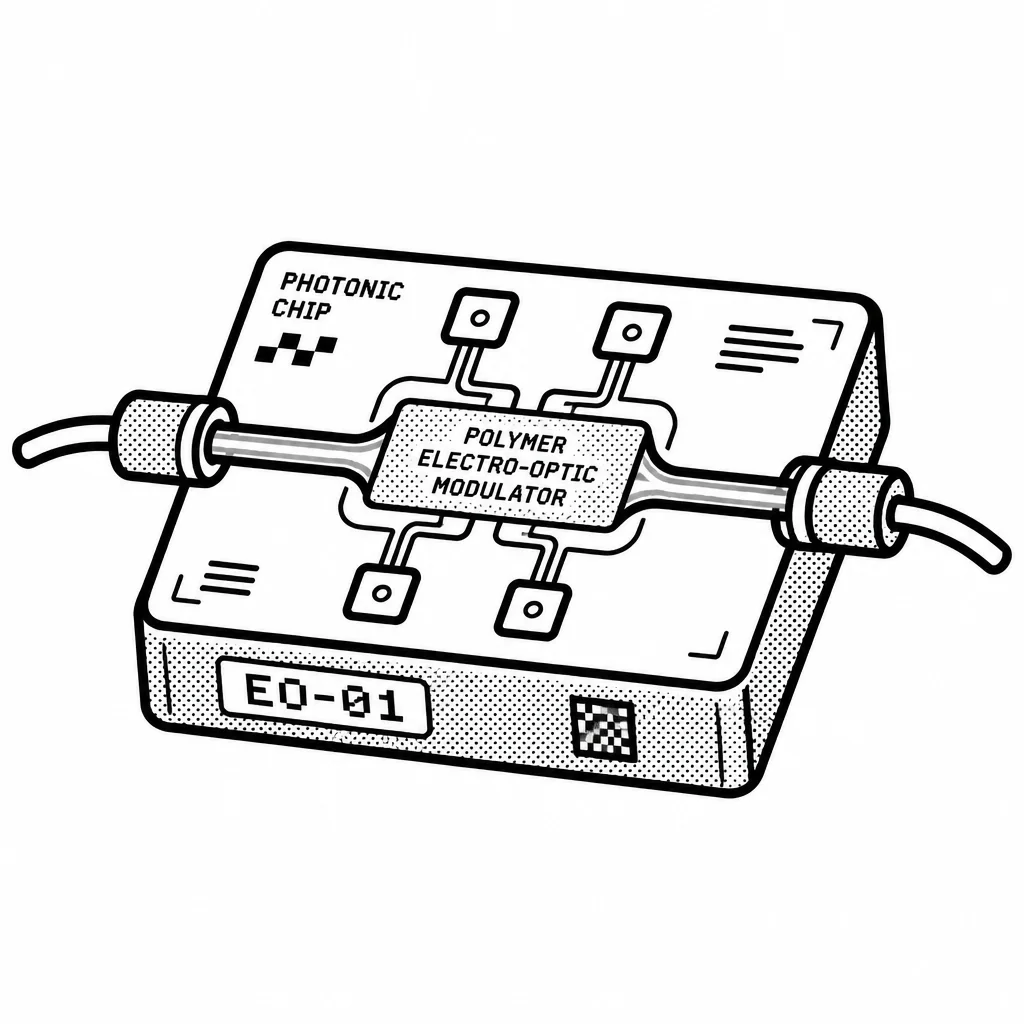
The bet behind the business is that polymers can beat the standard material the industry has used for years, lithium niobate. Polymer modulators can, in principle, switch faster and use less power, which matters because modern artificial intelligence and cloud computing keep demanding more bandwidth while burning more electricity. Lightwave Logic does not make the finished chips or modules itself. It is more like a specialty ingredient maker, designing its own devices to prove the material works, then licensing the polymer and partnering with foundries so others can manufacture at scale. Its headquarters in Englewood, Colorado, is close to the optics talent clustered in that region. The hard part is that this is a business living on promises not yet fully kept. Lightwave Logic's revenue has historically been tiny, mostly small payments for the polymer samples and licensing deals it lines up, and the company has relied on selling shares to fund its research year after year. That means dilution for existing investors, and it means the company's value hinges heavily on whether a major foundry or module maker adopts its material for a real, high-volume product. In recent years it has pushed its polymer platform toward commercial readiness, showcased its modulators at industry events, and signed partnership and licensing arrangements with manufacturing partners, all aimed at proving the technology can move from the lab into factories.
Looked at plainly, Lightwave Logic is a high-risk, high-reward materials play on the future of optical networking. If its polymer becomes the standard for fast, low-power data transmission, the payoff could be large because the material would sit inside countless devices. If a big chipmaker sticks with established technologies, or a rival announces a better solution, the company's years of spending become a very long, expensive waiting game. Either way, this is a company built on a genuinely clever idea about how light can carry information, and the whole story comes down to whether the world's manufacturers decide to trust that idea at scale.
Saved answer · last researched 16 Nov 2026