Understand any stock in simple English
Enter a ticker to learn what the company does and how it makes money.
Lantronix, Inc.
Lantronix makes the hardware and software that connect machines, devices, and equipment to networks and the cloud, so companies can monitor and control them remotely.
Lantronix is a small company that sells the plumbing that lets machines talk to the internet. Its customers are businesses and organizations that run physical equipment — factories, hospitals, power grids, cell towers, smart buildings, and increasingly vehicles — and need that equipment to send data back to a computer somewhere and to receive commands. Lantronix sells the little boxes that plug into machines to get them online, the software that manages and secures those connections, and engineering services to help customers wire it all together. Under the banner of "edge intelligence" and industrial IoT, its pitch is that the data should be processed near the machine rather than shipped all the way to a distant data center, saving time and bandwidth.
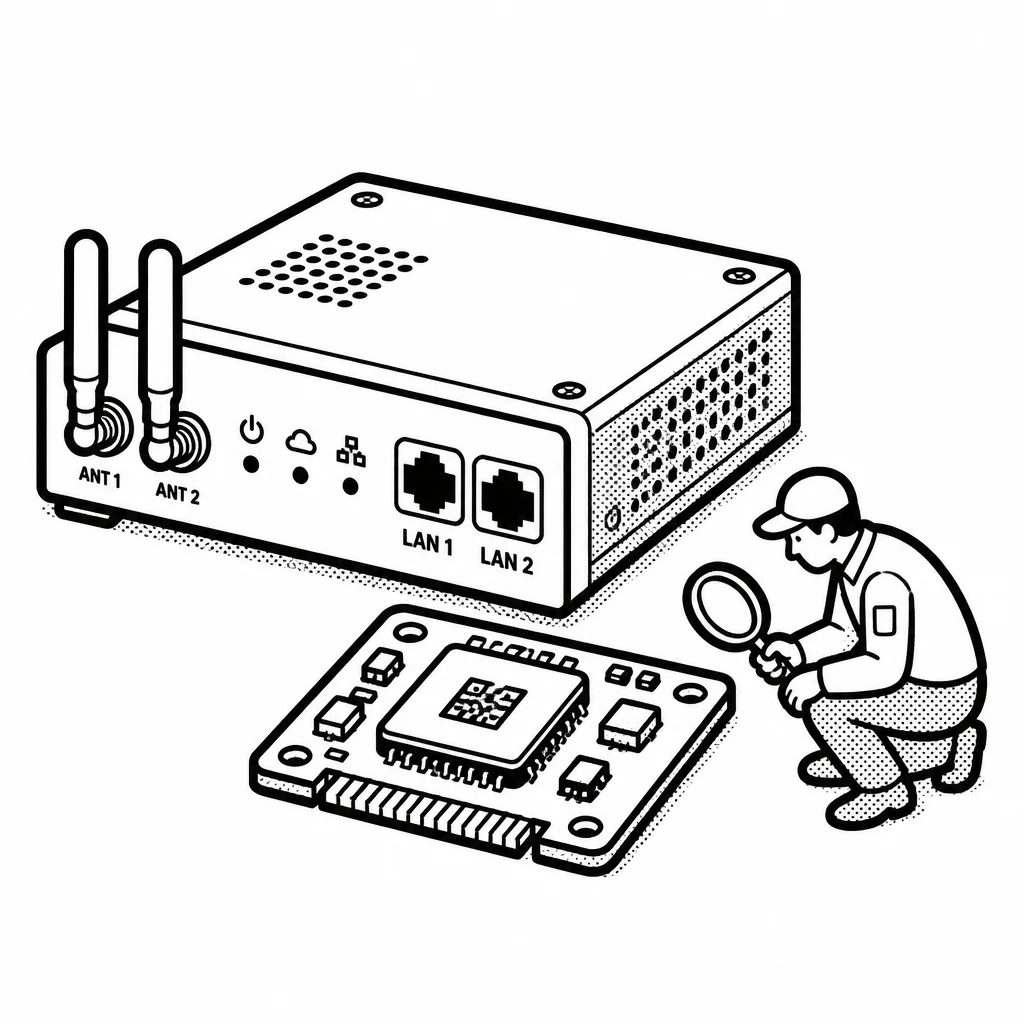
The way it makes money is straightforward: customers buy the devices, pay for the software subscriptions that manage them, and sometimes hire Lantronix to help design and deploy the system. Its strongest customers are enterprise and critical-infrastructure operators — places where an unplanned outage is genuinely expensive or dangerous, like a water utility or a cellular network. Those customers tend to be sticky, because once a device is embedded in an industrial system and the security and management tools are built around it, ripping it out is a headache. Lantronix has grown largely by buying smaller specialist companies rather than inventing everything internally, assembling a portfolio of connectivity brands that now sit under one roof. The uncomfortable part is that Lantronix is small and has spent much of its public life losing money. It is a $10-ish-a-share company competing against far bigger rivals and against low-cost Asian hardware makers, and its acquisitions have weighed on the balance sheet even as they added revenue. Recent years have brought the company a growing embedded-computing business and a strong position in out-of-band management — the gear IT departments use to remotely reboot and recover servers and network equipment when the primary connection is dead — plus a big push into automotive connectivity through a major customer relationship. The whole story hinges on whether it can turn this collection of acquired pieces into a profitable, growing business, or whether it stays a niche supplier that always looks a little bit too small for the markets it is chasing.
For a curious investor, the interesting tension is this: the underlying trend — every machine eventually gets connected — is real. The question is whether Lantronix captures a slice of that trend as a profitable business, or whether it is one of those companies that provides the picks and shovels but keeps having to buy more shovels to stay relevant. Its modest size means the stock can move sharply on any single customer win or loss, and its history of red ink means it has less room for error than the giants it competes with. It is a real company with real products in a real growth area, but it is far from a safe, cash-generating machine.
Saved answer · last researched 14 Nov 2026