Understand any stock in simple English
Enter a ticker to learn what the company does and how it makes money.
Loomis AB (publ)
Loomis moves and manages cash for banks, stores, and governments, charging a fee for handling the money that most people now rarely touch.
Loomis is a cash-handling company. It drives armored trucks, empties the cash from store tills and ATMs, counts and sorts it in secure vaults, and gets it back into the banking system — and it charges banks, retailers, and public institutions a fee for every step of that job.
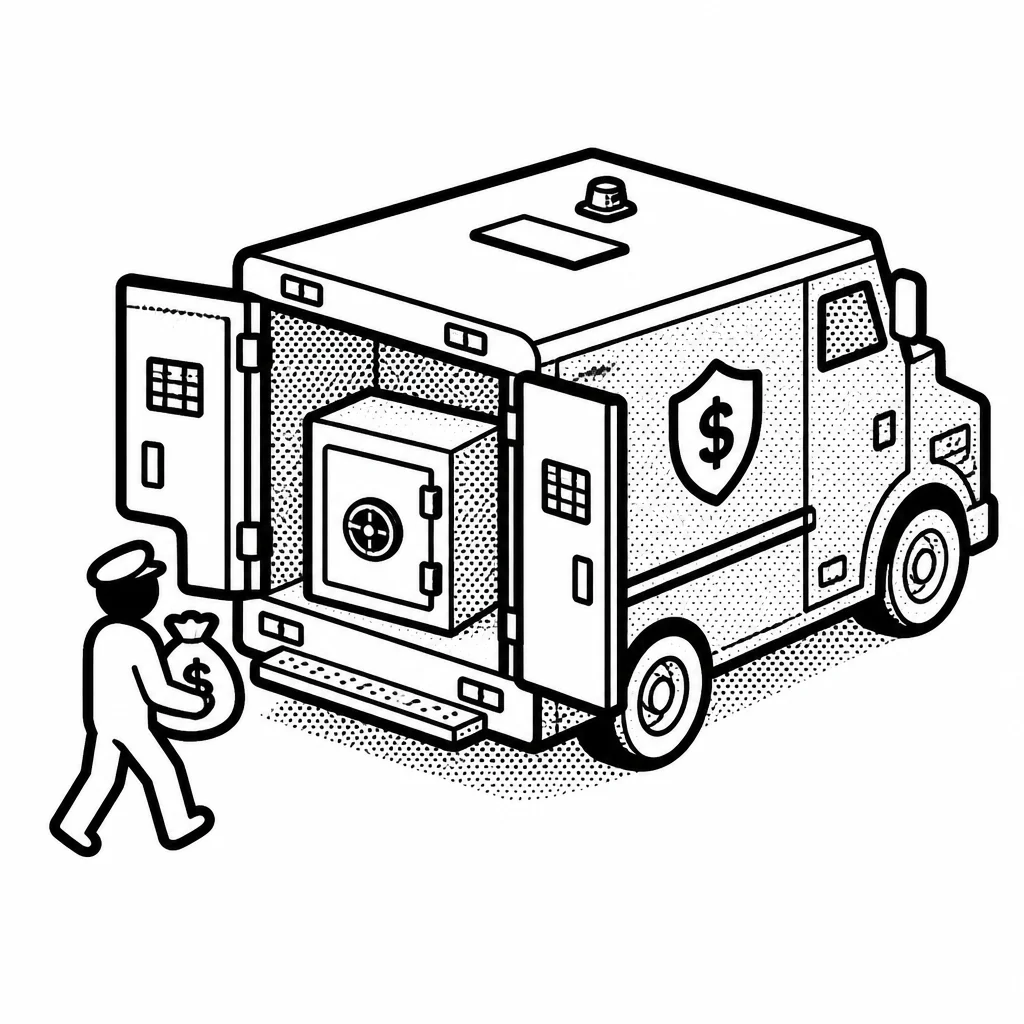
The business is simple to picture. A supermarket ends the day with thousands of bills and coins in its tills. Someone has to collect that money, guard it, recount it, detect counterfeits, and credit the store's bank account. Loomis does all of it. In return, customers save the cost and risk of doing it themselves, and they get a single partner who is already trusted by banks and insured for the job. The same logic applies to ATMs: Loomis stocks them, services them, and takes away the cash. The company is a genuine giant. It runs operations across Europe and the United States, and over the years it has bought up many smaller rivals to build that scale. Scale matters here because cash routes are dense and repetitive — the more stops a truck can make on one run, the cheaper each stop becomes. Loomis also has an international division that moves cash across borders and handles things like foreign exchange and precious metals. Its closest global rival is Brink's, though local players compete in many markets, and the bigger long-term threat is simply that fewer people pay with cash every year.
That shift is the honest worry. Card and phone payments keep eating into cash use in many rich countries, and some governments actively nudge their economies toward digital money. Loomis answers by pushing into services that survive a cashless world — ATM management, cash recycling, and secure logistics — and by leaning on markets where cash remains king. It is a steady, unglamorous, cash-generating business. It pays dividends and has bought back shares, and it earns money the old-fashioned way: by being paid to make a messy, risky physical job someone else's problem.
Saved answer · last researched 12 Nov 2026