Understand any stock in simple English
Enter a ticker to learn what the company does and how it makes money.
Lennar Corporation
Lennar builds and sells new homes to American families.
Lennar is one of America's biggest homebuilders. It buys land, puts up houses, and sells them to ordinary people who need somewhere to live. Most of its customers are first-time buyers, move-up families, and older people who want to downsize. The company sells houses under a few brand names, but the basic product is the same: a new home in a subdivision, ready to move into.
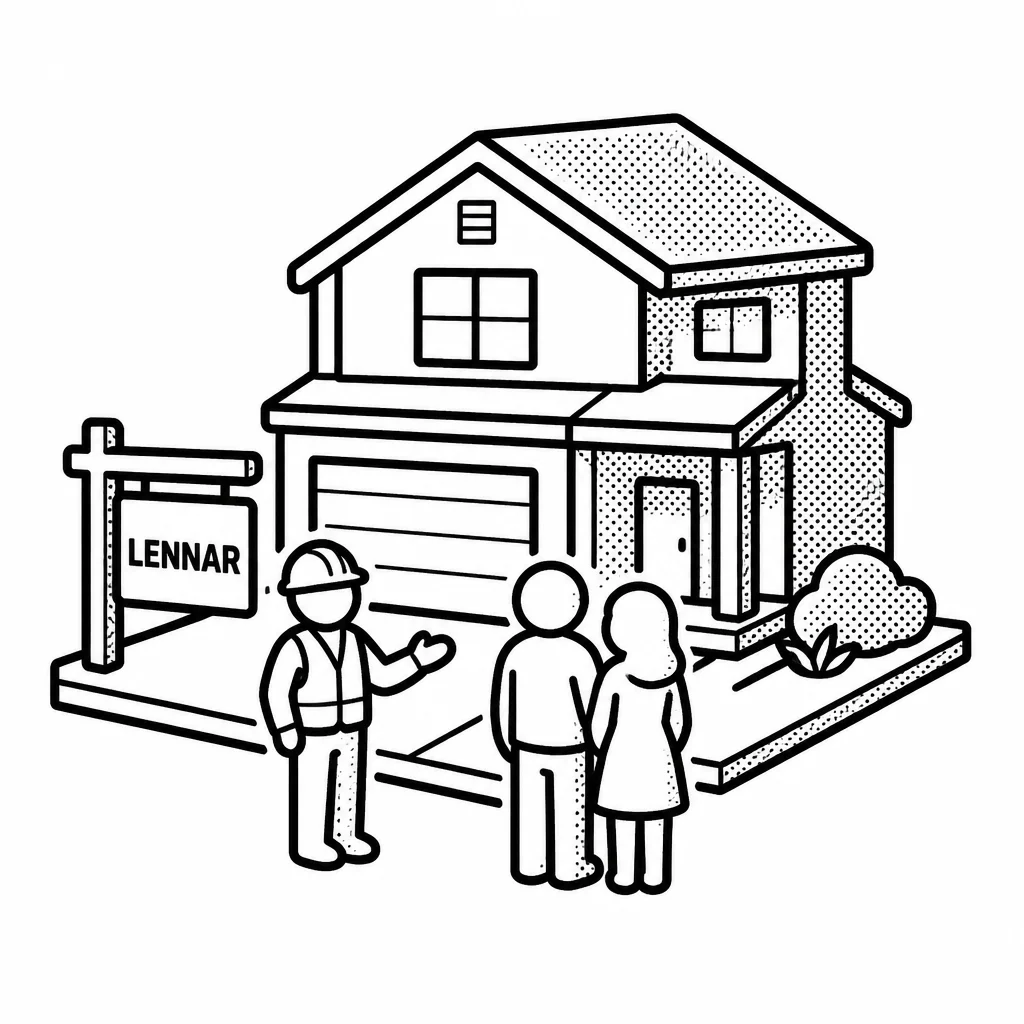
Building houses is a simple business on paper and a hard one in practice. Lennar has to guess years ahead how many people will want to buy homes in a given spot, then buy land before prices move. It also has to manage lumber, concrete, and labor costs that swing around. Its edge comes from buying land cheaply and building fast, often in big planned communities where it can sell many homes at once. It competes with other big builders like D.R. Horton and PulteGroup, plus thousands of small local builders. Buyers choose based on price, location, and how quickly they can move in. Lennar does more than sell houses. It has a big financial services arm that helps buyers get mortgages and title insurance, so it earns money on the loan as well as the house. It also owns a stake in Millrose, a company that makes and installs building products, and it runs a growing business renting out single-family homes through a subsidiary. Those pieces make the company less dependent on a single home sale and give it steady rental income.
The housing market is the whole story here. When mortgage rates jump, buyers pull back, and the builder's sales slow down. Lennar has responded by offering mortgage rate buy-downs and other incentives to keep buyers moving. That keeps volume up but squeezes profit margins. The company also spends heavily buying back its own shares, which it has done for years. The bet is that as long as America keeps growing and people keep needing houses, the business will keep earning. The risk is that a deep housing slump or a sharp rate shock hits the same time as a lot of unsold homes.
Saved answer · last researched 12 Nov 2026