Understand any stock in simple English
Enter a ticker to learn what the company does and how it makes money.
Loblaw Companies Limited
Loblaw runs Canada's biggest grocery and pharmacy chain, selling food, medicine, and everyday household goods to Canadians.
Loblaw is Canada's biggest grocer. It runs a family of supermarket brands — Loblaws, No Frills, Real Canadian Superstore, and Provigo among them — plus the Shoppers Drug Mart pharmacy chain. If a Canadian household buys food, fills a prescription, or grabs shampoo and a birthday card in one trip, there's a good chance Loblaw took the money.
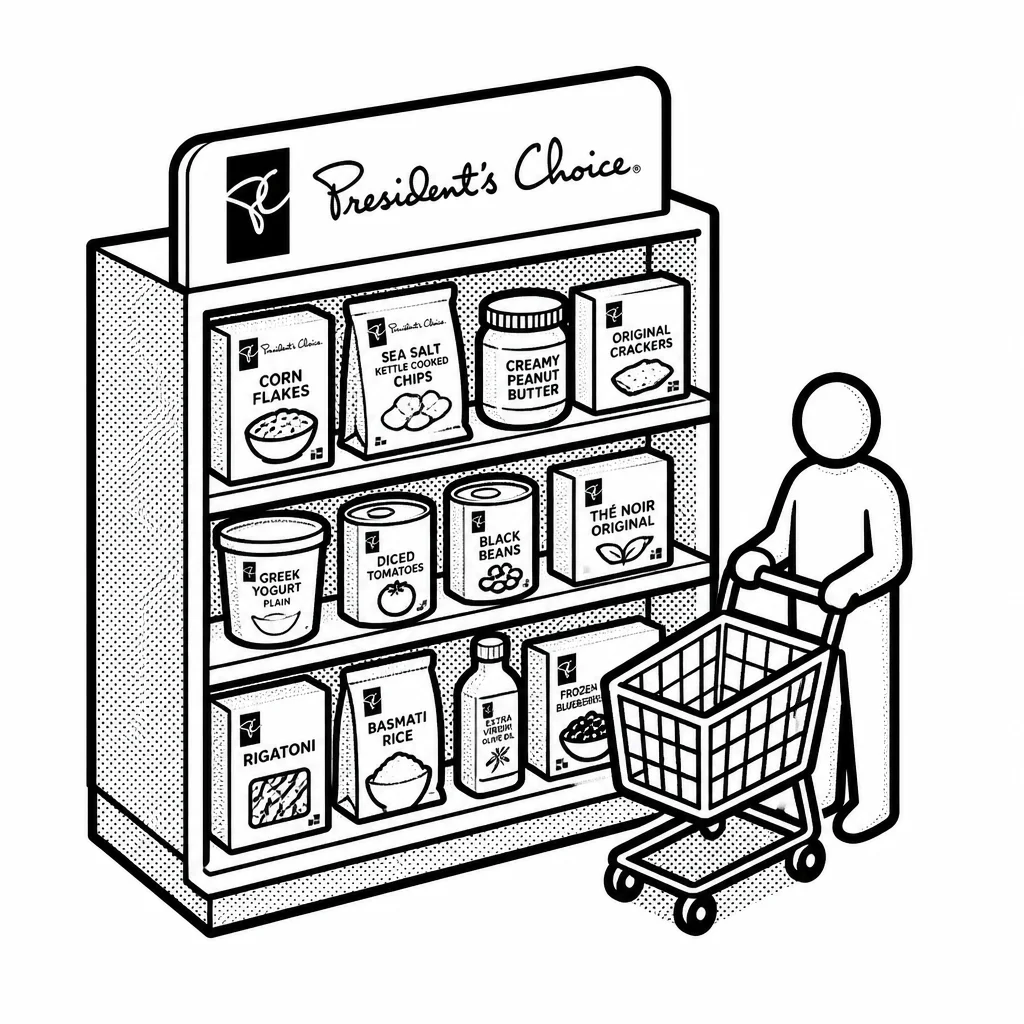
The company is really two big engines under one roof. The grocery side sells food and general merchandise through full-service stores and discount stores, with the discount banners doing a lot of the heavy lifting as shoppers hunt for lower prices. The pharmacy side, built around Shoppers Drug Mart and Pharmaprix in Quebec, sells prescription drugs, health and beauty products, and front-of-store items like cosmetics and snacks. Loblaw also owns a big private-label business, led by its No Name and President's Choice brands, which are a quiet profit machine: when shoppers buy the store's own brands instead of national brands, Loblaw keeps more of the margin. It also runs a large real estate arm and a financial services division offering credit cards and loyalty programs. Why do customers pick Loblaw? Mostly because it's everywhere — the discount banners compete on price, the full-service stores compete on selection and freshness, and Shoppers anchors the pharmacy and beauty market. The loyalty program, PC Optimum, ties it together by rewarding shoppers across both grocery and pharmacy. That scale gives Loblaw huge buying power with suppliers, which helps it keep prices competitive.
The business has had a rough public relations stretch. Canadians have loudly blamed grocers, Loblaw included, for high food prices, and the company has been under political pressure and even a consumer boycott campaign over grocery affordability. It has responded with things like price freezes on its No Name products. On the money side, Loblaw generates steady cash, which it uses to pay dividends, buy back shares, and invest in its stores and e-commerce. It also made a big bet on health care beyond the pharmacy counter, pushing into services like pharmacist-led care and virtual health. The simple story: Loblaw sells Canadians the boring, essential stuff they buy every week, and does it at a scale that's hard to beat.
Saved answer · last researched 12 Nov 2026