Understand any stock in simple English
Enter a ticker to learn what the company does and how it makes money.
Kumba Iron Ore Limited
Kumba Iron Ore mines iron ore in South Africa and ships it to steelmakers around the world.
Kumba Iron Ore digs up the raw ingredient that steel is made from. Its mines sit in the Northern Cape province of South Africa, and the ore they produce is sent by rail to a port, loaded onto ships, and sold mostly to steel mills in Asia and Europe, with smaller volumes going to Africa and the Americas. Steel is the skeleton of modern life — buildings, cars, bridges, appliances — and none of it gets made without iron ore, so Kumba sits near the very start of a giant global supply chain.
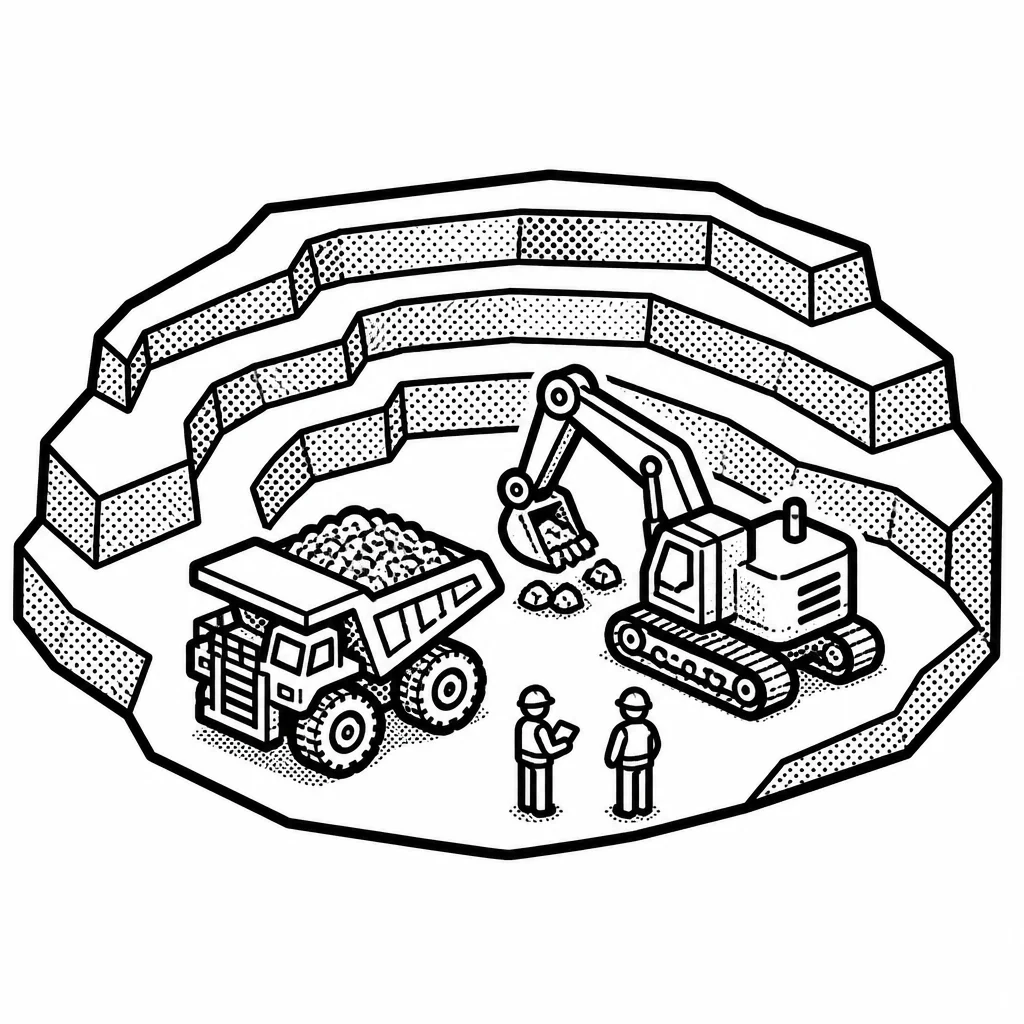
The company is majority-owned by Anglo American, the big mining group, which controls it through a stake of roughly two-thirds. Kumba runs two main operations. Sishen is a large open-pit mine that has been producing for decades, and Kolomela is a newer mine nearby. The ore from both is blended and shipped out through the port of Saldanha Bay on the west coast. Kumba's ore is known for being relatively high quality, which matters because steelmakers want ore that yields more iron with less waste and lower emissions. The business lives and dies by two things it cannot control: the price of iron ore and the reliability of South Africa's rail and port network. Iron ore prices swing hard with Chinese steel demand, and when they fall, Kumba's profits fall fast. The state-owned logistics company Transnet has struggled with locomotive shortages, cable theft, and maintenance backlogs, which has capped how much ore Kumba can actually get to port even when it digs plenty out of the ground. That mismatch between what the mines can produce and what the railway can move is one of the company's biggest headaches.
Because Kumba generates a lot of cash when prices are good and has relatively little need to reinvest in new mega-projects, it has historically paid out most of its earnings to shareholders as dividends. That makes it a favorite among income-focused investors in Johannesburg, but it also means the share price can be a wild ride. The company has been working on extending the life of its mines and on ways to move more ore despite the rail constraints, including using trucks for some of the journey. If you own Kumba, you are essentially making a bet on steel demand, iron ore prices, and whether South Africa can keep its trains running.
Saved answer · last researched 12 Nov 2026