Understand any stock in simple English
Enter a ticker to learn what the company does and how it makes money.
Kion Group AG
Kion makes forklifts, warehouse trucks, and the automated systems that move goods around large warehouses and distribution centers.
Kion is a German company that builds the machines and systems that move stuff around warehouses and factories. Its best-known products are forklifts and warehouse trucks — the yellow machines you see loading pallets — which it sells under brands including Linde and Still. It also runs a business that designs and installs large automated warehouse systems, with conveyor belts, robots, and software that let a distribution center sort and move goods with very little human lifting.
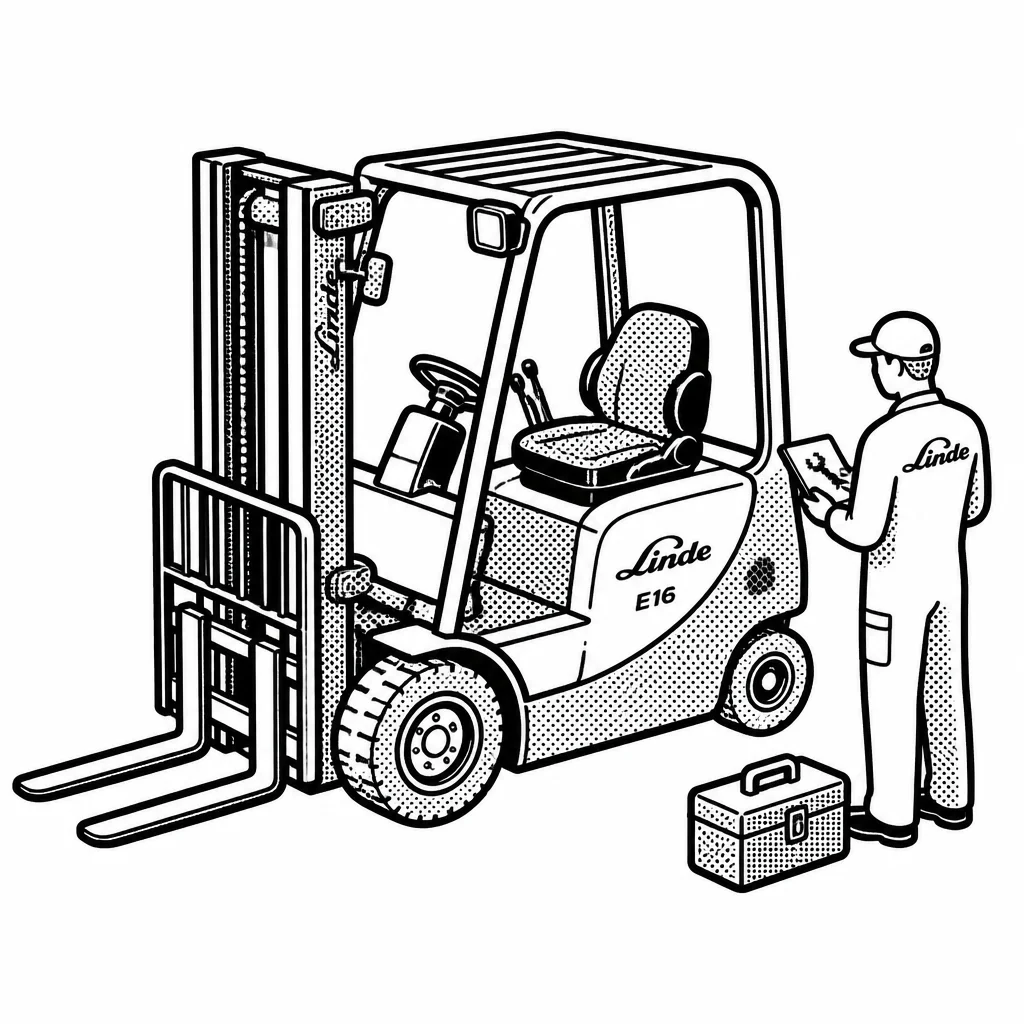
Customers are the companies that live and die by logistics: retailers, e-commerce operations, manufacturers, and third-party logistics firms. They buy Kion's trucks outright or rent them, and they sign service contracts for maintenance and parts, which keeps revenue coming in after the sale. For the big automation projects, Kion acts more like an engineering contractor, designing and building a system and then supporting it. The business is cyclical. When warehouses are expanding and companies are investing, orders pile up; when the economy slows, forklift demand falls and automation projects get delayed. Kion also faces tough competition, including Toyota's material handling business (Toyota) and Jungheinrich, and its automation arm competes with players like Amazon-owned robotics units that big customers might otherwise build themselves. The company sits at the center of a real long-term trend — warehouses needing more throughput with fewer workers — but that trend arrives in lumpy, project-driven waves rather than a smooth line.
One thing that makes Kion interesting is how much of the business is about the boring after-sale stuff: service, spare parts, and fleet management software. That recurring revenue is steadier than selling a forklift once, and it gives the company a cushion when new equipment orders dry up. Kion is based in Frankfurt, Germany, and its shares trade on Xetra.
Saved answer · last researched 12 Nov 2026
Timeline
Linde Spins Off Forklift Business as Kion
Linde had a big forklift business but wanted to focus on its other work, so it bundled the truck brands together and spun them out as a new company called Kion. Two investment firms, KKR and Goldman Sachs, bought the whole thing for about €4 billion. From day one, Kion was one of the world's biggest makers of forklifts and warehouse gear, but it carried a lot of debt from the deal.
Kion Buys Chinese Brand Baoli
To grow in China, Kion partnered with a local forklift brand called Baoli, first as a joint venture and then by buying it outright. That quickly made Kion the largest foreign forklift maker in China. Baoli also went international as a cheaper value brand in Europe and the Americas.
Weichai Power Becomes Anchor Investor
China's Weichai Power put money into Kion and became an important long-term investor. That backing later helped steady Kion's finances and support its growth plans.
Kion Lists on Frankfurt Stock Exchange
Kion went public in a rough market, and the shares were priced at the bottom of the range and fell below the issue price on the first day. But the money raised let Kion pay down the debt that KKR and Goldman Sachs had loaded onto it, giving it freedom to grow abroad.
Kion Acquires Dematic for Automation
Kion bought Dematic, a specialist in warehouse automation, for €1.9 billion. That turned Kion from a forklift maker into a full intralogistics provider—from trucks to fully automated material flow—and set it up for megatrends like digitalization and e-commerce.
Rob Smith Succeeds Gordon Riske as CEO
Rob Smith took over as CEO from Gordon Riske, who had led the company for 14 years. His job was to push the former forklift manufacturer further into automation and digitalization of logistics, and shareholders expected the growth to continue smoothly.
Kion Partners with Nvidia and Accenture
Kion teamed up with Nvidia and Accenture to bring 'Physical AI' into warehouses, using digital twins—computer models of real warehouses—to improve automation and flexibility. It was a clear push toward software and AI-driven supply chain solutions.
Kion Launches Efficiency Program
Facing a tough economy, Kion announced an efficiency program to save roughly €140–160 million a year by 2026, with one-time costs of about €240–260 million in 2025. The goal was to make the company more resilient.
Kion Targets Earnings Growth After Weak 2025
After a weak 2025—revenue down 1.8% to €11.3 billion and net income down about 35%—Kion set its sights on returning to earnings growth in 2026. It bet on warehouse automation, where Supply Chain Solutions orders jumped nearly 40%, and on a savings program of around €150 million a year. The company now called itself 'The Supply Chain Solutions Company', combining trucks, automation, robotics, software and physical AI.