Understand any stock in simple English
State Street SPDR S&P Bank ETF
It is an exchange-traded fund that holds a basket of U.S. bank stocks, giving investors an easy way to own the banking industry in one trade.
The SPDR S&P Bank ETF is a basket of American bank stocks wrapped up and sold as a single share. When you buy it, you are not betting on one bank — you are buying a small slice of dozens of them at once, from giant money-center lenders to regional banks and thrifts. It trades on NYSE Arca all day like a regular stock, so anyone with a brokerage account can buy or sell it in seconds.
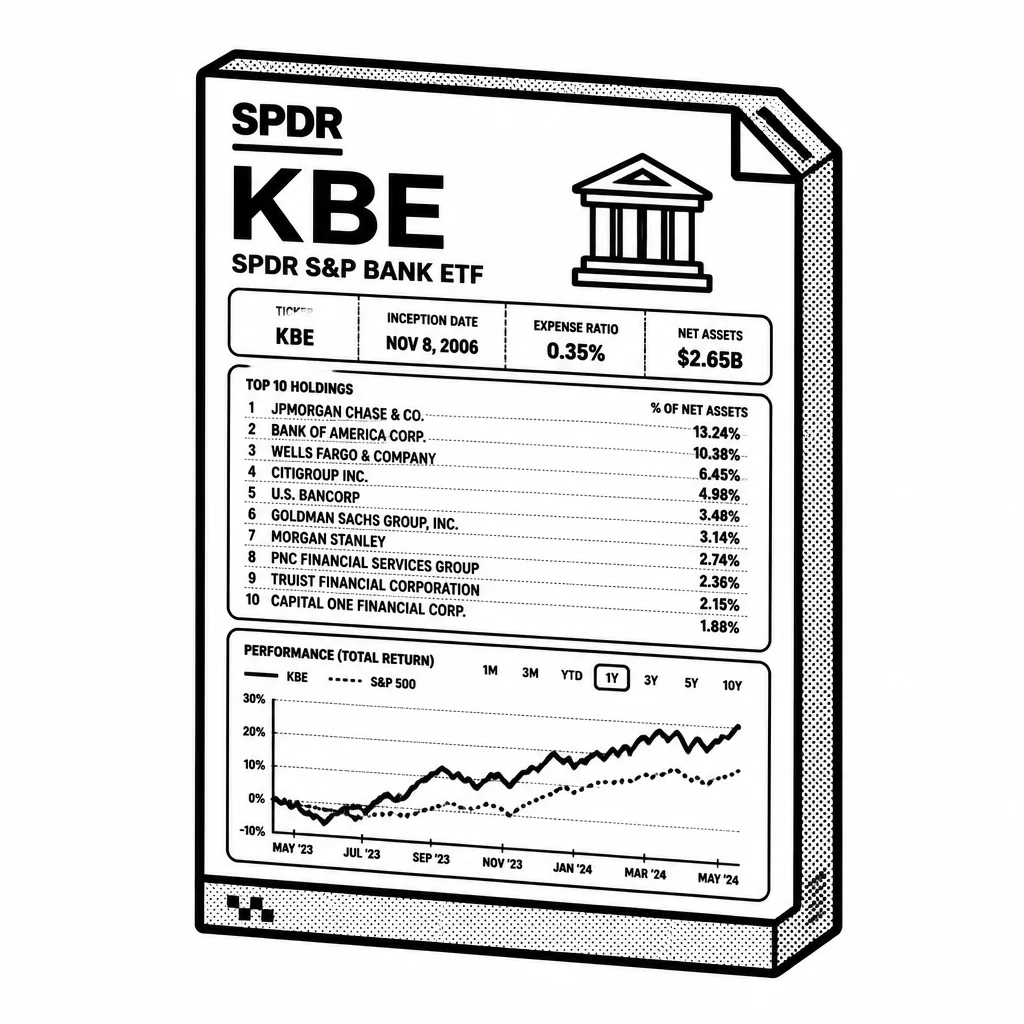
What makes this fund a bit different is how it spreads its money. Most index funds weight their holdings by size, so the biggest companies dominate. This one is equal-weighted: every bank in the index gets roughly the same slice, which means the smaller regional banks matter just as much as the giants. That tilts the fund toward the kind of lenders whose profits rise and fall with interest rates and the health of local economies, and away from sheer size. The fund is run by State Street, one of the biggest asset managers in the world, and it tracks an S&P index of U.S. banking firms. Because it holds bank stocks rather than bonds or cash, it swings around more than a broad market fund — bank shares can jump on rate news and slump when loan losses or deposit worries spook investors. State Street charges a modest annual fee, a small cut of your money each year for doing the basket-building for you.
People reach for this fund when they want a simple, diversified way to own the banking business without picking individual winners. Instead of trying to guess which bank will outperform, an investor gets the whole group in one ticket, plus the ability to trade in and out whenever the market is open.
Saved answer · last researched 17 Nov 2026