Understand any stock in simple English
Enter a ticker to learn what the company does and how it makes money.
JSE Limited
JSE runs South Africa's main stock exchange and the plumbing behind it, earning fees from trading, listings, clearing, and market data.
JSE is the marketplace where South Africans buy and sell shares, bonds, and other financial products. It is the continent's biggest stock exchange by market value, and almost every serious investment in South African public companies passes through it. When a pension fund buys shares of a bank, or a company lists itself to raise money from the public, the JSE is the venue and the referee at the same time.
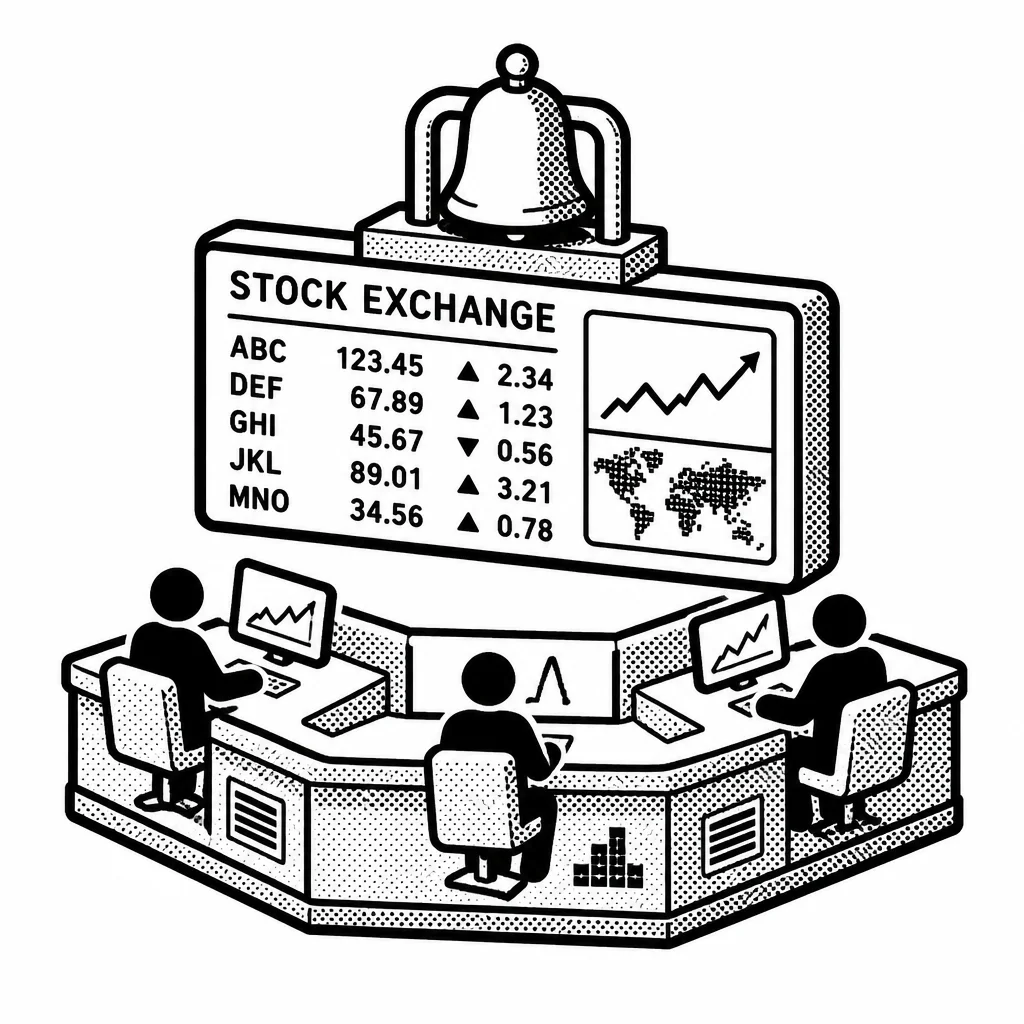
The business earns money from several streams. It charges fees when investors trade shares, when companies list or raise more money, and when it settles and clears those trades afterwards. It also sells market data — the live prices and trading records that banks, brokers, and news outlets pay for — and it operates regulatory services that police the market. Think of a stock exchange as a mix of a shopping mall, a referee, and a toll road: it collects rent from the shops, fees from the players, and a small charge on every trip. The JSE is itself listed on its own exchange, which is a rather neat piece of circularity. Its biggest customers are the banks and brokers that trade through it, plus the companies that list and the asset managers who invest. Its main competition comes from other venues and over-the-counter trading, and from the constant pressure of offshore exchanges that attract South African listings like London Stock Exchange. South Africa's economy and the flow of foreign capital in and out of it are the biggest forces the JSE rides on; when global investors like emerging markets, trading volumes rise, and when they flee, they fall.
One interesting wrinkle: the JSE has been moving into new territory, including a bond exchange and commodity trading, and it pays steady dividends from the fees it collects. Its main risk is that its fortunes are tied to a single economy and a handful of big listings, so a weak South African market or a big company delisting hurts. It is a toll booth on South African capitalism, and the traffic depends on confidence in the country.
Saved answer · last researched 12 Nov 2026