Understand any stock in simple English
Enter a ticker to learn what the company does and how it makes money.
JOYY Inc.
JOYY runs live-streaming and social apps where people watch broadcasts, chat, and send virtual gifts, plus an advertising arm, mostly outside China.
JOYY is a social entertainment company. Its core business is live streaming: people open an app, watch someone sing, chat, play games, or just hang out, and they pay real money to send that host virtual gifts. JOYY takes a cut of those gifts. That is the engine behind most of its revenue, and it is a simple, high-margin business — the content is made by the hosts, not by JOYY.
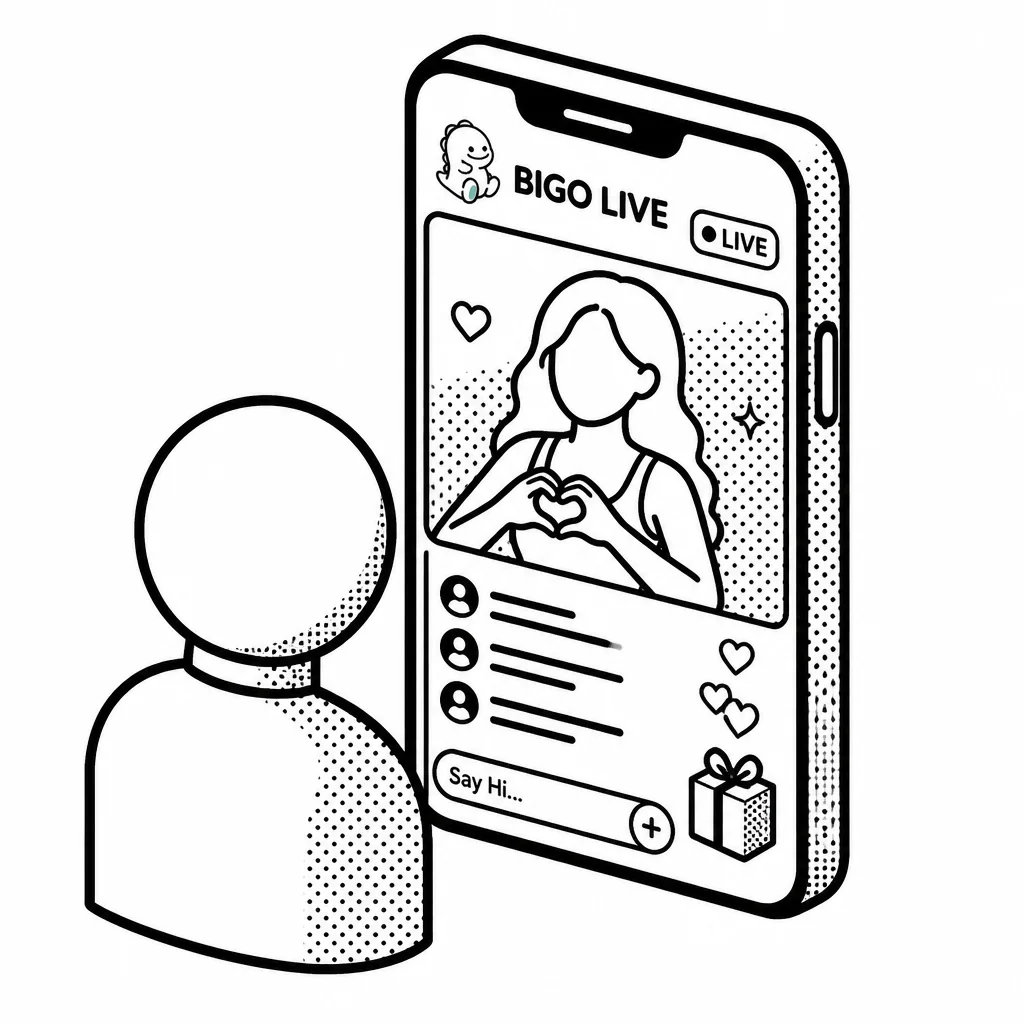
The company runs several of these platforms, each aimed at a different part of the world. Bigo Live is its flagship live-streaming app, popular across Southeast Asia, the Middle East, and other emerging markets. Likee is a short-video app in the same vein as TikTok, and Hago is a small social gaming and chat app. JOYY also has an advertising business that sells ads across its apps. Together these serve users in over 150 countries, with the bulk of the money coming from a relatively small slice of users who spend on gifts. The business has been through a big reshaping. JOYY used to be YY Inc., and its huge cash cow was YY Live, a live-streaming platform in China. In 2020 it sold YY Live to Baidu for about $3.6 billion, and later it sold its stake in Huya, a Chinese game-streaming company. So the JOYY you see today is mostly the international business — Bigo, Likee, and Hago — rather than the China platform it was built on. That pivot matters because it changed the company from a China story into a global one.
Live-streaming gifting is a good business when users are engaged, but it is not a guaranteed one. It depends on keeping hosts and viewers hooked, and it faces stiff competition from short-video giants like ByteDance's TikTok and from local rivals in each market. JOYY's edge is that it went international early and runs many apps across many countries, so no single market sinks it. Its challenge is turning lots of users into steady spenders and keeping them from drifting to free alternatives. The company has also returned cash to shareholders through buybacks and dividends, a sign that management sees the business as a reliable cash generator rather than a hyper-growth bet.
Saved answer · last researched 16 Nov 2026