Understand any stock in simple English
Enter a ticker to learn what the company does and how it makes money.
JB Hi-Fi Limited
JB Hi-Fi sells consumer electronics, home appliances, and software to shoppers in Australia and New Zealand through its stores and online.
JB Hi-Fi is a retailer that sells the gadgets people want and the appliances they need. Walk into one of its stores and you'll find phones, laptops, TVs, headphones, video games, and whitegoods like fridges and washing machines, all packed tightly onto shelves with bright yellow price tags. It sells to ordinary shoppers in Australia and New Zealand, both in physical stores and online, and it has built its reputation on sharp prices and staff who actually know the products.
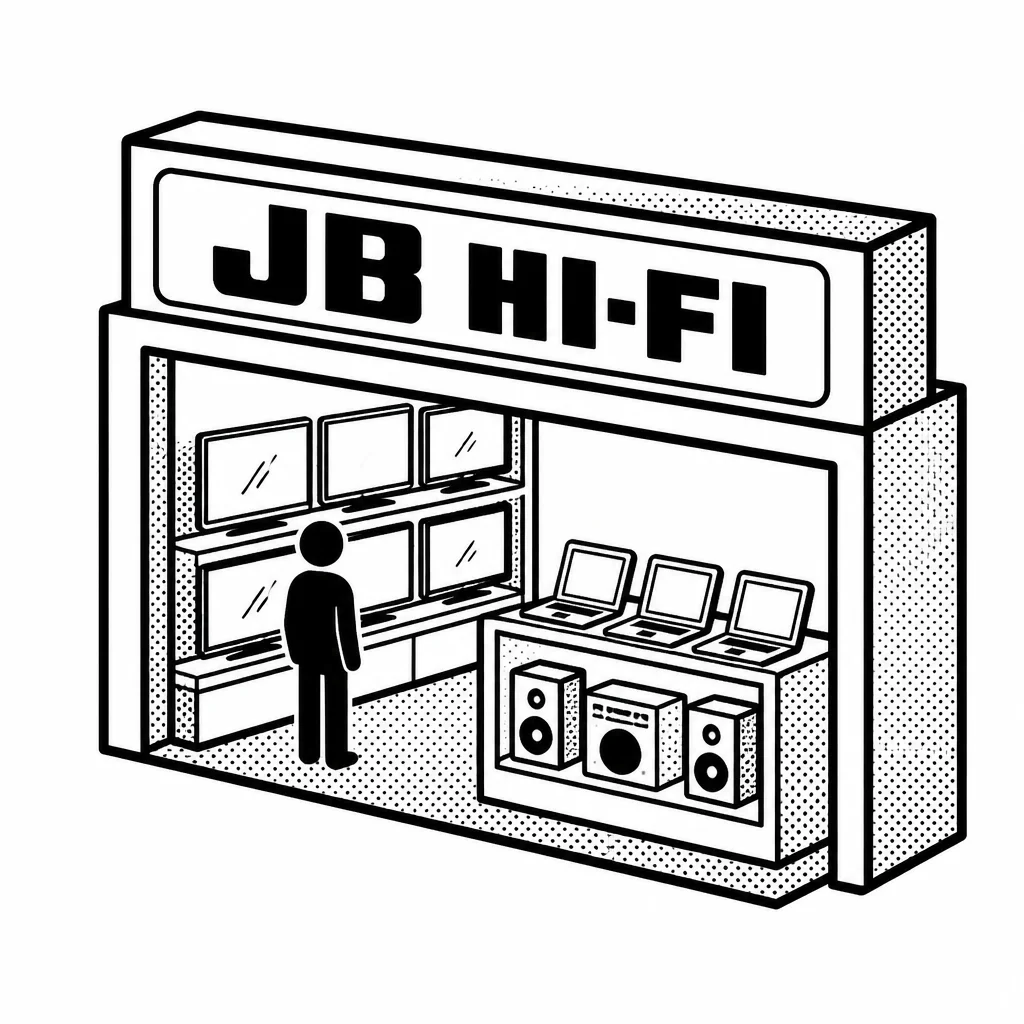
The company runs a few different store brands. Its main JB Hi-Fi stores push consumer electronics, while its JB Hi-Fi Home format leans into appliances and furniture. In New Zealand it operates under the same brand. It also owns The Good Guys, a separate appliance and electronics chain that targets families and home buyers with a slightly different feel and a big emphasis on home delivery and installation. Owning both lets JB Hi-Fi cover the bargain-hunting tech crowd and the household-appliance shopper without cannibalising itself too badly. The business makes money on thin retail margins, so volume and cost control matter enormously. Suppliers like Apple, Samsung, and Sony sell it products at wholesale prices, and JB Hi-Fi marks them up just enough to cover rent, wages, and marketing while staying cheaper than many rivals. It competes with big-box chains and online players, but its scale gives it buying power that smaller shops can't match. It also earns useful extra income from things like extended warranties, mobile phone plans, and financing deals arranged at the counter.
JB Hi-Fi is a cash-generative business that returns a lot of money to shareholders through dividends and share buybacks, and it has a habit of paying special dividends when profits are strong. The pandemic years were unusually kind to it, as locked-down households spent on home offices, TVs, and kitchen upgrades. More recently, sales have cooled as that spending boom faded and cost-of-living pressure squeezed shoppers. The company's challenge is simple to state and hard to solve: keep growing when the big purchase everyone already made is sitting in their lounge room.
Saved answer · last researched 12 Nov 2026