Understand any stock in simple English
Enter a ticker to learn what the company does and how it makes money.
iShares U.S. Energy ETF
It is an exchange-traded fund that holds a basket of large U.S. energy stocks, letting investors own the whole sector in one trade.
The iShares U.S. Energy ETF is a simple idea wrapped in a slightly technical name: it is a single fund you can buy like a stock that gives you a slice of the biggest energy companies in America. Instead of picking one oil producer or one refinery and hoping you chose right, you buy the whole group at once. The fund tracks an index of large-cap U.S. energy firms, so its fortunes rise and fall with the sector as a whole.
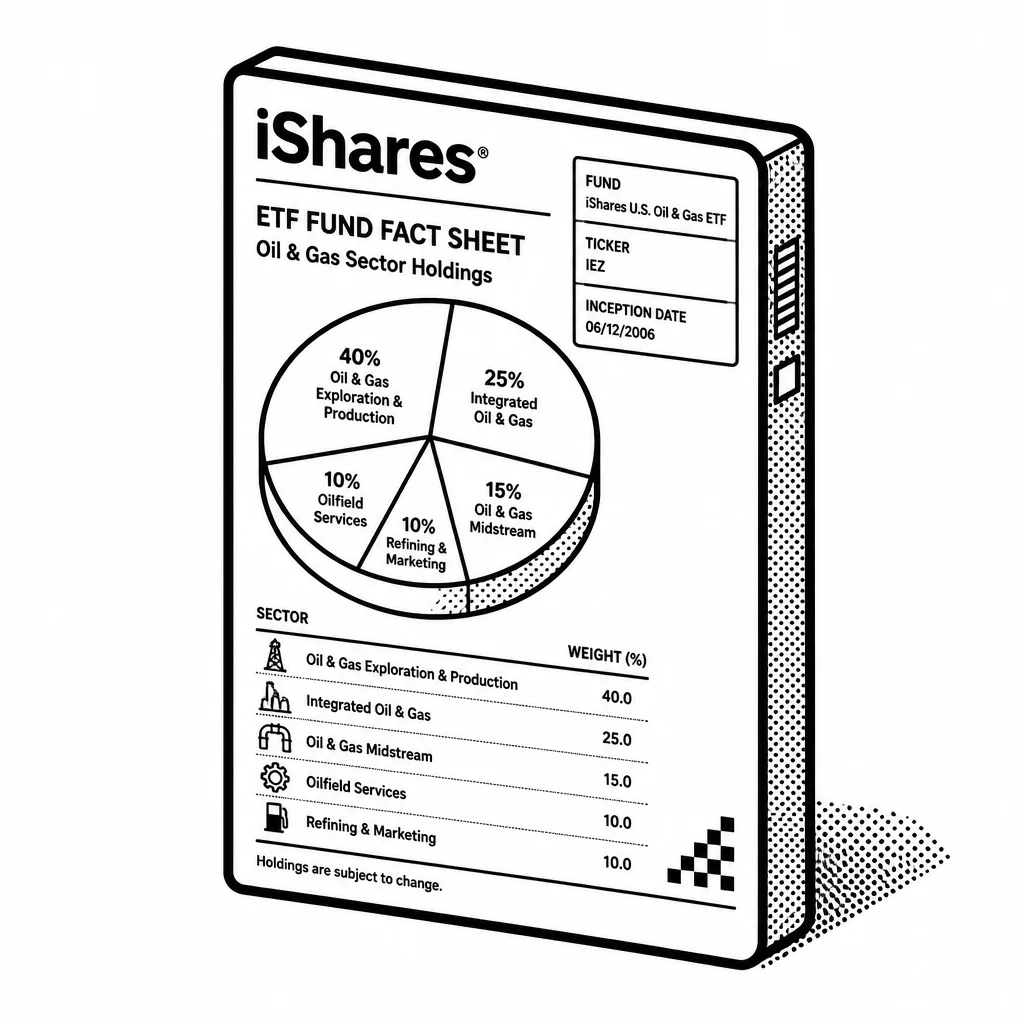
What is actually inside? Think of the companies that find oil and gas, drill it, pump it, and refine it into the fuel that runs cars and planes — plus the outfits that build the equipment and provide the services to make all that happen. When you own this fund, you own a small piece of that entire supply chain. When energy prices climb, these companies tend to earn more, and the fund tends to rise with them. The appeal is convenience and diversification. An investor who is bullish on energy but does not want to gamble on a single company can get broad exposure in one purchase. The trade-off is that you get the sector's bad years too, and energy is a famously boom-and-bust business — oil prices swing, and these stocks swing harder. The fund charges a small annual fee to cover the cost of running and rebalancing the basket.
One wrinkle worth knowing: the fund used to carry a different name, iShares Dow Jones US Energy ETF, before it was renamed to reflect its current index. That is common for ETFs — the wrapper stays the same, the label gets updated. For most investors, what matters is the holdings and the cost, not the branding on the box.
Saved answer · last researched 16 Nov 2026