Understand any stock in simple English
Enter a ticker to learn what the company does and how it makes money.
iShares S&P 500 Growth ETF
It is a giant exchange-traded fund that lets ordinary investors own a basket of large US companies expected to grow their earnings fast, all in one purchase.
The iShares S&P 500 Growth ETF is a single fund that holds a big basket of large American companies chosen for one trait: growth. It doesn't pick stocks itself. It simply copies the S&P 500 Growth Index, which scoops up the roughly half of the S&P 500 whose sales and profits are growing faster than the rest. Buy one share and you own a sliver of hundreds of businesses at once, from chipmakers to software firms to consumer brands, rather than betting on any single one.
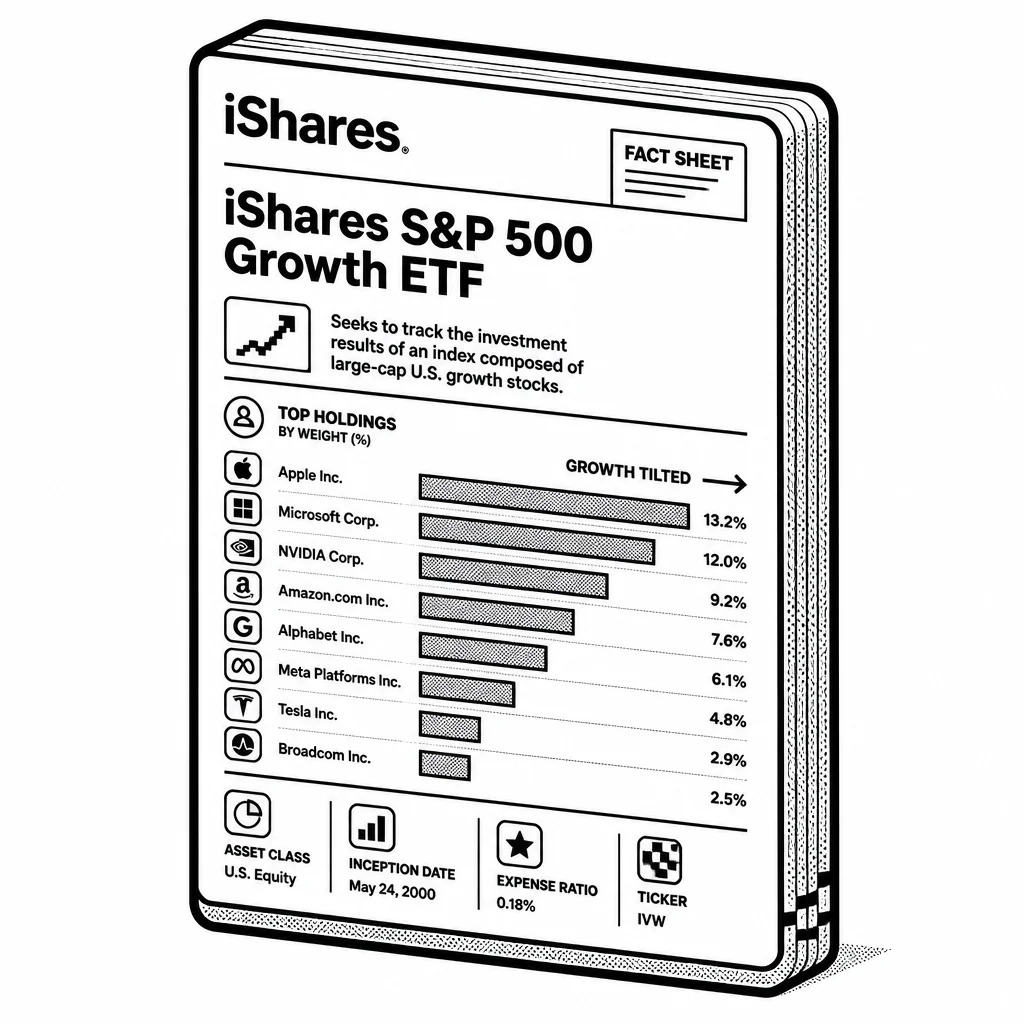
The thing to understand is how the line gets drawn. The S&P 500 already holds America's 500 biggest public companies. The "growth" version sorts those 500 by measures like earnings growth and sales momentum, then keeps the fast movers and drops the slow, steady, dividend-heavy names. It's a mirror of the market's optimism: the fund leans toward companies the market expects to expand, not the ones paying out cash today. That tilt means it can run hotter in booms and fall harder when growth stories cool. Investors use it as a cheap, simple building block. Instead of researching individual stocks, they buy a piece of the whole growth engine of corporate America and hold it, often for years. The fund's yearly fee is tiny — a few dollars per $10,000 invested — because there's no team of analysts making judgment calls; the index does the deciding. That low cost and one-click diversification are the main reasons it exists and why so much money sits in it.
The fund is run by BlackRock, the world's largest asset manager, under its iShares brand, and it trades on the NYSE Arca exchange like a normal stock. Its strength is convenience and scale. Its weakness is that it offers zero protection from a growth downturn, and it concentrates heavily in a handful of giant technology names that dominate the growth index — so owning it is, in practice, a big bet on those few companies staying on top.
Saved answer · last researched 16 Nov 2026