Understand any stock in simple English
Enter a ticker to learn what the company does and how it makes money.
InSilico Medicine Cayman TopCo
Insilico Medicine uses artificial intelligence to discover and design new drugs, and it also sells the AI software it built to do that.
Insilico Medicine is a drug-discovery company that uses artificial intelligence to invent new medicines. Instead of relying only on human chemists sketching molecules and testing them one by one in a lab, it feeds biological and chemical data into its own AI models, which propose brand-new drug molecules aimed at a specific disease, and then its scientists test those ideas in the real world to see which ones actually work.
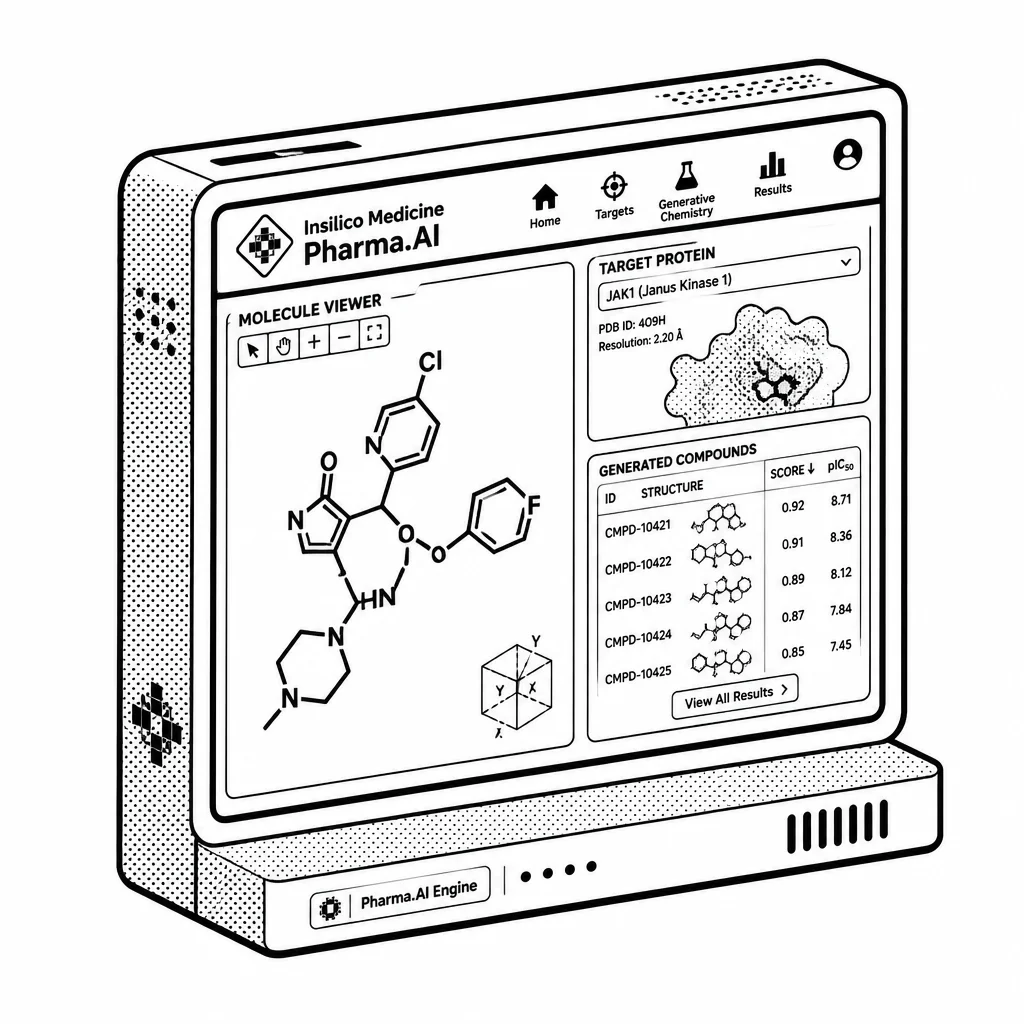
The company has two ways of making money. The bigger and more exciting bet is its own pipeline of drug candidates. Its best-known is a pill for a lung-scarring disease called idiopathic pulmonary fibrosis, which has reached mid-stage human trials, making it one of the first AI-discovered drugs to get that far. It also partners with large drugmakers, which pay it upfront, fund the research, and promise bigger payments if a drug succeeds and reaches the market. On the side, it licenses its AI discovery software to other companies that want the same tools for their own research. Its pitch is speed and cost. Drug discovery is brutal: it famously takes around a decade and billions of dollars to turn an idea into an approved medicine, because most candidates fail. Insilico says its AI can find promising molecules in months rather than years and throw out bad ones early, which matters enormously when each failed attempt is so expensive. The catch is that this is still a young, unproven idea — the world is watching to see whether an AI-designed drug actually wins approval and helps patients. A drug that fascinates the industry but fails in trials would be a costly lesson.
The company is headquartered in Hong Kong, with major operations in Shanghai and Boston, and it raised over $300 million from investors including Nvidia's venture arm. It went public on the OTC market, which is a lightly regulated venue mostly for smaller or foreign companies rather than a major exchange like Nasdaq. So investors can buy shares, but with less disclosure and trading activity than a big listing. Competitors are a mix: traditional drugmakers like Eli Lilly and big AI-focused players such as Schrödinger, plus a wave of startups chasing the same idea. The whole business rests on one question — whether AI can genuinely make better drugs faster — and that is still being answered in the lab and the clinic.
Saved answer · last researched 8 Nov 2026
BIG PICTURE
Insilico's AI has named 35 drug candidates since 2021, most still years from patients
- 35% Drug candidates nominated with its AI since 2021
- 65% Not reported
A drug candidate is the point where a molecule is picked to be tested seriously, long before it reaches patients. Insilico says its AI platform has produced 35 of them since 2021. Each one can be licensed to a bigger drugmaker, which is how Insilico earns much of its money. A large pile of candidates gives it more chances to sign those deals. Source: Simply Wall Street, data from 2026
Timeline
Alex Zhavoronkov Founds Insilico
Alex Zhavoronkov had an unusual mix of backgrounds: business, biotech, and the physics and math behind computing. He started a company in Delaware around a big bet — that generative AI could design new medicines, and that the real product was a software platform for drug hunting called Pharma.AI. At the time, that was a strange idea. Most people thought drug discovery was a lab job done by humans in white coats.
Hong Kong Headquarters and Its First Drug Project
For years the company mostly built software. Then it set up headquarters in Hong Kong and finally launched its first actual drug discovery project. That was the moment it stopped being just a toolmaker and started owning a pipeline of its own medicines — a much riskier, much more expensive kind of business.
Fosun Deal and the First Big Checks
A partnership with Fosun, plus collaboration deals with Sanofi, brought in tens of millions of dollars upfront. This was the lightbulb moment for the business model: instead of only selling software, the company could license out its discoveries to big drugmakers. Those deals would become the core way it made money.
Filing to List in Hong Kong
The company filed to go public in Hong Kong, hoping to become China's first listed AI drug discovery firm. But the paperwork put its problems on full display: hundreds of millions of dollars in losses over just two years, and not a single drug on the market. Investors now had to decide whether the promise was worth the wait.
The Big Hong Kong IPO
The listing finally happened at the very end of the year, and it was the largest biotech IPO in Hong Kong that year. Big names — Eli Lilly, Tencent and Temasek — signed on as cornerstone investors, the kind of backers who lend credibility. After years of spending, the company now had public money behind it.
First Profitable Half-Year
Then came the payoff: the first profitable half-year in the company's history, with revenue nearly tripling and real net profit. The money came from licensing and collaboration deals — with Lilly, Servier and Takeda among the partners — worth billions in signed value. And its lead AI-designed lung drug, rentosertib, moved into late-stage human trials. The bet on AI and out-licensing had turned into an actual business.