Understand any stock in simple English
Enter a ticker to learn what the company does and how it makes money.
Innodata Inc.
Innodata helps big companies build and improve artificial intelligence by preparing and labeling the data those AI systems learn from.
Innodata is in the business of feeding artificial intelligence. Big companies in technology, banking, insurance, and healthcare hire it to collect, clean up, and label the enormous piles of text, images, and other data that AI models need before they can learn to do anything useful. Without that human groundwork, the AI is just a clever machine staring at a mess.
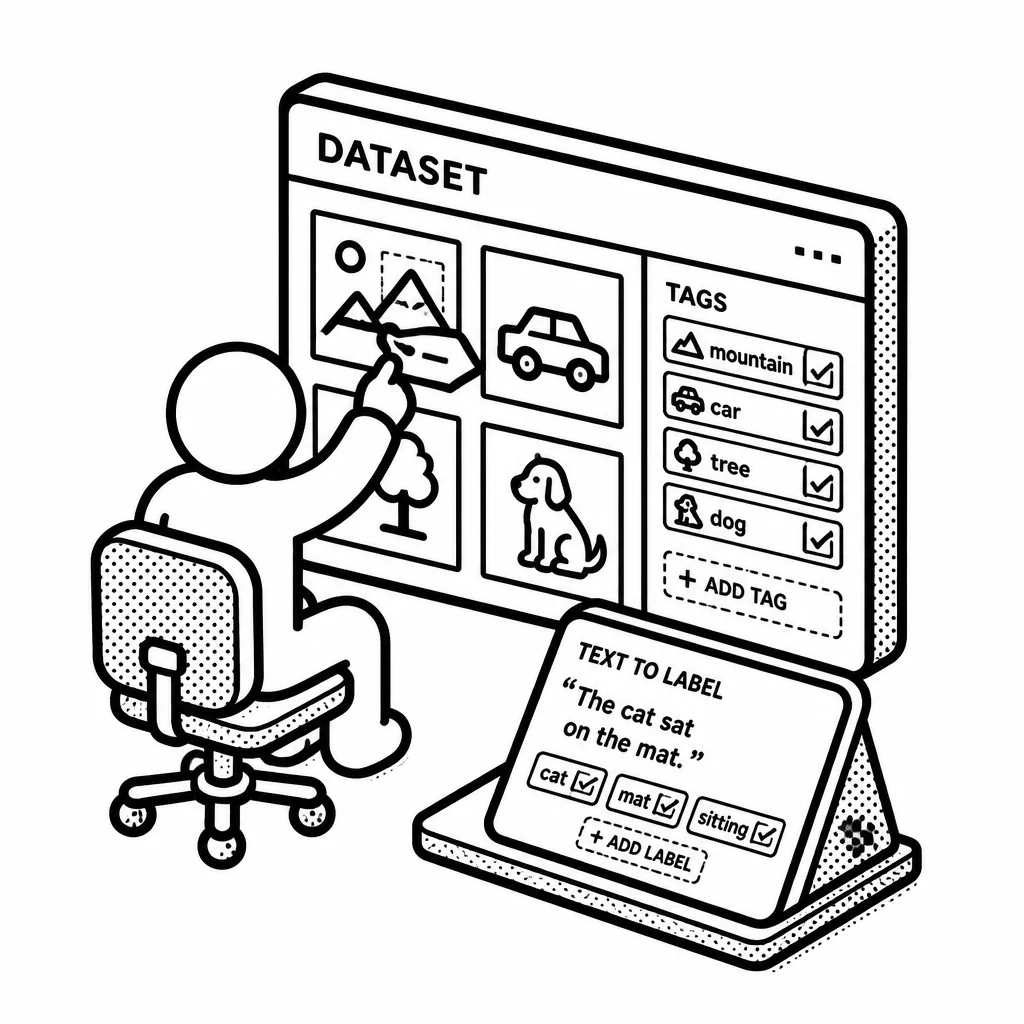
Here is the basic problem it solves. An AI model learns from examples, but raw data is messy — scanned documents, customer emails, medical records, web pages. Someone has to turn that chaos into neat, tagged examples a machine can actually learn from, and that takes careful human judgment plus clever software. Innodata does that work with a global workforce and its own tools, and it also builds the pipelines that keep the data flowing for AI projects. The company has been around since the 1980s, first as a digital publishing and data-processing shop, then gradually shifting toward the AI training-data boom that took off in the 2020s. That shift turned a quiet back-office vendor into a stock investors suddenly cared about, because every company racing to build AI needs exactly the kind of grunt work Innodata sells. Its big selling point is a mix of human reviewers and automation, plus deep experience handling sensitive industries where privacy rules are strict.
The business is real but not glamorous. Its customers are mostly large corporations, its competition includes other data-labeling and AI-services firms as well as big tech companies that do this work in-house, and revenue can swing with a handful of large contracts. The upside is that AI keeps needing good data, and the downside is that this is labor-heavy, price-competitive work where scale and trust are everything.
Saved answer · last researched 12 Nov 2026
BIG PICTURE
Innodata's biggest customer went from about a tenth of sales to nearly three-fifths
- 58% Revenue from its single largest customer
- 42% Revenue from all other customers
In 2023, Innodata's largest customer brought in about 10% of its sales. By 2025, that same kind of account made up roughly 58%, and its usual contracts can be ended with just 30 to 90 days' notice. Most of the money comes from a handful of tech giants paying Innodata to prepare and grade the data their AI models learn from. Source: 矽基前沿 [Si]gnals, citing Innodata 10-K filings, data from 2025
Timeline
Innodata Starts With Digitized Content
Innodata opened in New York City with a simple job: take piles of information and turn it into clean digital content. The clever part wasn't the typing. It was building quality checks and audits, so customers could trust that the digital copy was correct. That habit of checking the work would stick with the company for decades.
Innodata Goes Public
By the early 1990s the company had grown to more than a thousand employees around the world, and it went public soon after. A small New York digitizing shop was now a global operation.
Isogen Brings Publishing Tech
Innodata bought Isogen International, adding tools for managing and publishing content, plus standards for organizing information and outsourcing services. It was a step up from doing the work to also owning the machinery that made the work possible.
The Company Becomes Innodata Isogen
The company formally took the name Innodata Isogen, a sign that the two businesses were now one. The name was a label for a real change: content services and content technology under one roof.
The Name Goes Back to Innodata
Stockholders approved a change back to the simpler Innodata Inc. The Isogen era was over, and the company wanted its old name back.
MediaMiser and Bulldog Reporter Added
Innodata bought MediaMiser, which monitored and analyzed media coverage, and later picked up the assets of Bulldog Reporter, a PR company. These were moves into the news and public relations world, adjacent to the content work it already did.
Wolfpack Research Attacks the AI Story
Wolfpack Research published a report calling Innodata's AI "smoke and mirrors," arguing the company leaned on low-wage offshore labor rather than special technology. The stock fell about 30% in a day, and a class action lawsuit followed. The fight over what Innodata really was, a labor business or an AI business, was now out in the open.
Record Results Send Shares Soaring
The stock more than doubled after record first-quarter results, with sales up 54% from a year earlier. A new contract with an unnamed AI hyperscaler was expected to bring in $51 million in 2026. The doubters from the Wolfpack report suddenly had a lot to answer for.
Rahul Singhal Becomes CEO
Rahul Singhal took over as President and CEO, while founder Jack Abuhoff moved up to Executive Chairman. The handoff came right after record second-quarter results, with revenue up 58% from a year earlier. A founder-led company was becoming a professionally led one.
A Major Customer Program Ends
A big customer program ended in mid-October, expected to cut fourth-quarter revenue by about $12 million. The stock fell 15.5% in a week as worries about customer concentration and margins came back. The two largest customers had generated about 73% of revenue in the first nine months of the year. The old question, how much of this business rests on a few big clients, returned just as the AI boom looked strongest.