Understand any stock in simple English
Enter a ticker to learn what the company does and how it makes money.
ING Groep N.V.
ING is a big bank that takes deposits, lends money for mortgages and business loans, and moves payments for millions of customers in Europe and beyond.
ING is a bank, but it built its name on something most old banks treated as a boring side job: the internet. Long before "digital banking" was a buzzword, ING was pushing customers to do their banking online and through an app instead of standing in line at a branch. Today it serves millions of retail customers — people with checking accounts, savings, mortgages, and personal loans — mostly in the Netherlands, Belgium, Germany, and a handful of other European countries. It also runs a large wholesale banking arm that lends to and advises big companies, and a smaller operation in its home market that handles insurance and pension products.
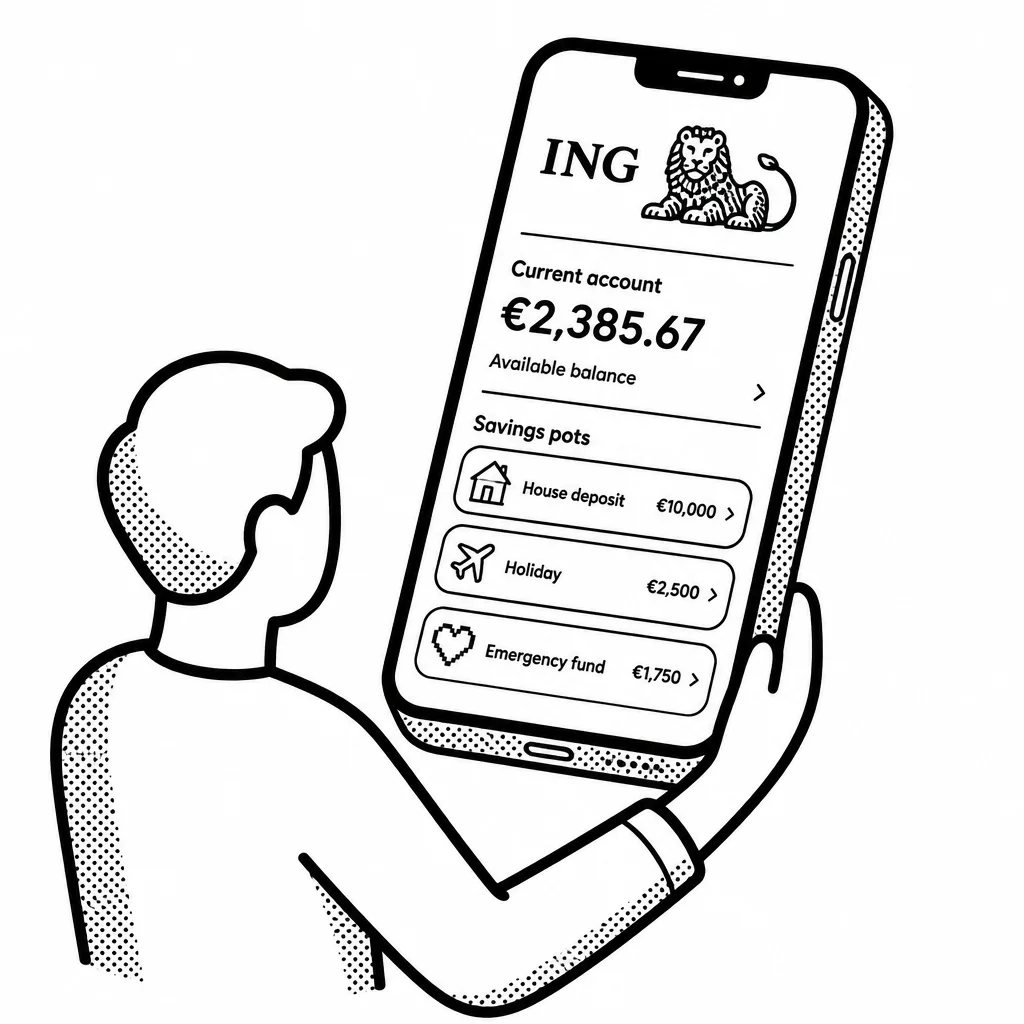
The core money machine works like this. ING pays you a little interest on the money you park in your savings account, then lends that money out as mortgages and business loans at a higher rate. The gap between what it pays depositors and what it charges borrowers is the spread, and that spread is the engine. On top of that, ING earns fees for payments, asset management, and advising corporate clients on things like raising money or managing risk. It is a plain-vanilla lender at heart, which is a strength: simple loans and deposits are easier to understand and control than the exotic stuff that blew up other banks in 2008. What makes ING interesting is how it got here. The company was formed from the merger of insurance and banking businesses, and for years it was a sprawling conglomerate. After the 2008 financial crisis it took a government bailout, then paid it back and split itself apart, selling off its insurance arm and slimming down to focus on banking. That reset shaped the ING you see now: leaner, more digital, and mostly European. Its app-first model keeps costs down because it doesn't need thousands of branches, but it also faces fierce competition from local banks and digital challengers in each market, and low interest rates can squeeze that lending spread.
ING is a public company listed on the New York Stock Exchange and in Amsterdam, and it returns a lot of its profit to shareholders through dividends and share buybacks. The bank is also a heavy user of technology and is investing in digital tools and data to keep customers sticky. The big risks are familiar to any lender: a weak economy means more borrowers who can't pay, and tight regulation in Europe keeps a close eye on how much capital it must hold. It is, in short, a large, simple, digital-leaning European bank that makes its money on the oldest trick in finance — borrowing cheap and lending dear — and has spent the last fifteen years proving it can do that without the drama.
Saved answer · last researched 15 Nov 2026