Understand any stock in simple English
Enter a ticker to learn what the company does and how it makes money.
iShares MSCI India ETF
It is an exchange-traded fund that lets investors buy a basket of large and mid-sized Indian companies in one trade.
The iShares MSCI India ETF is a fund, not a company that makes or sells anything. What it sells is a simple idea: a way to own a slice of India's stock market without opening a brokerage account in Mumbai or picking individual stocks. An investor buys shares of the fund on the NYSE, just like buying shares of Apple, and the fund uses that money to hold a broad basket of Indian companies.
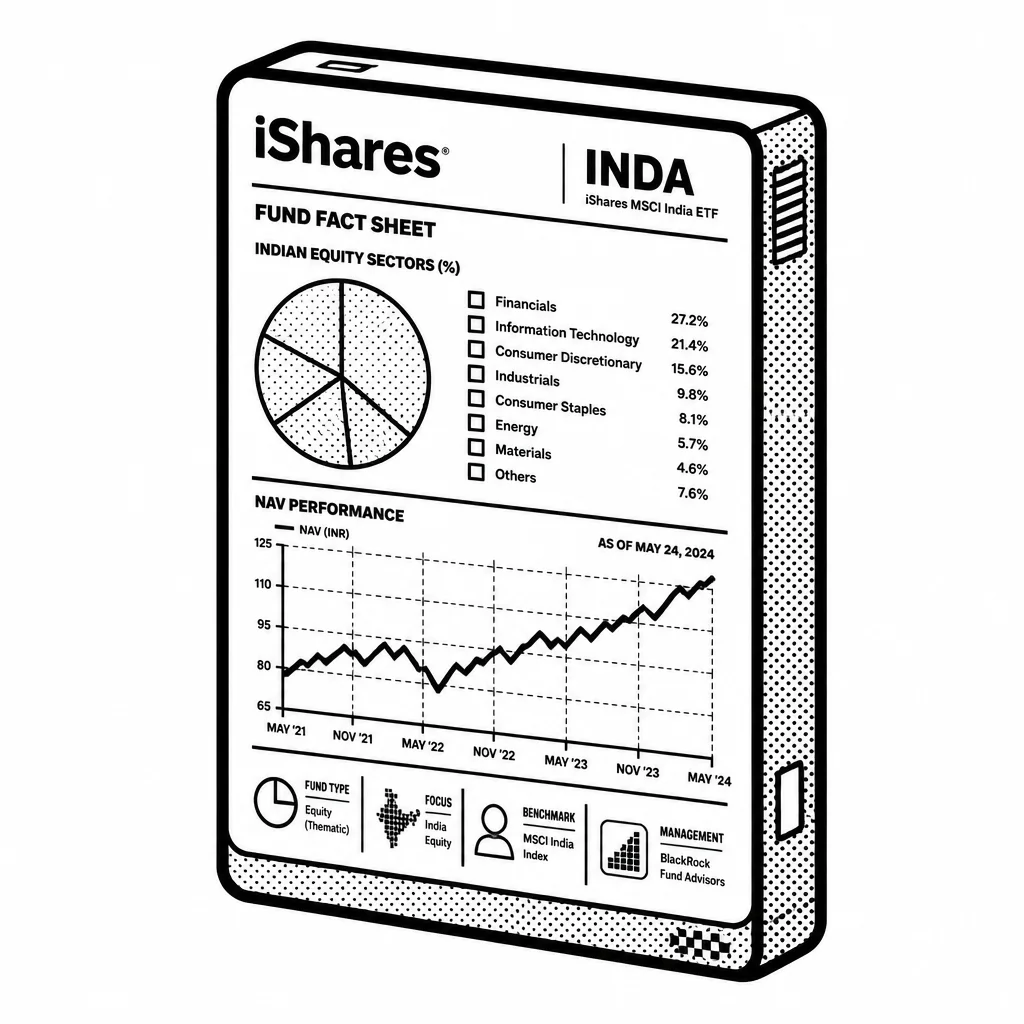
The fund tracks the MSCI India Index, which covers large and mid-sized Indian firms across sectors like financials, technology, energy, and consumer goods. When you own a share, you own a tiny piece of banks, software exporters, and industrial companies that power one of the world's fastest-growing major economies. The fund is managed by BlackRock's iShares unit, the biggest ETF issuer in the world. Why do investors pay for this? Convenience and diversification. Buying Indian stocks directly can be a headache — foreign brokerage rules, currency conversion, limited access. The fund wraps all of that into one ticker that trades in US dollars during normal market hours. It collects a small annual fee, currently around 0.6% of assets, to cover management and index licensing costs.
The catch is that this is a pure exposure play. It rises and falls with Indian markets and the rupee-dollar exchange rate, and it offers no clever hedging or downside protection. It competes with other India-focused funds like the WisdomTree India Earnings Fund and the iShares MSCI India Small-Cap ETF, but its size and liquidity have made it the default choice for many US investors wanting India in their portfolio.
Saved answer · last researched 16 Nov 2026