Understand any stock in simple English
Enter a ticker to learn what the company does and how it makes money.
iShares International Select Dividend ETF
It is an exchange-traded fund that holds a basket of high-dividend stocks from developed markets outside the US, collecting their dividends for investors.
This is a fund, not a company that makes or sells anything. It holds a basket of stocks from developed countries outside the United States — places like Canada, the UK, Europe, Australia, and Japan — and the whole point of the basket is income. The fund picks stocks that pay high dividends, meaning these are established businesses handing a chunk of their profits back to shareholders every year, and it weights the holdings so the biggest payers count for more. An investor buys a share of the fund and, in return, gets a slice of all those dividends as regular cash payments, plus whatever the stock prices do.
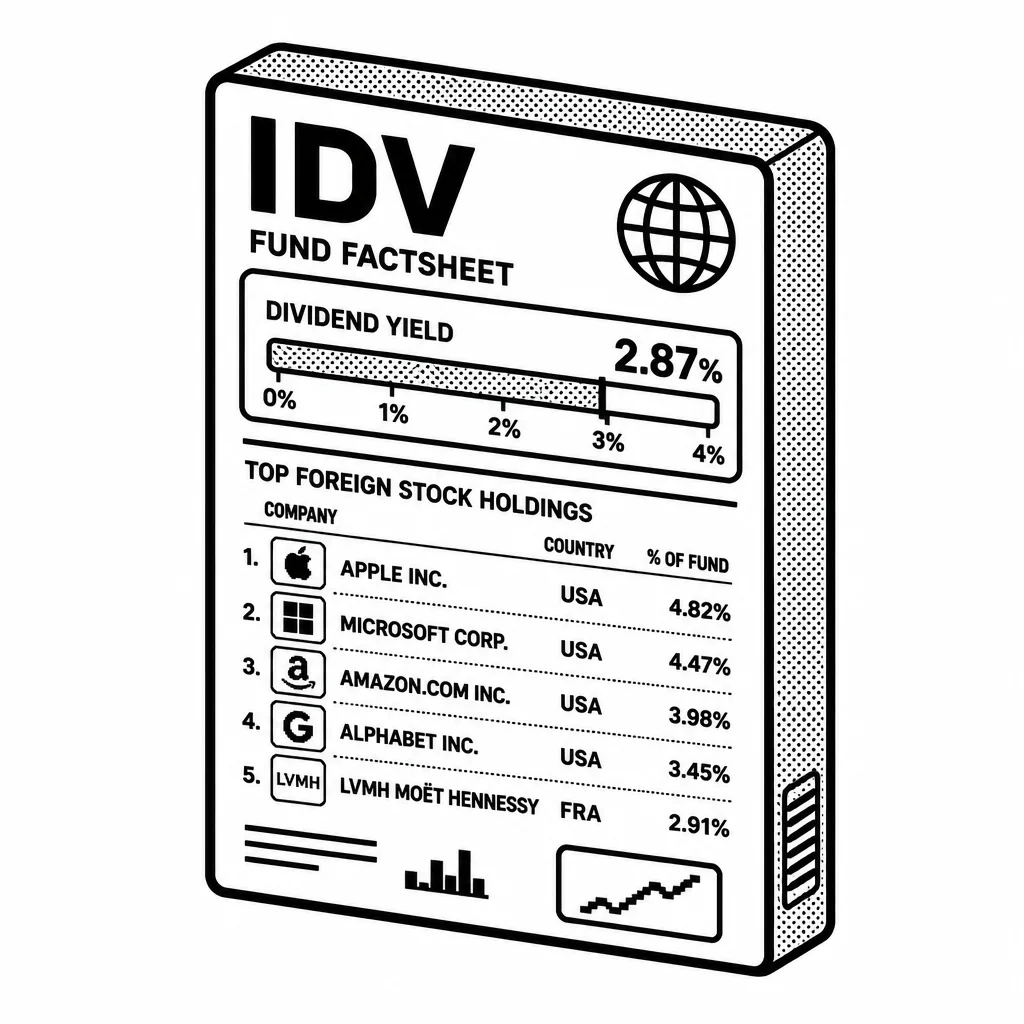
The thinking behind it is simple. Lots of investors want steady cash from their portfolio rather than betting on fast-growing tech names. Instead of researching dozens of foreign stocks and buying each one, they buy this single fund and let it do the picking. It screens for companies with a track record of paying dividends, then tilts toward the ones with the highest yields. That makes it a one-stop income tool for people who want exposure outside the US without buying individual shares. The trade-off is real and worth saying plainly. Chasing the highest dividends can lead you into companies that are cheap for a reason — a stock price that has fallen makes the dividend yield look fat, even if the business is struggling. So a high-yield fund can end up holding more than its share of slow-growing or troubled firms, and the payouts can shrink when companies cut their dividends. It also means the fund behaves differently from a broad index: it leans on sectors like financials and utilities, which tend to pay well, and skips many of the growth stories that drive other markets.
The fund is run by iShares, the giant ETF business owned by BlackRock, which collects a small management fee for running it. Investors pay that fee out of the fund's assets, so the cost shows up quietly in the returns rather than as a bill. For people who want foreign dividend income in one click, the appeal is convenience and diversification; the risk is that "high dividend" and "good business" are not always the same thing.
Saved answer · last researched 16 Nov 2026