Understand any stock in simple English
Enter a ticker to learn what the company does and how it makes money.
Vodafone Idea Limited
Vodafone Idea is an Indian telecom operator that sells mobile voice and data plans to hundreds of millions of customers.
Vodafone Idea is one of India's big mobile network operators, selling phone calls, mobile data, and extras like caller tunes and OTT bundles to prepaid and postpaid customers across the country. You pay it for a recharge or a monthly bill; it keeps your SIM connected, carries your calls and data over its network, and charges you for the usage. It also earns from enterprise and broadband services, though the core of the business is the phone in your pocket.
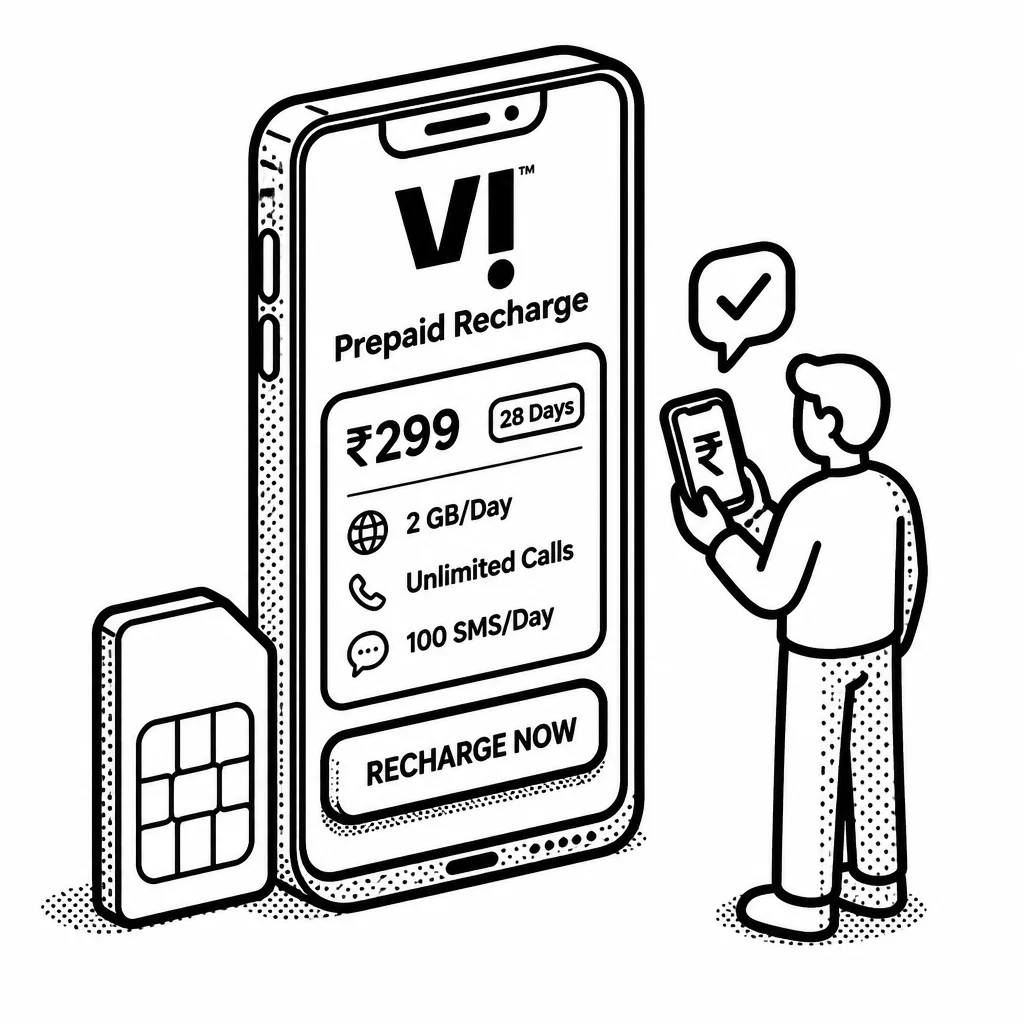
The company was formed in 2018 when Vodafone Group's Indian arm merged with Idea Cellular, combining India's number two and number three operators to take on Reliance Industries's disruptive Jio and Bharti Airtel. The merger created a business with a huge customer base but also a huge problem: it inherited heavy debt and a fierce price war, and it has lost subscribers to Jio and Airtel ever since. India's telecom market is effectively a three-way fight, and Vodafone Idea is the smallest and most financially stretched of the three. The most important thing to understand about Vodafone Idea is the government's role. In 2021 it opted for a four-year moratorium on adjusted gross revenue and spectrum dues, converting some into government equity, which made the government its largest shareholder. Its debt pile and looming payment deadlines have repeatedly required government relief and repeated capital raises from its promoters, Vodafone Group and the Aditya Birla Group's Grasim Industries. The company has struggled to fund the network investment needed to keep pace, which is why subscriber losses have persisted. What it controls is the network itself — spectrum, towers, and the infrastructure that carries traffic — and it needs constant spending to keep that network competitive. Money it raises goes largely into 4G and 5G rollout and paying down debt rather than dividends; the company has not paid a dividend for years. It is a business whose survival and recovery depend less on clever strategy than on whether it can raise enough money, and charge enough per customer, to service its debt while building a network customers actually want to use.
The swing factor is average revenue per user: if it can raise prices and hold subscribers, the cash engine improves, and if it can't, the debt spiral tightens. It's a big, essential network caught in a hard place — a real business with real customers, but one whose balance sheet is the story as much as its service.
Saved answer · last researched 12 Nov 2026