Understand any stock in simple English
Enter a ticker to learn what the company does and how it makes money.
ICICI Prudential Asset Management Company Limited
It manages mutual funds and other investment products that pool people's money and invest it in stocks, bonds, and other assets.
ICICI Prudential Mutual Fund is one of India's largest money managers. It takes money from ordinary savers and big institutions and invests it on their behalf, mostly through mutual funds — baskets of stocks, bonds, or a mix of both that anyone can buy into. Instead of picking stocks themselves, investors buy units of a fund, and a team of professional managers decides what the fund owns.
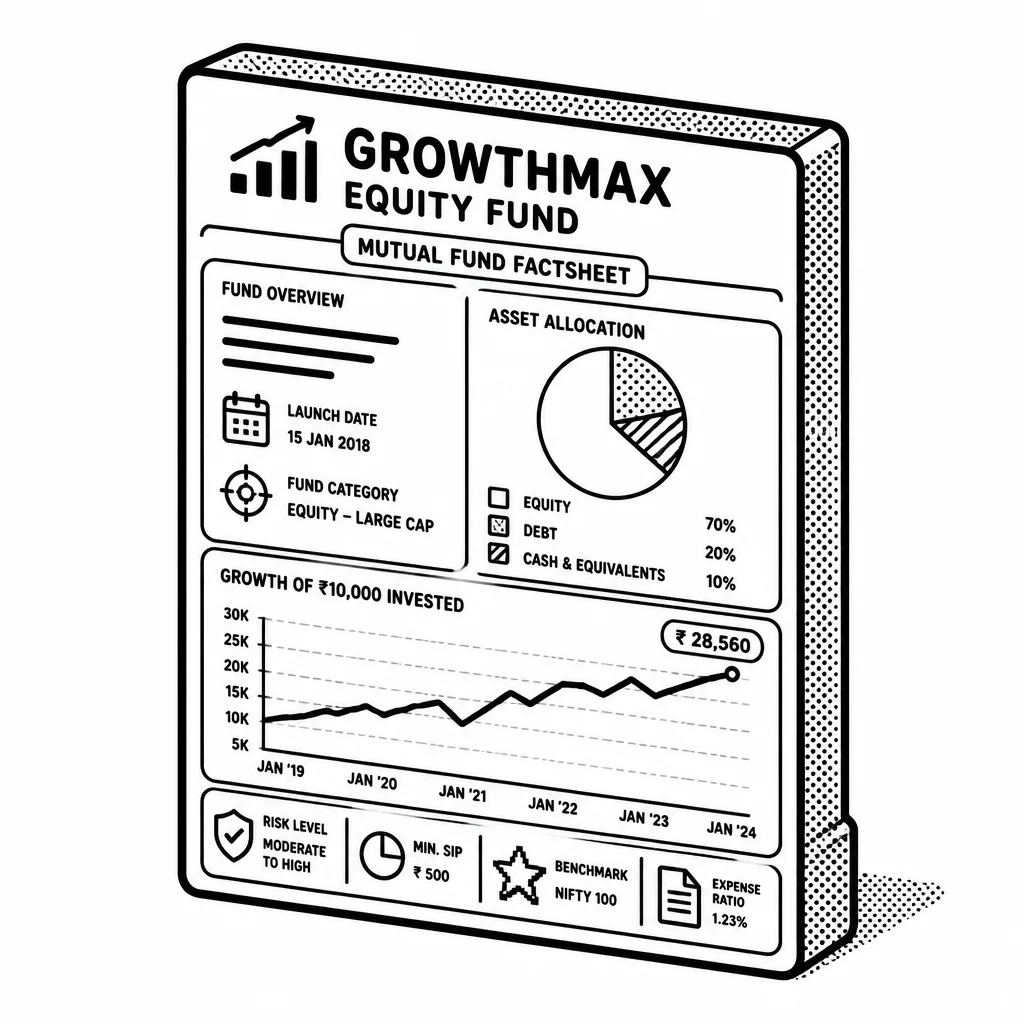
The business runs on a simple engine: a small fee on the money it manages. If a fund charges roughly 1% a year and manages a huge pile of assets, the fees add up fast, and those fees arrive steadily whether markets are up or down. Beyond plain mutual funds, the company also runs portfolio management services for wealthier clients and alternative investment funds for sophisticated investors, plus advisory services for individuals and institutions. It also sells through a wide network of distributors and agents across India, which is how a lot of ordinary households end up in its funds without ever walking into an office. The tailwind is structural. Indians are steadily moving savings out of gold and bank deposits and into market-linked products, and the biggest fund houses capture a large share of that flow. Scale matters enormously in this business: the cost of running a fund barely rises as it gets bigger, so the largest players earn fat margins. The risks are just as real — performance that disappoints can trigger investor exits, and regulators keep tightening rules on fees and on how funds are marketed and sold. Competition is fierce, with bank-backed rivals and newer, cheaper passive funds chasing the same investors.
Money left over after costs gets used to run and expand the business, pay dividends to shareholders, and invest in technology and distribution. The company listed on the National Stock Exchange in 2025, giving public investors a direct stake in India's fast-growing savings pool. Its fortunes ultimately rise and fall with two things: how much money Indians keep pouring into funds, and whether its managers earn good enough returns to keep them there.
Saved answer · last researched 12 Nov 2026