Understand any stock in simple English
Enter a ticker to learn what the company does and how it makes money.
SK hynix Inc.
SK hynix makes memory chips and image sensors that go into phones, computers, and data centers.
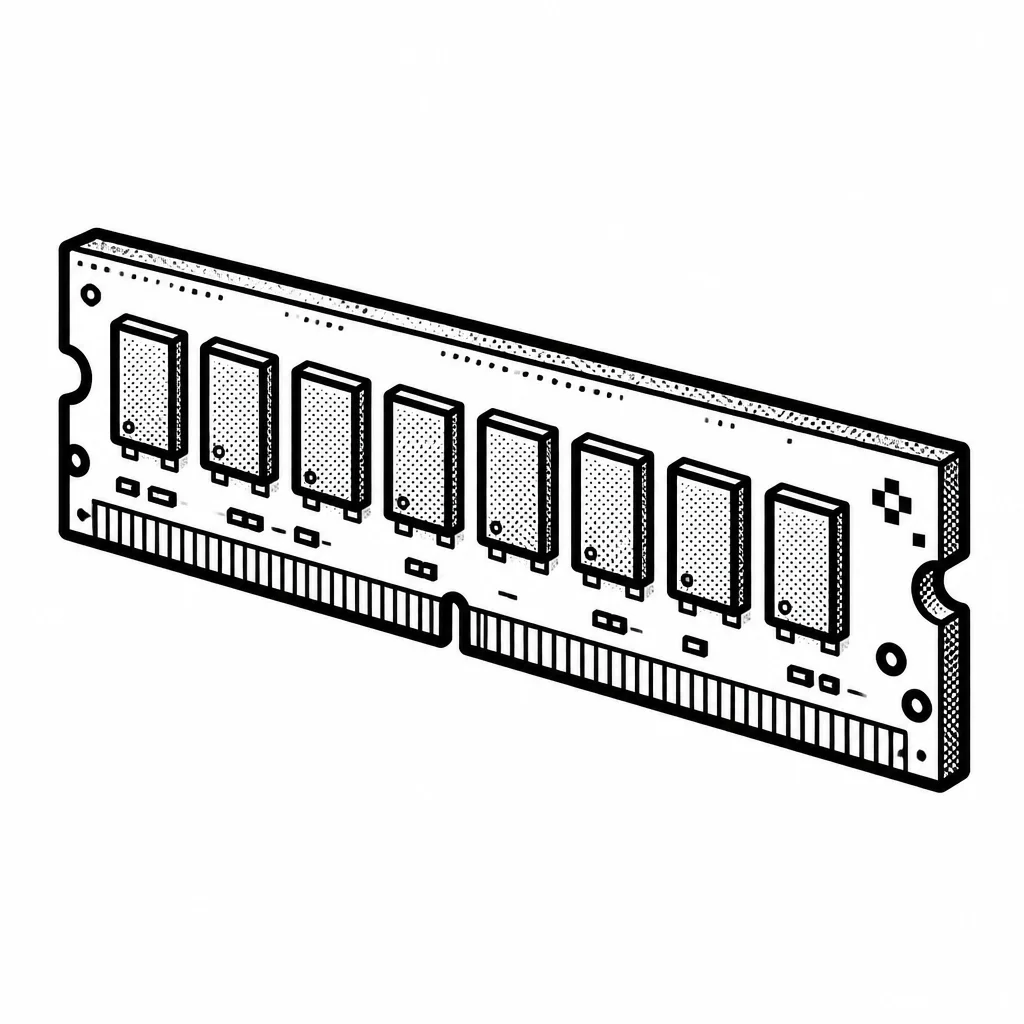
SK hynix makes the memory that lets your phone hold a thousand photos and your laptop run ten browser tabs at once. Its main products are DRAM, the fast working memory a computer uses while it's running, and NAND flash, the storage that keeps data safe when the power is off. It also sells CMOS image sensors, the tiny chips that turn light into pictures inside phone cameras. The company is based in South Korea and sells to electronics makers around the world.
The business runs on brutal cycles. Memory chips are a commodity: one company's DRAM works much like another's, so buyers mostly shop on price and supply. When demand booms, prices and profits soar, and chipmakers race to build new factories. Those factories take years to come online, so by the time the extra supply arrives, demand has often cooled and prices crash. SK hynix has lived through several of these busts, including a brutal downturn in 2023 when memory prices fell so far the company posted heavy losses. Then AI demand exploded, and the same company swung back to record profits. The AI boom gave SK hynix its lucky break. Training and running AI models requires enormous amounts of a special high-bandwidth memory, or HBM, which stacks DRAM chips vertically so data can move much faster. SK hynix bet on HBM early and became the leading supplier, selling much of it to Nvidia, whose AI chips dominate the market. That position matters because HBM is far harder to make than ordinary memory, which gives the leader more pricing power and steadier profits than the commodity business ever offered. Competitors like Samsung and Micron are spending heavily to catch up.
The company pours its cash into staying ahead. Memory is a manufacturing race: whoever builds the most advanced factories at the biggest scale wins, so SK hynix spends enormous sums each year on new plants and equipment, and it is building a massive new chip cluster in South Korea. The bet is that its HBM lead and scale will keep paying off. The risk is the old cycle returning: if AI demand cools or rivals flood the market with HBM, prices could fall just as they always have. Memory chips are a high-stakes roller coaster, and SK hynix is currently riding near the top.
Saved answer · last researched 14 Nov 2026