Understand any stock in simple English
Enter a ticker to learn what the company does and how it makes money.
Hufvudstaden AB (publ)
Hufvudstaden owns and manages office and retail buildings in central Stockholm and Gothenburg, and makes money mainly by renting space to tenants.
Hufvudstaden is a Swedish landlord with a very specific taste in real estate: prime commercial buildings in the hearts of Stockholm and Gothenburg. It doesn't build houses for families or warehouses on the edge of town. It owns offices and street-level shops in the most central, hard-to-replicate locations, and it earns money by renting that space to businesses and retailers.
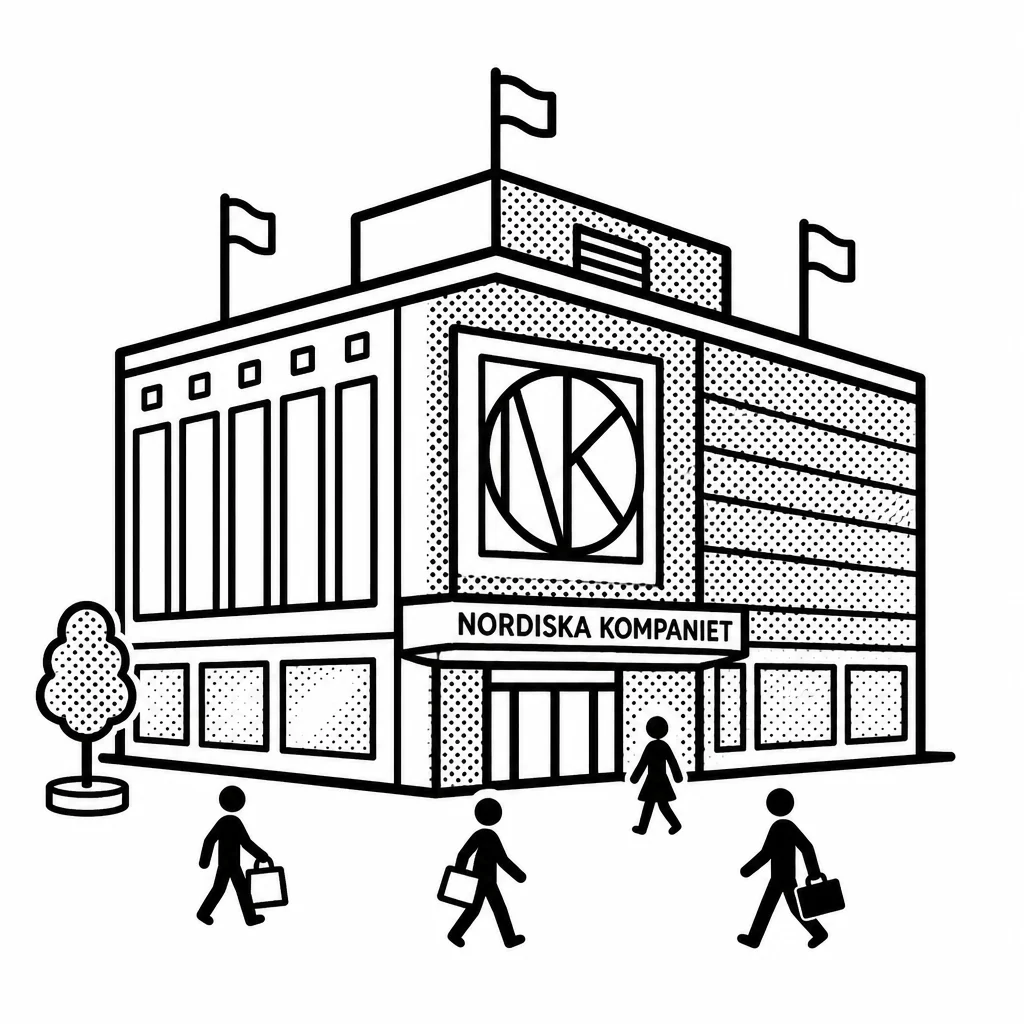
The business is simple at its core. Tenants sign leases and pay rent, and Hufvudstaden collects it. What makes the company interesting is where its buildings sit. In Stockholm, much of its portfolio is clustered around the NK department store and the surrounding shopping streets, plus the modern office district along Sveavägen. In Gothenburg, it owns a chunk of the central shopping and office core. You cannot easily build a new competitor next to these properties, so location is the moat. The company also invests in renovating and repositioning buildings to charge higher rents, and it develops new projects when the math works. There is a catch to owning trophy real estate: it ties up a lot of capital, and the value of the buildings moves with interest rates. When rates rise, property values tend to fall, and Hufvudstaden's earnings get hit by valuation changes even if the rent checks keep coming. The company carries debt to fund its portfolio, and it pays out a dividend to shareholders. Its shares trade in two classes, and the larger owners have historically been Swedish institutions, which gives it a stable, long-term shareholder base rather than a crowd of restless traders.
The main thing to understand is that this is a quality-over-quantity landlord. It doesn't chase volume in cheap locations; it owns a small number of buildings in places where tenants want to be seen. That makes the business resilient and the rents sticky, but it also means growth comes slowly, through rent increases, careful development, and the occasional acquisition. If Swedish offices and shopping streets stay desirable, Hufvudstaden collects. If the center of gravity shifts, the portfolio is exposed.
Saved answer · last researched 12 Nov 2026