Understand any stock in simple English
Enter a ticker to learn what the company does and how it makes money.
HEXPOL AB (publ)
HEXPOL makes the specialized rubber and plastic compounds, plus the seals, gaskets, and wheels, that go into cars, machines, and industrial equipment.
HEXPOL is a Swedish materials company that most people have never heard of, but you are probably surrounded by its work. It makes advanced rubber and plastic compounds — the raw stuff that gets molded into parts — and it also makes finished engineered products like gaskets, seals, and wheels that go into cars, appliances, and industrial machines. If a part needs to stay soft in the cold, resist oil, seal tight, or bounce back after a million squeezes, there is a good chance the material was cooked up in a HEXPOL plant.
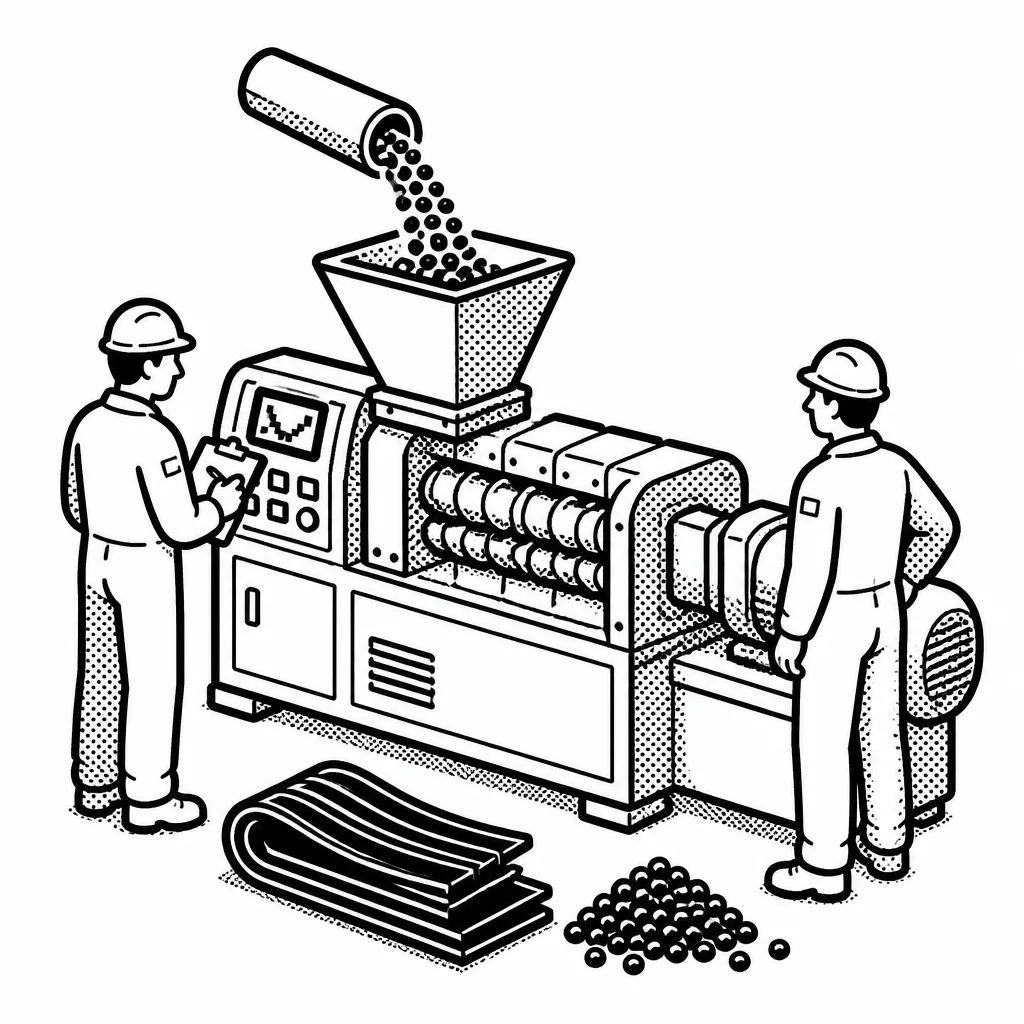
The company has two main engines. The bigger one is polymer compounding, where HEXPOL buys basic rubber and plastic, then mixes in additives and processes it into a custom blend that customers can't easily make themselves. The other makes finished parts — engineered gaskets and seals for vehicles and industry, plus wheels and other components. Customers are mainly in automotive and general industry, and they keep coming back because switching a compound means retesting a whole production line. That sticking power is real: HEXPOL's sales reached roughly 21 billion Swedish kronor in 2024. One thing to get straight: despite the name, HEXPOL has nothing to do with Hexagon, the Swedish measurement and software group. HEXPOL was once called Hexagon Polymers, a unit spun out of Hexagon and listed separately in 2008, before the old "Hexagon" was dropped. That origin story matters because it explains the name confusion that still trips people up today. The business is a genuinely global one, with production across Europe, the Americas, and Asia, which helps it supply carmakers and industrial giants wherever their factories sit. Its main vulnerability is simple demand: when auto production slows, its orders slow too. Rising raw material prices are another pressure, though HEXPOL tries to pass those through to customers. Its strength is the boring, sticky nature of the work — once a compound is approved for a part, nobody wants to change it.
HEXPOL uses its steady cash flow to pay dividends, buy back shares, and pick up smaller compounding rivals, which is how it has grown its footprint over the years. It is a quiet, unglamorous business that makes the invisible ingredients modern manufacturing depends on, and collects a reliable profit for doing it.
Saved answer · last researched 12 Nov 2026