Understand any stock in simple English
Enter a ticker to learn what the company does and how it makes money.
Hindalco Industries Limited
Hindalco makes aluminium and copper products and sells them to industrial and packaging customers around the world.
Hindalco is one of India's largest metals companies. It makes aluminium and copper — the metals that end up in everything from car parts and cables to cans and window frames — and sells them to factories, builders, and packaging companies across the world. If you drink from a can or drive a car, there's a decent chance some of the metal inside passed through Hindalco's hands.
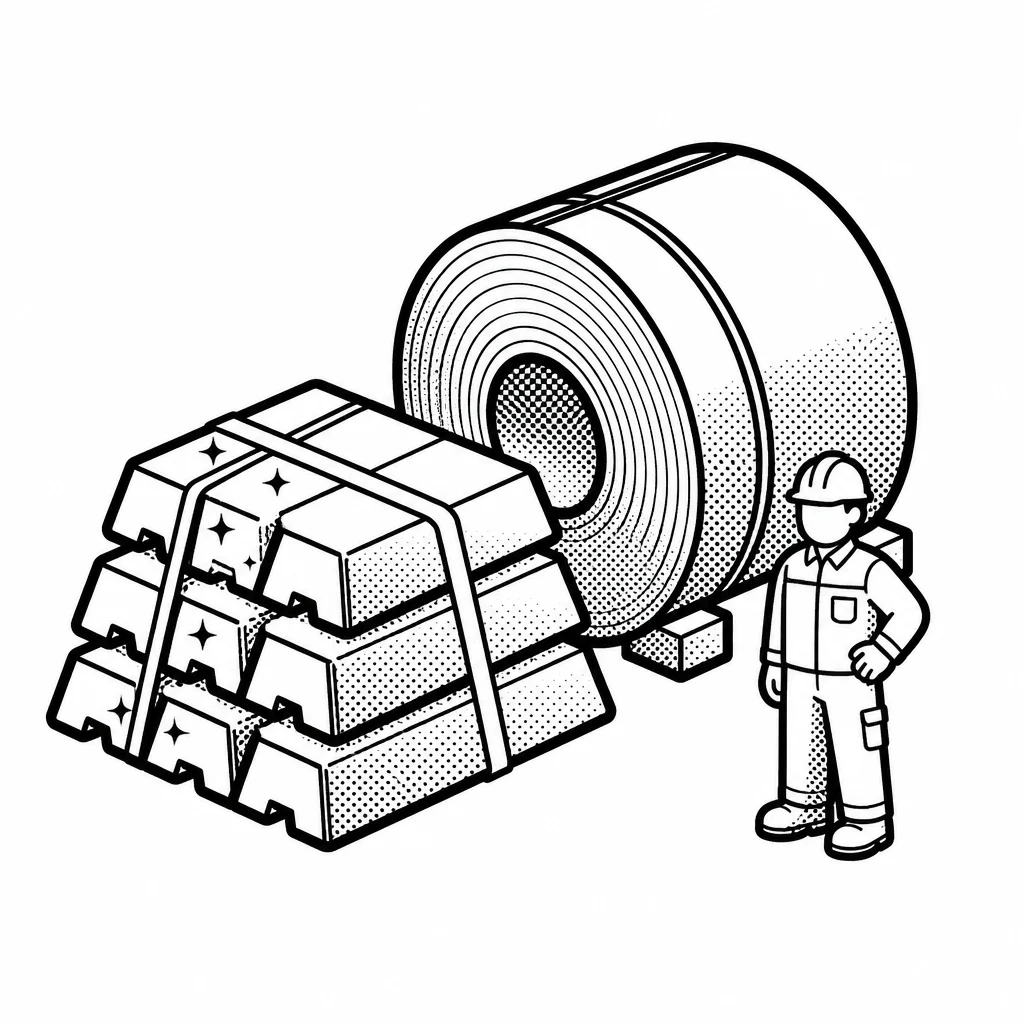
The business basically works like this: Hindalco digs up or buys raw material, smelts it into metal, then rolls, extrudes, or shapes it into products customers can use. Its aluminium side makes everything from primary metal to finished sheets and foils, including packaging materials. Its copper side makes rods, cathodes, and other products used in electrical wiring and industrial equipment. Customers pay for the metal and the shaping — Hindalco's edge comes from owning mines, power plants, and smelters, which keeps its costs lower than rivals who must buy raw materials at market prices. The company is part of the Aditya Birla Group, one of India's biggest business empires, and its biggest move was buying Novelis, a major aluminium rolling and recycling company, in 2007. That deal made Hindalco a global player in aluminium products, especially beverage cans and automotive sheet, and Novelis now generates a large share of the group's revenue. Hindalco's shares trade on the National Stock Exchange of India and it also has American Depositary Receipts listed in New York.
Metals are a cyclical business — prices swing with the global economy, and Hindalco's profits rise and fall with them. Energy costs matter enormously too, since smelting aluminium is famously power-hungry. That's why Hindalco owns coal mines and power plants, and why it keeps pushing into recycling through Novelis, which uses far less energy than making new metal. The company pays a modest dividend but mostly reinvests cash into expanding capacity and paying down debt. Its main risks are simple: weak metal prices, expensive energy, and trade tariffs, especially in the US, where Novelis does a lot of business.
Saved answer · last researched 12 Nov 2026