Understand any stock in simple English
Enter a ticker to learn what the company does and how it makes money.
HORNBACH Holding AG & Co. KGaA
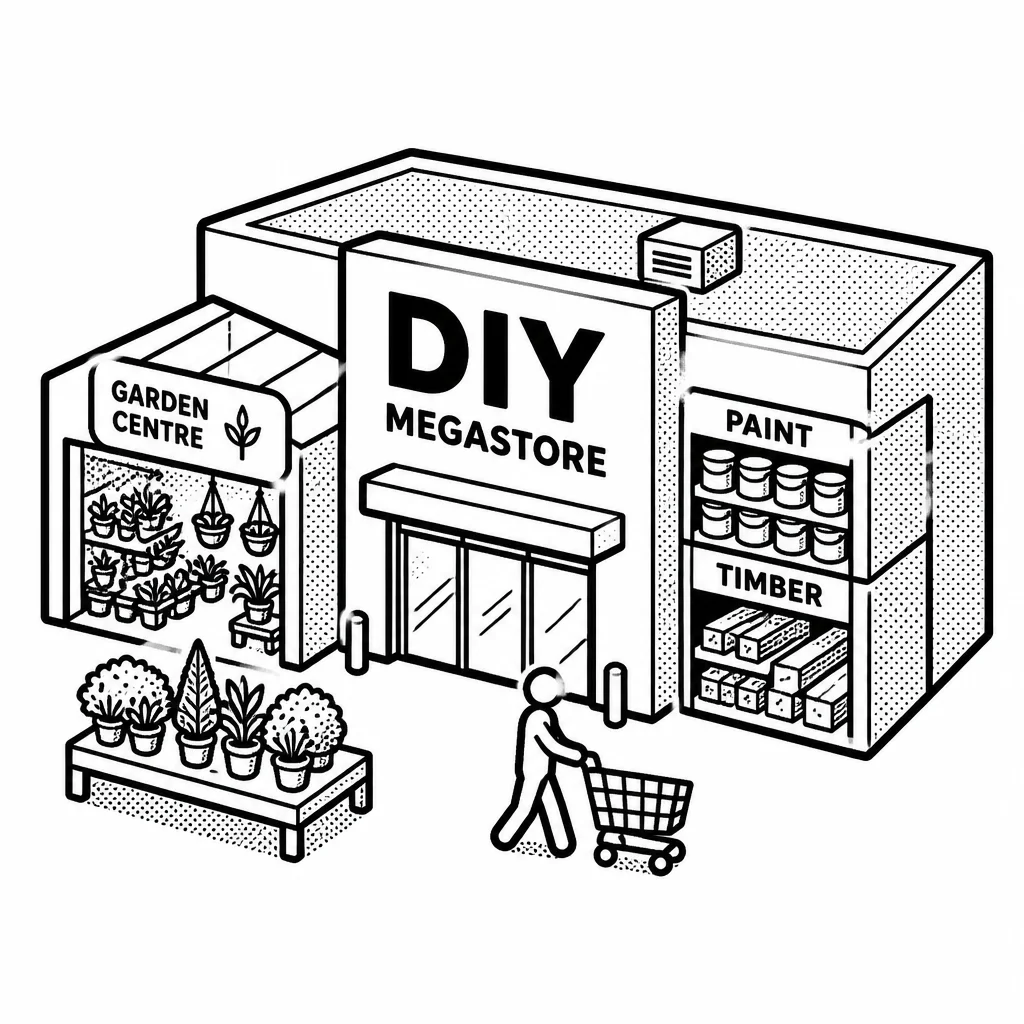
Hornbach runs big DIY megastores with garden centers, selling hardware, building materials and garden products to consumers and tradespeople across Germany and Europe.
Hornbach is a German retailer that runs huge home-improvement stores — the kind of place where you can buy a bag of cement, a new drill, a tree for the garden and a kitchen sink all in one trip. Its stores are unusually large, often called DIY megastores, and most come with a garden center attached. It sells to ordinary homeowners fixing up their houses and gardens, and also to tradespeople like builders and landscapers who need materials in bulk.
The company makes money the way most retailers do: it buys products from manufacturers, marks them up, and sells them in its stores. Customers choose Hornbach for the sheer range of stuff under one roof and for the advice and service in the aisles. The business is split between its retail stores — the bulk of what it does — and a smaller operation that develops and manages the real estate its stores sit on, which matters because owning property instead of renting it keeps a big fixed cost under control. Hornbach is based in Germany and runs stores there and in several other European countries, including the Netherlands, Austria, Switzerland and Sweden. That spread matters: Germany is its home and biggest market, but expansion abroad is where a lot of its growth comes from. The do-it-yourself retail game is fiercely competitive, with big rivals fighting over the same customers, so scale and store locations are everything. One of the more interesting things about Hornbach is its advertising. For years it has run quirky, memorable campaigns built around the slogan that there is always something to do — a playful nudge that even when a project is finished, another one is waiting. That kind of branding helps a retailer stand out in a crowded market. The company is also known for a long history: it started as a family business and grew into a listed company, with the founding family still holding a major stake, which shapes how it is run.
What makes Hornbach strong is its big-format stores, its mix of consumer and trade customers, and the fact that it owns a lot of its real estate. What makes it vulnerable is the same thing that hits every DIY retailer: when people stop renovating or the economy slows, sales soften, and fixed costs like stores and staff do not shrink with them.
Saved answer · last researched 12 Nov 2026