Understand any stock in simple English
Enter a ticker to learn what the company does and how it makes money.
Hydro One Limited
Hydro One owns and runs most of the electricity wires in Ontario, delivering power to homes and businesses and getting paid a regulated rate for moving it.
Hydro One is the company that owns most of the power lines in Ontario. If you live in Canada's most populous province and you're not in the Toronto city core, there's a good chance Hydro One's wires carry the electricity to your house. It also operates the big high-voltage transmission grid — the long-distance highways of electricity that carry power from generating stations across the province to the local networks that feed neighborhoods.
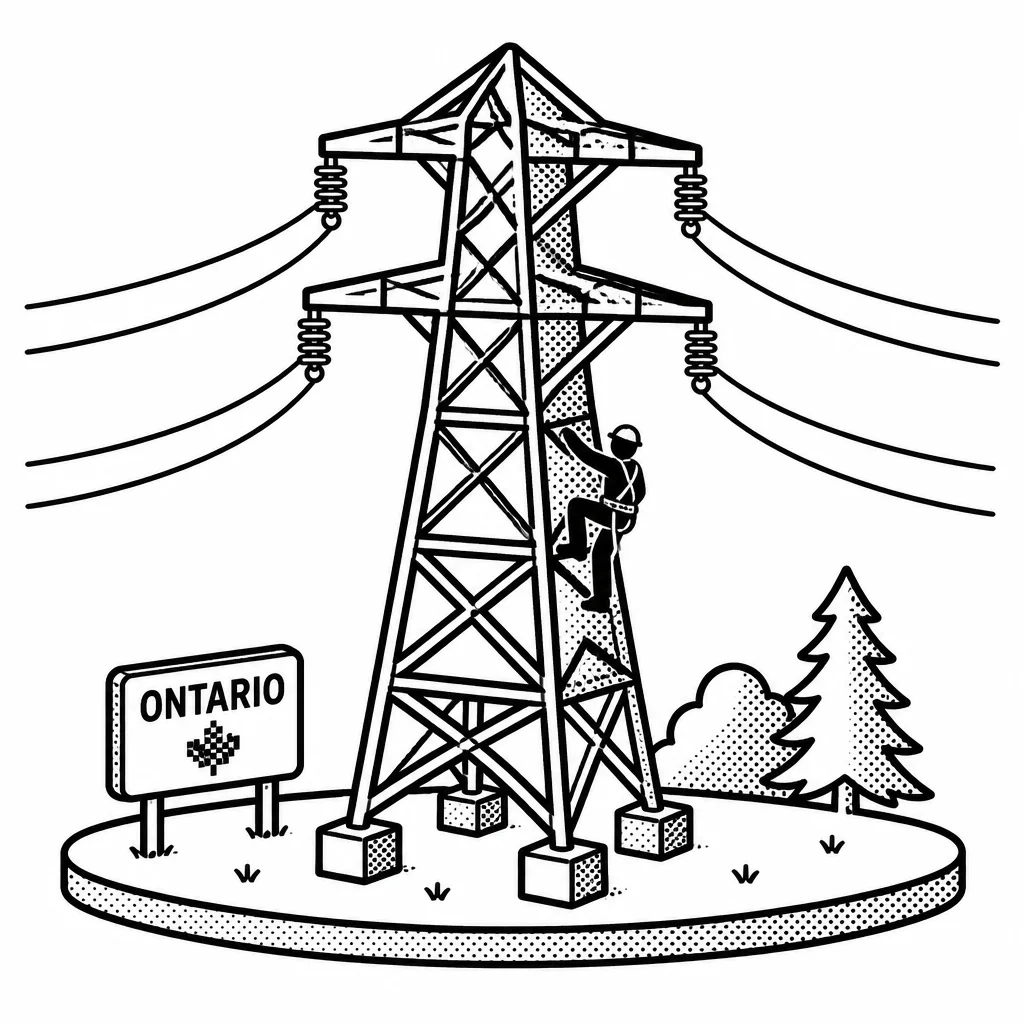
The business is split into two simple parts. Transmission moves large amounts of electricity over long distances, from where it's generated to where it's needed. Distribution is the last mile: the poles and wires that deliver power directly to homes, businesses, and municipal customers. Hydro One serves roughly 1.5 million customers, mostly in rural and small-town Ontario, which is why its territory looks like a map with a hole cut out of the middle where Toronto's own utility operates. Here's the important part: Hydro One is a regulated utility, not a competitive one. You can't choose it, and it can't really chase you. The Ontario Energy Board sets the rates it's allowed to charge and the profit it's allowed to earn, and in exchange it gets a remarkably stable, predictable business. Its growth comes from building new infrastructure and from acquiring other utilities, not from winning customers away from rivals. That's why it appeals to investors who want income: the company pays a steady dividend, funded by the cash it collects from those regulated rates.
The company's history is unusual. It was owned by the province of Ontario for years, and the government sold shares to the public starting in 2015, keeping a large stake. Its biggest customers are the businesses and households in its service area, but it also serves large industrial operations and has been expanding into more transmission projects as Ontario looks to electrify and connect new power generation. The risks are the flip side of its stability: regulators can decide to cut the allowed return, the provincial government still holds significant influence, and the company carries a fair amount of debt, which is normal for utilities built on expensive, long-lived infrastructure.
Saved answer · last researched 12 Nov 2026