Understand any stock in simple English
Enter a ticker to learn what the company does and how it makes money.
Grifols, S.A.
Grifols turns human blood plasma into life-saving medicines and sells the machines hospitals use to test blood and diagnose disease.
Grifols is a Spanish healthcare company built on one strange but remarkable fact: human blood plasma, the pale liquid left after you remove the red and white cells, contains proteins that can keep people alive. Grifols collects plasma from thousands of donors, ships it to plants, and separates it into medicines for people whose bodies can't make those proteins on their own. Its biggest sellers treat immune deficiencies and rare bleeding and clotting disorders, and its medicines are also used in surgery, transplant, and critical care. It also sells diagnostic instruments and reagents, mainly blood-typing and screening tools that hospitals and labs use to make sure a transfusion won't harm a patient.
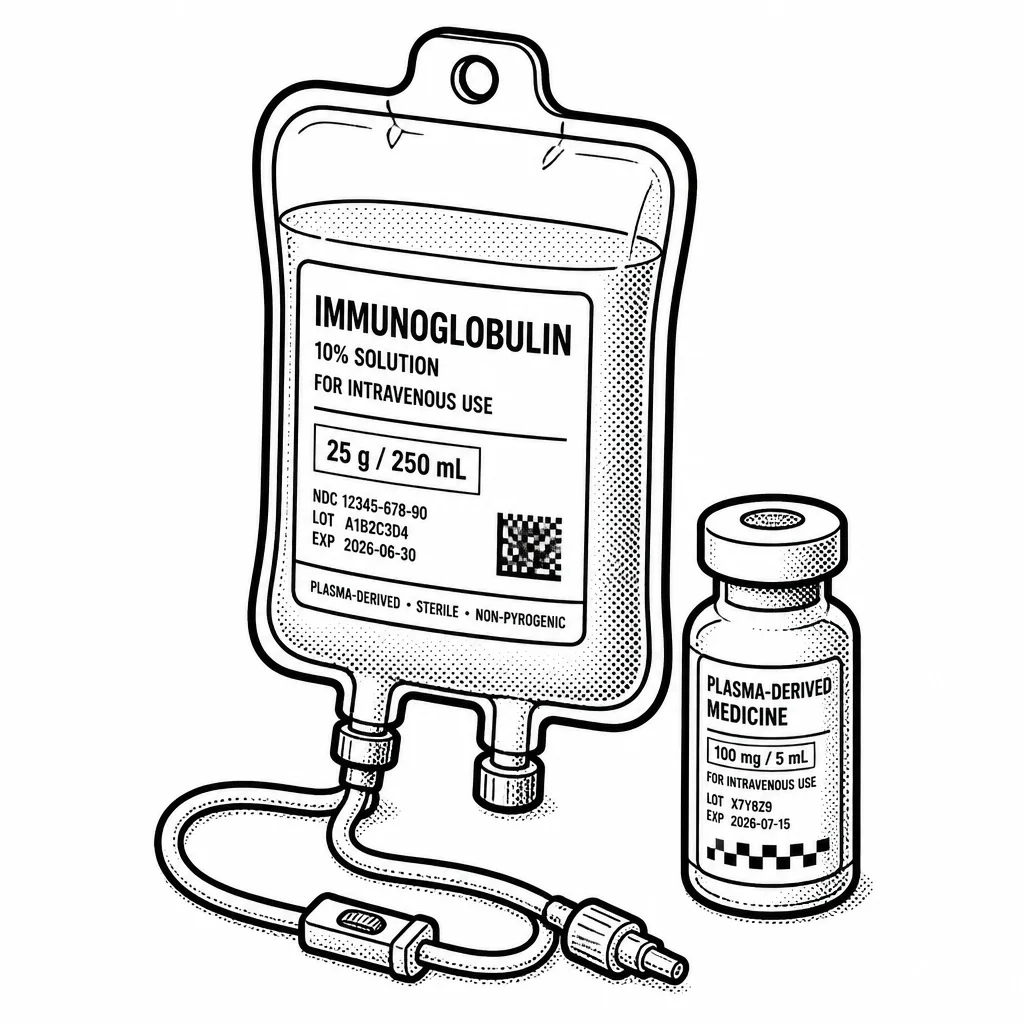
The plasma business is a grind. Donors must be paid and collected repeatedly, plasma must be frozen and tracked, and turning raw plasma into a finished drug takes months of careful filtering and testing. That makes plasma a scarce, hard-to-scale ingredient, which is why only a handful of companies worldwide do this at scale: Grifols, CSL, and Takeda are the big names. Because plasma medicines are hard to copy and often the only option for patients, the business earns steady, recurring revenue and tends to grow slowly with demand. Grifols also has a smaller hospital-pharmacy and biotech-supply arm, but plasma medicines are the engine. In recent years, its 2022 purchase of Biotest, a German plasma company, added scale and new products. The last few years were messy. Grifols carries heavy debt, mostly from acquisitions and big investments in plasma collection centers and plants, and in 2024 a short-seller report from Gotham City Research questioned its accounting and related-party dealings, hammering the shares and prompting a formal review. Since then the company has worked to rebuild trust: it changed leadership, cut costs, and is selling non-core assets to pay down borrowings. It also has a large stake in Shanghai RAAS, a Chinese plasma company, which it has partly sold.
The bet is simple: plasma demand keeps rising because more patients are diagnosed and more therapies are approved, while collecting enough plasma remains the bottleneck. Grifols profits when it fills its collection centers and runs its plants efficiently; it struggles when plasma is expensive to source or when debt payments crowd out the money it needs to invest. It's a business that does real medical good and makes real money, but one whose balance sheet and credibility have been tested hard.
Saved answer · last researched 14 Nov 2026