Understand any stock in simple English
Enter a ticker to learn what the company does and how it makes money.
Genesis Minerals Limited
Genesis Minerals is an Australian gold miner that digs gold out of the ground in Western Australia and sells it.
Genesis Minerals is a gold miner. It finds gold in the ground of Western Australia, digs it up, and sells it to refineries and traders who turn it into the bars and jewellery people eventually buy. That's the whole business in one sentence: pull gold out of the dirt, sell it for the going price.
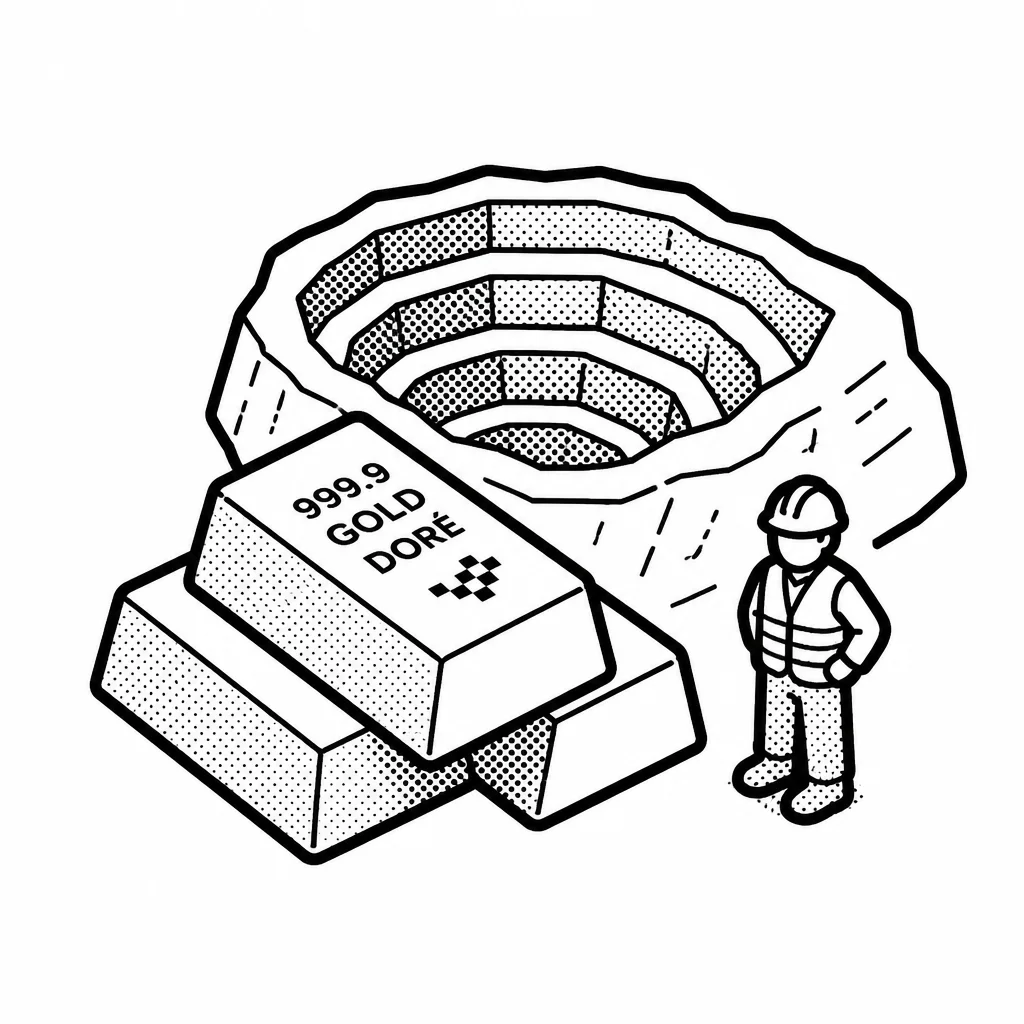
The company's main asset is a collection of gold mines and processing plants clustered around Leonora, a small town in Western Australia's Goldfields region, several hundred kilometres inland from Perth. It also explores for more gold nearby, because a miner's future depends on replacing what it digs up. Genesis grew fast through deals rather than slow, patient drilling, buying up neighbouring mines and mills to become one of the larger gold producers in the region. Why would anyone buy gold shares instead of just buying gold? Because a miner's profits can rise much faster than the gold price when it produces at a low cost per ounce. The flip side is brutal: gold prices move with global fear and interest rates, costs creep up, and a mine that looks cheap on paper can disappoint when the ore turns out harder to extract than expected. Shareholders get no dividend safety net; gold miners live and die by the margin between what it costs to pull an ounce from the ground and what the market pays for it.
The company's recent strategy has been consolidation — swallowing up nearby operations and promising to squeeze more out of shared equipment and processing capacity. That is the classic mining gamble: pay a big price now for a bigger, simpler operation later. If gold prices stay strong and the integration goes smoothly, the extra scale pays off. If gold prices fall or the acquired mines underperform, the debt and dilution used to fund the deals become a heavy weight.
Saved answer · last researched 12 Nov 2026