Understand any stock in simple English
Enter a ticker to learn what the company does and how it makes money.
GAIL (India) Limited
GAIL owns and runs most of India's natural gas pipelines and sells the gas that flows through them, along with petrochemicals and other energy products.
GAIL is the company that moves much of India's natural gas around the country. It owns and operates a huge network of long steel pipelines that stretch from gas fields and import terminals to power plants, fertilizer factories, industrial plants, and city gas networks. Think of it as the country's gas highway system: producers pay to put gas in one end, and customers pay to take it out the other. GAIL also buys and sells gas itself, acting as a middleman between suppliers and users.
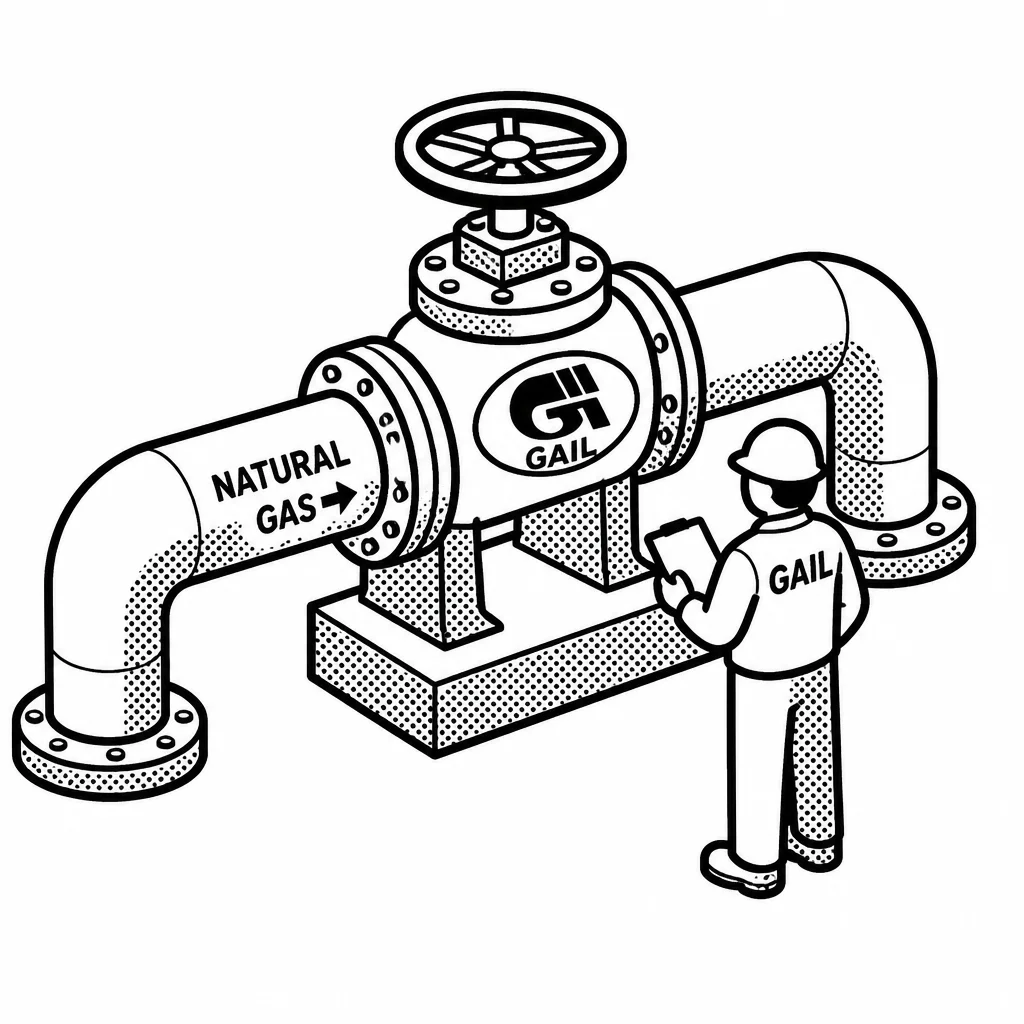
The company has a second big business in petrochemicals. It runs plants that turn natural gas into plastics raw materials, the little pellets that go on to become pipes, packaging, and thousands of everyday products. So when gas prices are cheap, GAIL's chemical plants earn better margins, and when gas prices spike, those margins get squeezed. It also liquefies petroleum gas into cylinders for cooking — the kind many Indian households rely on — and sells small amounts of power. Its customers span power plants, fertilizer makers, factories, auto fuel stations, and millions of homes. That gives it a broad base, but it also makes GAIL sensitive to government policy, since the Indian government controls it and sets many of the rules on gas pricing and pipeline access.
GAIL's biggest strength is its pipeline network. Laying thousands of kilometres of large steel pipe takes years and a lot of capital, so it is hard for rivals to copy. The main risk is that gas demand can be uneven: if power plants and factories slow down, or if cheap imported gas dries up, both its pipeline volumes and its petrochemical profits can fall at the same time. It pays a chunk of its profits back to shareholders as dividends, and it keeps spending on expanding its pipelines and plants to stay ahead of rising Indian energy demand.
Saved answer · last researched 12 Nov 2026