Understand any stock in simple English
Enter a ticker to learn what the company does and how it makes money.
GEA Group Aktiengesellschaft
GEA makes the machines and systems that food, drink, and drug makers use to turn raw ingredients into packaged products.
GEA is a German industrial company that builds the big machines and processing lines behind everyday food and medicine. If a dairy turns milk into cheese, a brewery fills thousands of bottles an hour, or a drug maker dries a powder into pills, there is a good chance GEA equipment is somewhere in that factory. The company sells to food and beverage producers, pharmaceutical companies, and dairy farms around the world.
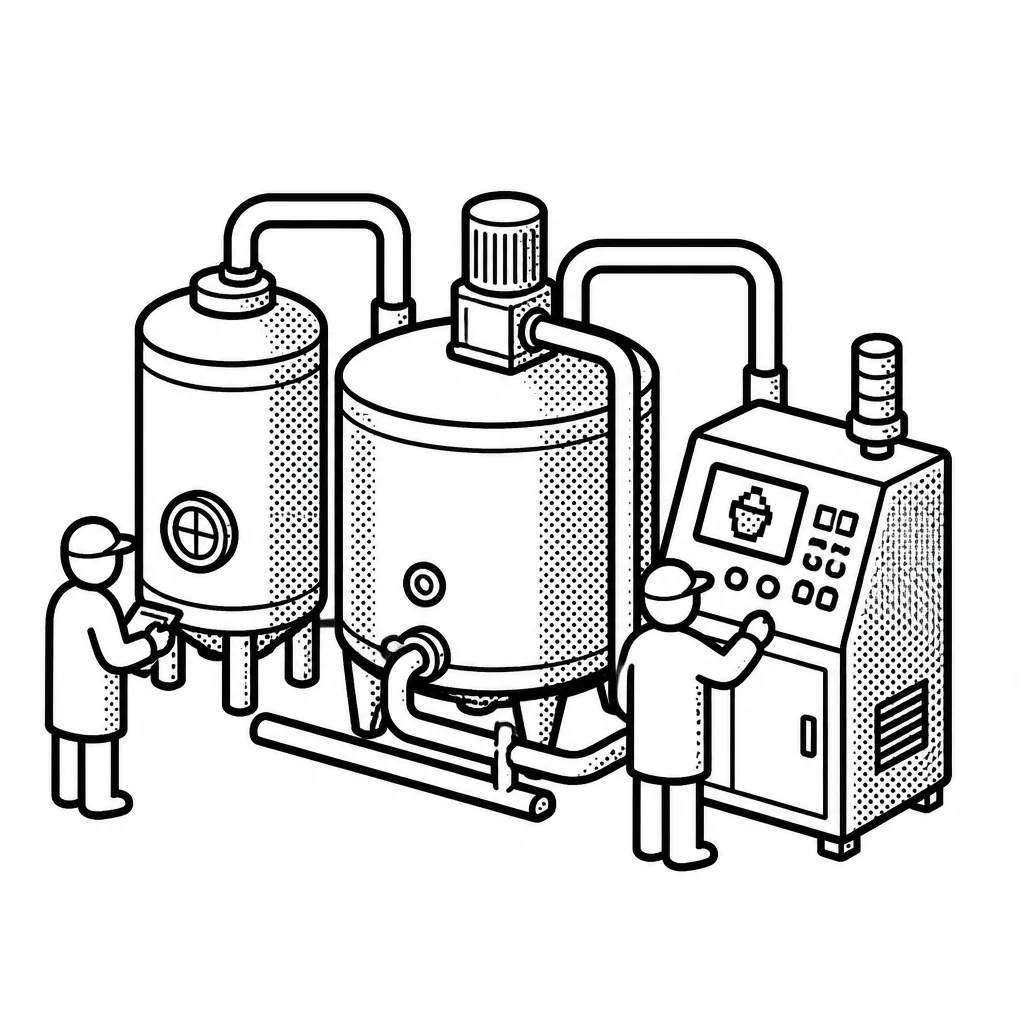
Its business runs through a few connected areas. One makes process equipment like separators, homogenizers, and pasteurizers — machines that heat, cool, mix, or split liquids. Another builds filling and packaging lines that put products into bottles, cartons, and containers. A third serves pharmaceutical and chemical customers with equipment for drying, granulating, and handling delicate materials. GEA also has a farm-technology arm that sells milking and manure-handling systems to dairy farmers. The thread tying it all together: GEA helps customers turn raw stuff into safe, sellable products at scale, and do it efficiently. The money comes from selling these systems, then earning recurring revenue from spare parts, maintenance, and service contracts over the years a machine runs. That service tail matters, because industrial equipment is a long-lived purchase and customers want a partner who keeps it working. Customers pick GEA for its engineering know-how, its global service network, and the fact that its machines are built to meet strict food-safety and hygiene rules. Competitors in parts of its business include Alfa Laval in separators and heat transfer, Tetra Pak in food processing and packaging, and Sartorius in some pharmaceutical equipment. GEA's results rise and fall with how much factories are investing; when food and drug makers hold back on big projects, orders soften, and when they spend, GEA benefits.
The company is headquartered in Düsseldorf, Germany, and its shares trade on the XETRA exchange. It is a mid-sized industrial player rather than a household name, so its fortunes depend less on consumer headlines and more on capital spending by the world's food and pharma factories. It returns cash to shareholders partly through dividends, and its long-term pitch is simple: a growing global population needs more processed food and medicine, and someone has to build the machines that make it.
Saved answer · last researched 12 Nov 2026