Understand any stock in simple English
Enter a ticker to learn what the company does and how it makes money.
flatexDEGIRO SE
flatexDEGIRO runs an online brokerage that lets European retail investors buy and sell stocks and other securities cheaply, and it also sells banking and securities software to other financial firms.
flatexDEGIRO is an online broker built for ordinary European savers who want to buy stocks, funds, and other securities themselves without paying a fortune in fees. Customers open an account, deposit money, and trade through a website or app, mostly on their own rather than through a human advisor. The pitch is simple: low trading costs and a wide menu of markets, so a self-directed investor can build a portfolio without handing a big cut to a traditional bank.
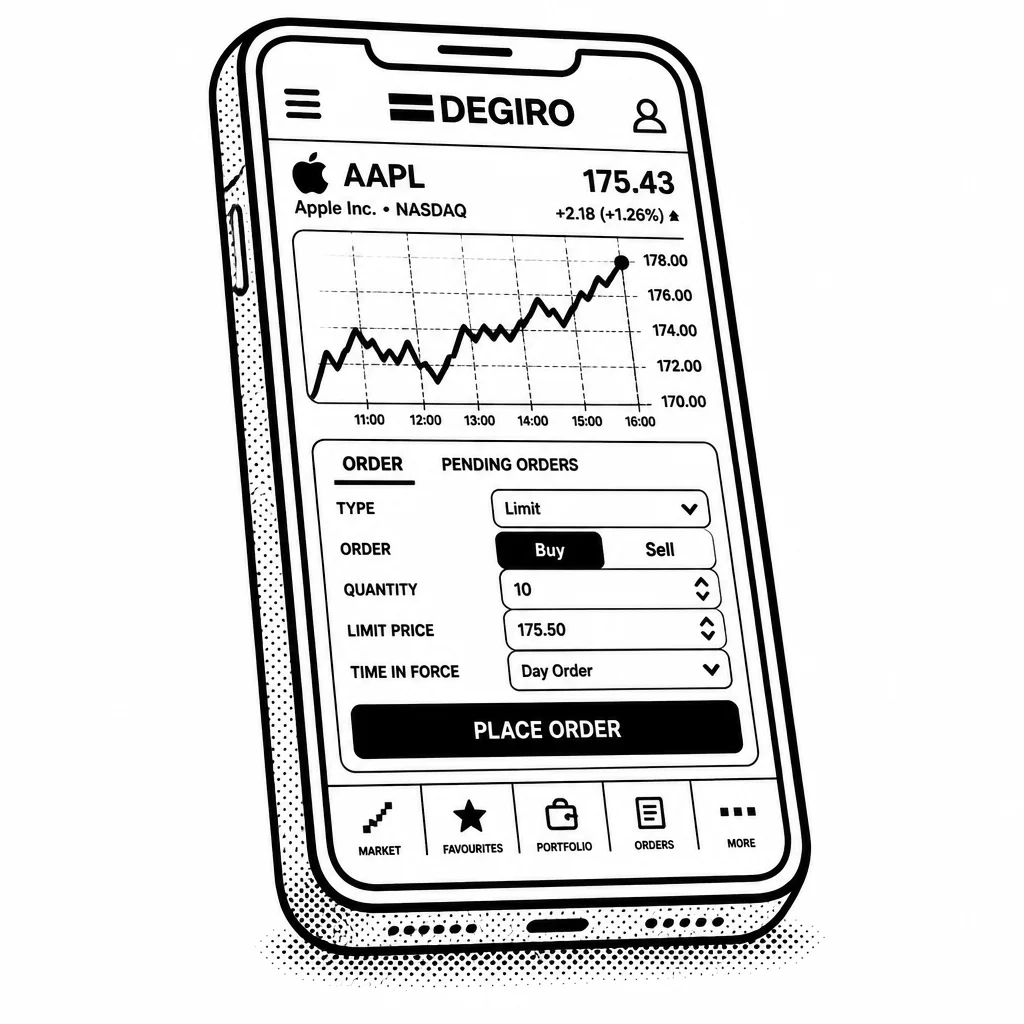
The company is really two businesses under one roof. The bigger one is the brokerage, run mainly under the names flatex and DEGIRO, which together serve millions of retail customers across countries like Germany, the Netherlands, and much of Europe. The smaller, older piece is a software business that sells IT systems to banks and financial firms — the plumbing behind securities trading and banking. That division is a legacy of the company's past life as FinTech Group, and today brokerage is what drives results. How does it make money? It charges customers for trades — a flat fee per order in the flatex model, very low commissions and handling fees at DEGIRO — and it earns interest on the cash customers leave sitting in their accounts, which became a surprisingly big money-maker when interest rates rose. It also collects fees on things like account services and some products. Being a low-cost operator means volume matters enormously: millions of small trades and a large pile of customer cash are the engine. The competitive edge is scale and thrift. Competitors include bank-owned brokers and newer apps such as Trade Republic-style players and established rivals like Interactive Brokers, all fighting for the same cost-conscious retail investor. flatexDEGIRO's answer is a lean, automated platform with no branch network, plus a long track record and broad market access. The risk is that this is a crowded, price-sensitive market — a trading slowdown or a promotional price war can hit revenue quickly, and the company has had to invest heavily in technology and controls after regulatory pressure over its systems and customer onboarding.
It has generally plowed profits back into growing the platform and buying back its own shares rather than paying a fat dividend. The story to watch is whether it can keep adding customers across Europe and squeeze more revenue from each account while keeping regulators comfortable.
Saved answer · last researched 12 Nov 2026