Understand any stock in simple English
Enter a ticker to learn what the company does and how it makes money.
FTAI Aviation Ltd.
FTAI Aviation owns, leases, and repairs commercial jet engines and aircraft, making money from airlines and other lessors who need planes and engines to keep flying.
FTAI Aviation owns and leases commercial jet engines and aircraft to airlines and leasing companies. That alone is a straightforward business: buy a plane or engine, rent it out, collect monthly payments for years. But the more interesting part is what the company does with engines. It has built a business around the CFM56, the workhorse engine that powers huge numbers of Boeing 737s and Airbus A320s. FTAI buys used engines, tears them down for parts, and sells or trades those parts to airlines and repair shops. It also runs maintenance, repair, and overhaul operations, so it can take a tired engine, fix it up, and either lease it back out or harvest the parts. The company calls this combined engine operation its "modular" model, and it is the engine that really drives the growth story now.
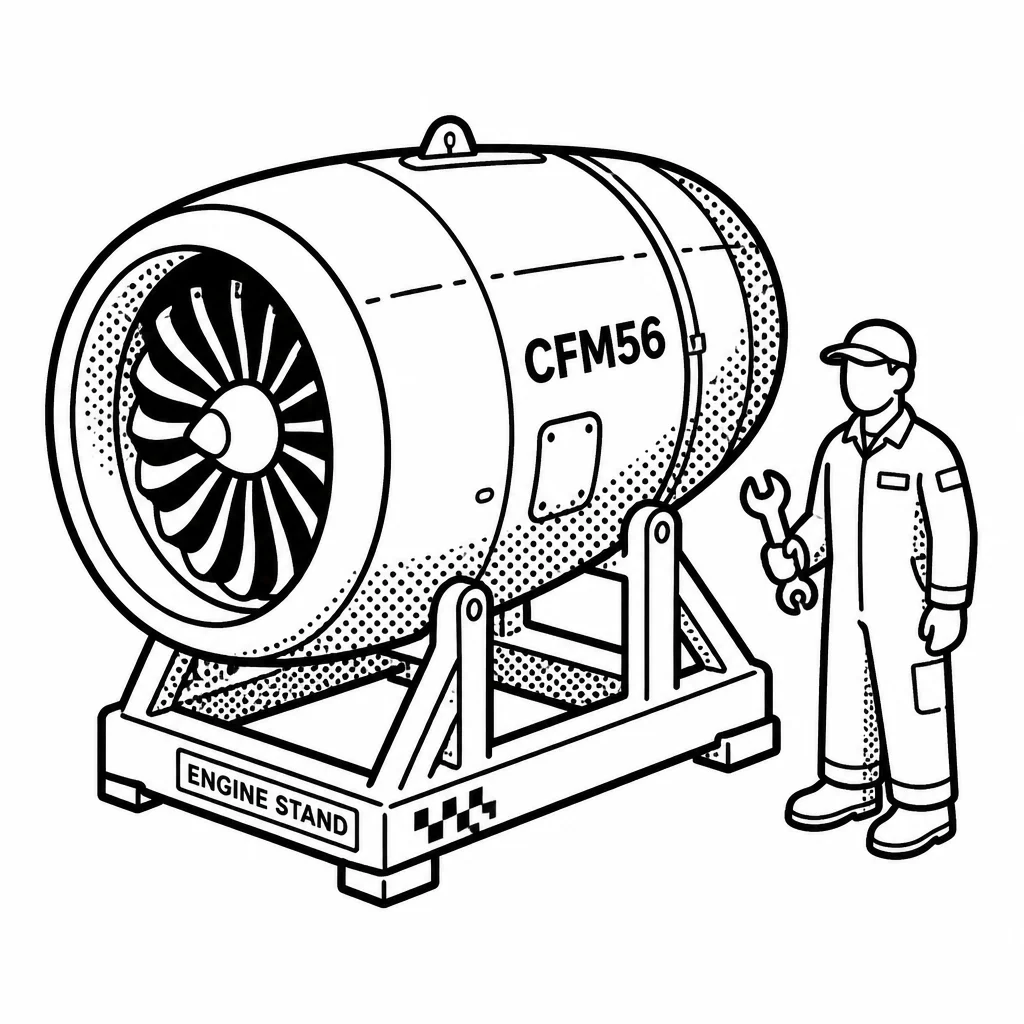
Here is the basic problem FTAI is solving. Airlines fly planes for decades, and engines wear out. Replacement parts from the original manufacturer are expensive and often slow to arrive. FTAI's pitch is that it can supply a serviceable engine, or the parts to fix one, faster and cheaper than the alternative. Airlines care about one thing above all: keeping planes in the air, because a grounded plane earns nothing. So a company that can hand them a working engine on short notice has real bargaining power. The leasing side of the business, meanwhile, gives FTAI steady rental income and a deep inventory of aircraft it can later part out. The company has grown fast in recent years. In 2023 it reported revenue of roughly $1.2 billion, and it has kept expanding its engine pool and its repair capacity, including through partnerships and acquisitions aimed at securing more CFM56 material. It also spun off its older infrastructure and offshore energy leasing business into a separate public company, so what remains is a cleaner, aviation-focused business. Like any company tied to used aircraft parts, FTAI is exposed to the health of the airline industry and to the supply and pricing of used engines, which can swing with the market.
The risk is worth stating plainly. Selling used parts and leasing engines is a cyclical, capital-hungry game, and FTAI carries real debt to fund its engine inventory. If engine prices fall or airlines pull back, the value of that inventory can shrink. And the business depends heavily on one engine family, the CFM56, which is being replaced over time by newer engines. The bet is that the world's huge fleet of aging 737s and A320s will need parts and overhauls for many years yet. So far, that bet has paid off handsomely, with the stock among the best performers in its sector.
Saved answer · last researched 15 Nov 2026