Understand any stock in simple English
Enter a ticker to learn what the company does and how it makes money.
JFrog Ltd.
JFrog sells a software platform that helps companies store, manage, and secure the building blocks their developers use to make software.
JFrog is a software company that acts as a secure warehouse and delivery system for the parts that go into building software. When developers write an app, they rely on thousands of pre-made pieces — things like code libraries, configuration files, and ready-to-use packages. JFrog's platform stores all these pieces in one organized place, tracks every version, and speeds them through the pipeline that turns raw components into finished software that customers actually run.
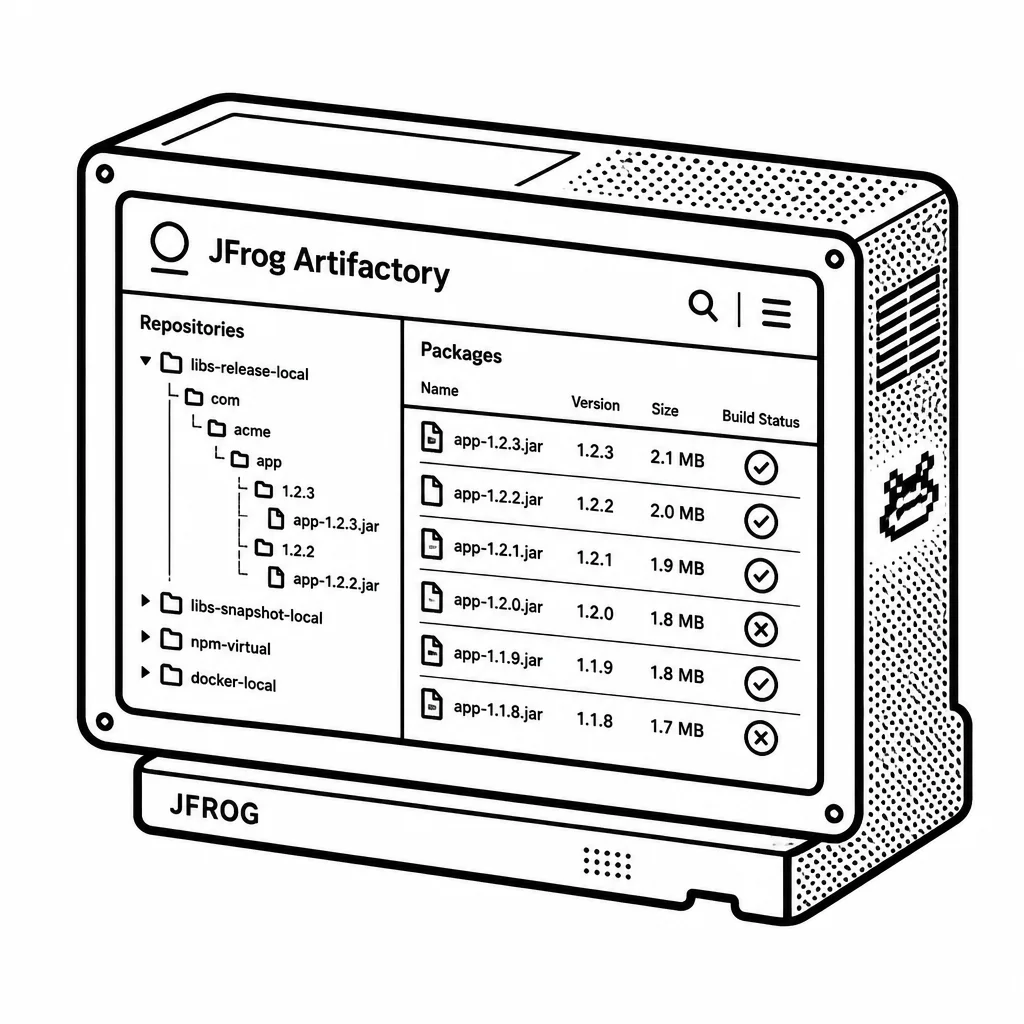
Its core product, Artifactory, is the storage-and-management hub for those building blocks. A companion product, Xray, acts like a security scanner, examining each piece for hidden vulnerabilities or malicious code before it reaches production. Together they form what the company calls a software supply chain platform — essentially the plumbing and quality control for how software gets assembled and shipped. The customers are software development organizations: banks, tech firms, and other big enterprises that need to move code fast without letting bad or compromised parts slip through. The business makes money by selling subscriptions to that platform, priced by how much storage and how many developers a customer uses, with higher tiers unlocking security and advanced features. It competes with a mix of point tools and larger platforms — Microsoft bundles its own code-hosting and artifact tools into GitHub, while other vendors sell pieces of the pipeline separately. JFrog's pitch is that it sits in the middle of everything, works with whatever tools a team already uses, and increasingly adds security and AI-assisted features on top.
JFrog is headquartered in Israel and listed on Nasdaq. It generates most of its revenue from cloud subscriptions, a faster-growing slice than its older on-premises software, and it has pushed into security scanning and AI model management as new areas of growth. The company has been roughly break-even to modestly profitable; it spends heavily on sales and research to chase the large enterprise market. The bigger risk is competition from giants that can bundle similar tools for free or cheap, which keeps pressure on JFrog to stay the neutral, reliable hub developers trust.
Saved answer · last researched 15 Nov 2026
BIG PICTURE
JFrog's premium platform bundle now brings in 58% of its revenue
- 58% Revenue from Enterprise+ platform subscriptions
- 42% Revenue from other JFrog products and services
Most of JFrog's money no longer comes from selling one tool at a time. In the first quarter of 2026, its Enterprise+ subscription bundle, which packs storage, security and governance together, made up 58% of revenue. Convincing big companies to buy the whole platform instead of single pieces is how the company grows each account. Source: Built In, data from 2026
Timeline
Two Developers Build Artifactory
Software teams were drowning in pieces of code called packages, and keeping track of them was a mess. A group of open-source developers built a tool called Artifactory to manage those packages, and thousands of companies started using it because it simply worked. In 2008 the creators turned that tool into a company, JFrog. Because its founders came from open source, that habit of building in the open stuck with JFrog's product culture.
Cisco and Netflix Sign On
JFrog's first real customers were Cisco and Netflix, two very large companies trusting a tiny startup with the code that runs their business. That early vote of confidence put the young company on a growth path.
Xray Adds Security
JFrog had always helped companies store and track their software packages. With Xray, it started scanning those packages for security problems, and a $50 million raise gave it fuel to build the new product out.
Buying Its Way Into DevOps
JFrog went shopping, picking up CloudMunch, then Trainologic, then Shippable. Each buy added more tools around Artifactory, so customers could do more of their software work in one place.
The IPO Pop
In September 2020 JFrog went public, priced at $44 a share, and opened at over $71. Investors piled in, the offering was many times oversubscribed, and the stock closed its first day up 47%. It gave the company public money and a public reputation as a DevOps leader.
Vdoo Deepens Security
JFrog paid $300 million for the Israeli security company Vdoo, pushing further into DevSecOps, the idea that security should be built into software from the start rather than bolted on later.
The Stock Falls Back to Earth
The party didn't last. By late 2022 the stock had fallen to about $25, well below its IPO price. The causes were ordinary ones: the stock had been priced too high, growth was slowing, the company was still losing money, and rising interest rates made unprofitable growth stocks less appealing.
Qwak Brings AI Models
JFrog agreed to buy Qwak AI, a platform for training, running and watching over machine-learning models. The goal was to make JFrog the one place companies keep every kind of software, including AI models, not just traditional code packages.
AI Code Drives Growth
The bet started paying off. Revenue jumped 31% in the third quarter of 2026, cloud revenue climbed 60%, and JFrog signed a $76 million multiyear deal with a major telecom. Management's pitch was simple: AI writes more code, and all that code becomes more software packages that need storage, security and governance. If that's true, JFrog sits right in the middle of it.