Understand any stock in simple English
Enter a ticker to learn what the company does and how it makes money.
Fuchs SE
Fuchs makes and sells specialty lubricants and functional fluids for cars, factories, and machines all over the world.
Fuchs is the world's largest independent maker of specialty lubricants — the oils and greases that keep engines, gears, metalworking machines, and factory equipment running smoothly. It sells to two broad groups: automotive customers (car makers, suppliers, and repair shops) and industrial customers (steel mills, mines, wind farms, food plants, and just about anyone with machinery that grinds, spins, or heats up). What makes Fuchs different from the giants is that it doesn't own oil wells or refineries. It buys base oils, blends them with its own chemical recipes, and sells the result as a branded, problem-solving product.
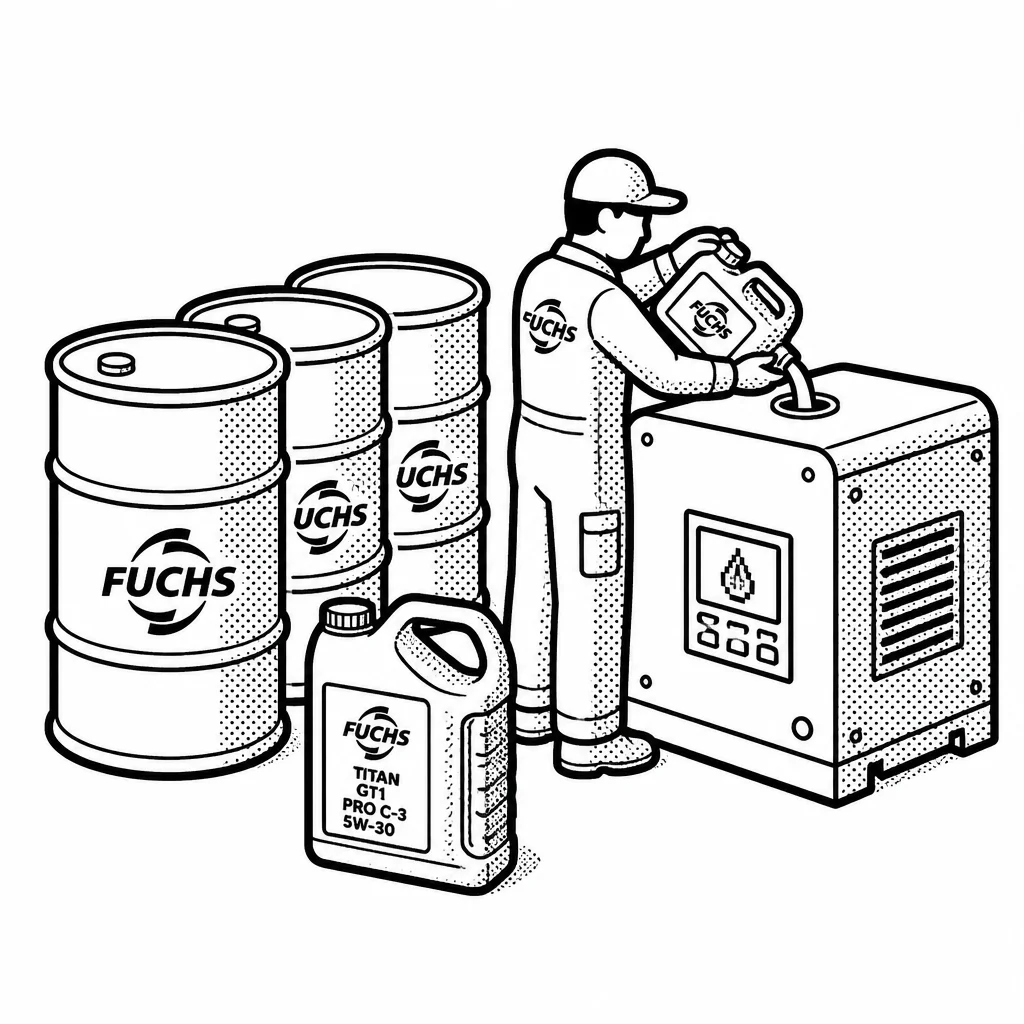
That independence is the heart of the business. The big oil companies like Shell and ExxonMobil sell lubricants too, but for them it's a small side dish next to pumping and refining crude. Fuchs only does lubricants, so it can focus entirely on tuning formulas for a specific steel mill's rolling line or a wind turbine's gearbox. Customers pay a premium for that fit, and once a factory has qualified a lubricant for a critical machine, switching is a hassle — the oil is a tiny cost compared with the downtime if something seizes up. That stickiness, built on thousands of small tailored products, is the real moat. Fuchs was founded in 1931 by Rudolf Fuchs in Mannheim, Germany, and it's still run with a long-term, family-influenced style from its headquarters there. It grew by expanding country by country and by buying smaller regional lubricant specialists, which brought local customers and know-how. In 2023 the company changed its name from Fuchs Petrolub SE to Fuchs SE — dropping "Petrolub" to signal it's about advanced fluids, not just oil — and it now operates across dozens of countries with production sites on every major continent.
The money comes from selling those blended products, and the cash flow mostly goes back to shareholders and into growth. Fuchs is a reliable dividend payer and has bought back its own shares; it has also kept funding new plants and acquisitions. The main risks are plain: demand tracks industrial production, so a factory slowdown hurts; base oil prices swing with energy markets; and electric cars, which need fewer engine oils, quietly reshape the automotive side over time. Fuchs is a steady, unglamorous business — but the world's machines will keep needing the right grease.
Saved answer · last researched 12 Nov 2026