Understand any stock in simple English
Enter a ticker to learn what the company does and how it makes money.
Schwab Fundamental International Equity ETF
It is an exchange-traded fund that owns a broad basket of large non-U.S. companies, weighted by fundamental measures like sales and cash flow rather than market value.
This is a fund, not a company that makes or sells anything. It gives an investor a single, low-cost way to own a wide slice of big companies based outside the United States — established businesses in places like Japan, the United Kingdom, and across Europe — in one purchase. You buy it like a stock, and its value rises and falls with the shares it holds.
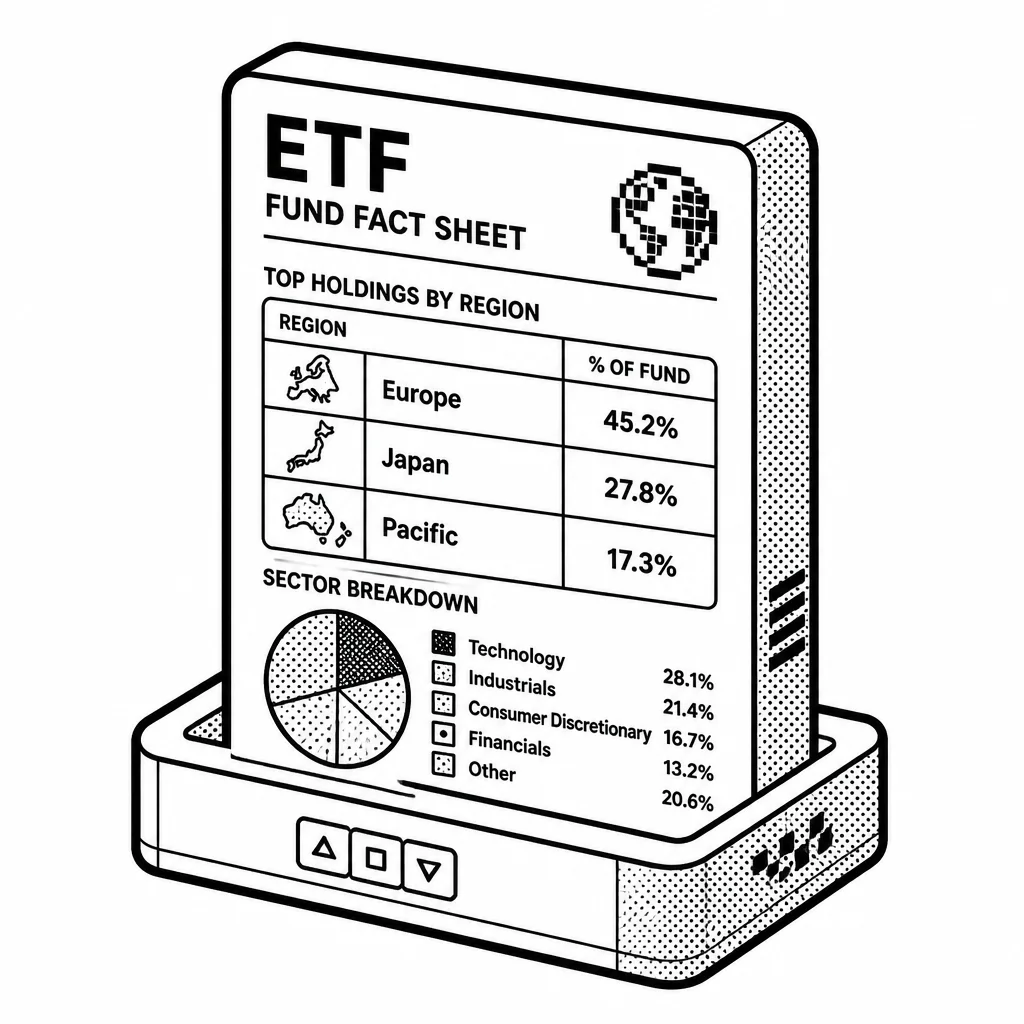
The word "fundamental" is the whole idea. Most index funds weight their holdings by size on the stock market, which means the most expensive companies get the biggest slice. This fund instead ranks companies by fundamental measures — things like sales, cash flow, and dividends — and gives more weight to the companies that score higher on those plain business numbers. The bet is that this steers money toward solid, cash-generating businesses and away from hype, which can smooth out some of the market's wilder swings. It is one of the cheaper ways to own international stocks, with annual fees well below what an actively managed fund would charge. The trade-off is that it owns hundreds of companies, so no single winner can move the needle much, and it carries the extra risks of investing abroad: currency moves, different accounting, and foreign politics. It also leans toward big, mature, value-style firms, so it can lag badly in years when fast-growing technology stocks lead the market.
The fund is run by Charles Schwab, the big discount brokerage, and sits in a family of similar "fundamental index" funds. Think of it as a ready-made, diversified international portfolio in a box — useful for the part of a long-term plan that reaches beyond the United States, not as a bet on any one company or country.
Saved answer · last researched 16 Nov 2026