Understand any stock in simple English
Enter a ticker to learn what the company does and how it makes money.
F5, Inc.
F5 sells security, networking, and automation products that keep applications running fast and safe for big organizations.
F5 is one of those companies whose work you almost never see, even though you have probably relied on it today. Whenever you log into a bank app, buy something online, or open a work file in the cloud, there is a good chance F5 gear was sitting quietly in the background, making sure that request reached the right computer quickly and didn't get hijacked along the way.
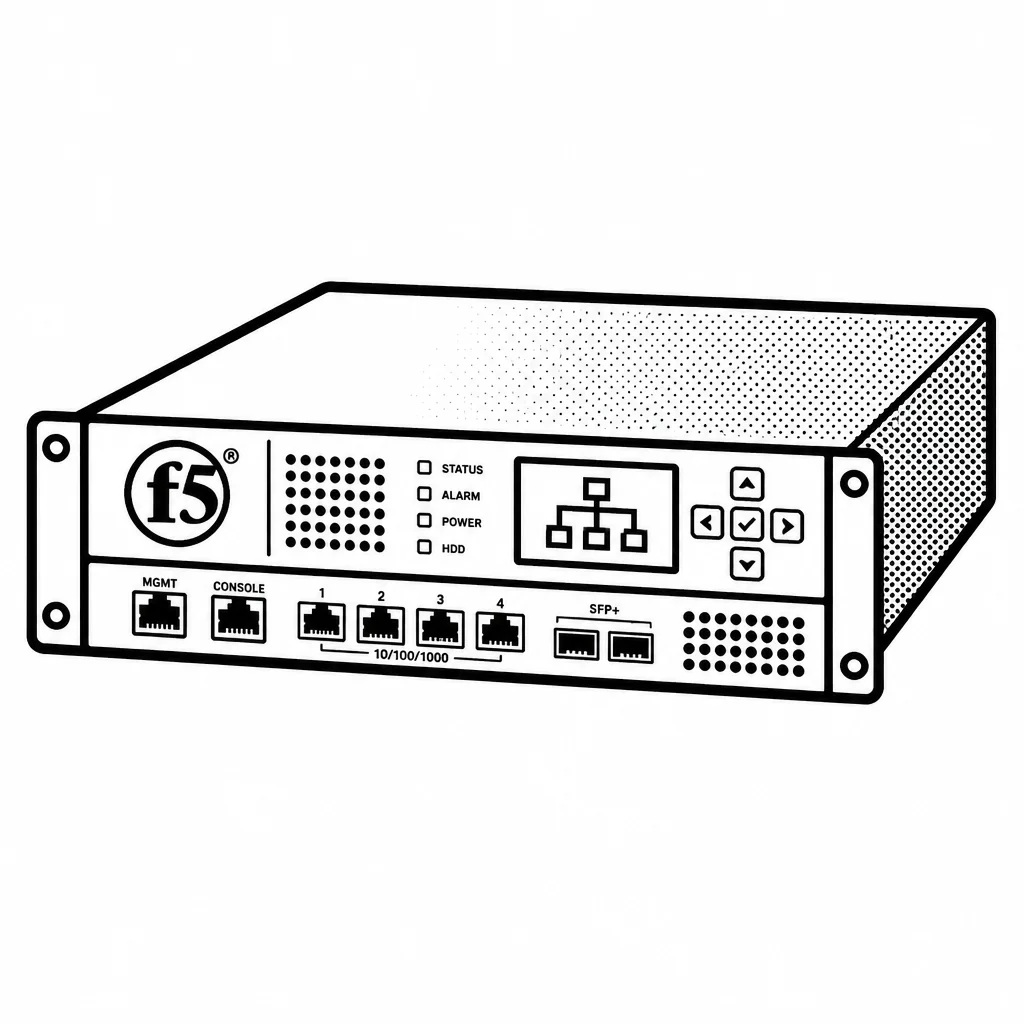
The company's roots are in a piece of hardware called a load balancer. A busy website is served by many servers, and the load balancer is the traffic cop that sends each visitor to a server with room to spare, so no single machine gets crushed. F5's flagship product family, BIG-IP, built a huge business on that job, and it is still the core of the company. Over time F5 added security software that inspects incoming traffic, blocks attacks, and manages who gets access to which applications, plus automation tools that help customers set up and control all of this across their own data centers and the cloud. Customers are large organizations: banks, retailers, telecom carriers, hospitals, and government agencies. They pay F5 for appliances and software licenses, and increasingly for subscriptions that bundle security and cloud services together. Switching away is painful because F5 sits in the direct path of live traffic, so customers tend to stay for years. That stickiness is a real strength, but it is also why the company has had to remake itself as more work moves to the cloud and customers buy security from vendors like Palo Alto Networks and Cloudflare.
F5 has responded by pushing a software version of its traffic manager and a subscription model that grew quickly, and in 2023 it bought a company called Lilac Cloud to strengthen that cloud push. It is a profitable business that throws off a lot of cash, which it has used to buy back a large chunk of its own shares — roughly a fifth of the company in just a few years. The honest worry is growth: the hardware business is mature, and F5 has to keep convincing big customers that its newer software and security products are worth paying for every month.
Saved answer · last researched 12 Nov 2026
Timeline
F5 Starts in Seattle
In 1996, Jeff Hussey started F5 Labs in Seattle with a bet that the internet was about to explode. As websites grew, single servers would choke under the traffic. So in 1997 the company shipped the BIG/IP Controller, a box that spread visitors across many servers so sites stayed online. The name came from the F5 tornado, the fiercest kind on the Fujita scale.
F5 Labs Becomes F5 Networks
By 1999, the company wanted to sell shares to the public, and it filed for an IPO under a new name: F5 Networks. The name changed at the filing, a signal that the company was growing up.
The IPO Pays Off
The bet paid off in a big way. The company sold shares at ten dollars each and raised about twenty-five million dollars, then watched the stock climb to a stunning hundred-plus dollars by the end of the year.
The Dot-Com Crash Hits
Then the ground gave way. F5 had built its business on dot-com start-ups, and those customers were dying. The stock cratered from about a hundred and sixty dollars to under ten, below the IPO price. The new boss's verdict was blunt: the business model was broken.
John McAdam Takes Over
To fix it, F5 brought in John McAdam, a former IBM web server executive, as chief executive in mid-2000, replacing founder Jeff Hussey. His job was to steer the company through the dot-com collapse.
The TMOS Platform
The real turnaround came from a new product. After three years of work, F5 launched TMOS, an operating system platform that tied its products together and added security on top of traffic management. It was a hit, and it became the foundation for everything F5 built next.
McAdam Steps Aside, Then Returns
In mid-2015, Manny Rivelo took over as CEO, but he resigned by December over matters of personal conduct. The board put John McAdam straight back in charge. It was a remarkable run: under him, annual revenue had grown from about a hundred million dollars to nearly two billion, and the company had earned a place in the S&P 500.
François Locoh-Donou Becomes CEO
In the spring of 2017, François Locoh-Donou replaced John McAdam as president and CEO. He still runs the company today.
F5 Buys NGINX
F5 made a big move into modern software in 2019, buying NGINX, the company behind one of the most widely used open-source web servers, for six hundred seventy million dollars. NGINX brought cloud-native tools alongside BIG-IP.
F5 Buys Volterra
Two years later, F5 bought Volterra, an edge networking company selling security as a service, for five hundred million dollars. Its products were folded into F5 Distributed Cloud Services, giving F5 a cloud-based platform for delivering and securing applications.
F5 Drops Networks
In 2021, the company shortened its name to F5, Inc., dropping the word Networks. The change reflected a real shift: the business was no longer just about hardware boxes but about software and security.
A Nation-State Breach
In October 2025, F5 revealed that a sophisticated nation-state attacker had kept long-term access to its systems, including the BIG-IP development environment, and had downloaded files such as source code. The stock fell sharply, and a weak outlook blamed on the breach knocked off more than two billion dollars in market value and triggered a securities class action.
AI Fuels a Comeback
A year later, F5 was growing again. Quarterly revenue rose by double digits, product revenue had grown at that pace for nine straight quarters, and direct AI bookings topped a hundred million dollars, up nearly three hundred percent, with more than two hundred customers. The company was now aiming its platform at hybrid multicloud, AI delivery, AI security and AI factory load balancing.