Understand any stock in simple English
Enter a ticker to learn what the company does and how it makes money.
Ferguson Enterprises Inc.
Ferguson distributes plumbing, heating, cooling, and water supplies to contractors and businesses across North America.
Ferguson is the supply house behind a huge share of North America's plumbing and heating work. When a contractor needs a toilet, a water heater, copper pipe, a valve, or the parts to fix a leaking basement, Ferguson is one of the first places they call. It sells to the trades, not to you — professional plumbers, HVAC technicians, and industrial customers who buy in bulk and need the right part fast.
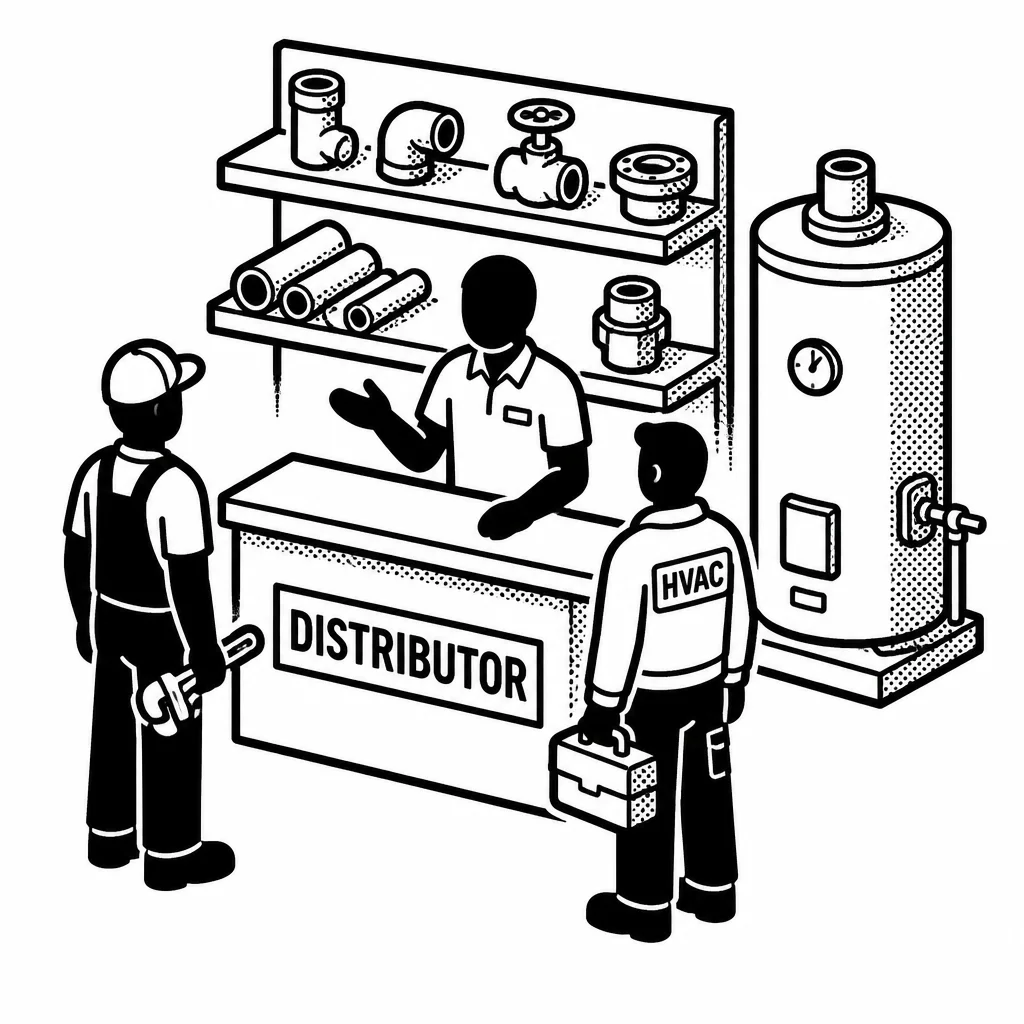
The company runs two main arms. Its plumbing and heating business supplies water and drainage products, pipes, valves, and fittings. Its HVAC business sells heating, cooling, and air-quality equipment, plus the parts to install and service it. Both arms live off a simple idea: contractors don't want to shop around. They want a counter where someone knows the products, stock is deep, and delivery happens the same day. Ferguson's scale — around 35,000 staff and a massive product catalog — lets it stock more than any local rival and negotiate better prices from manufacturers. The history is unusual. Ferguson was founded in Britain in 1953 as a plumbing business and grew into a global distributor. Over time it bought American plumbing suppliers and eventually became a huge part of Wolseley, a UK-listed group. In 2024 the company shifted its primary listing to the New York Stock Exchange and renamed itself Ferguson Enterprises, effectively becoming an American company — a rare case of a British firm crossing the Atlantic to chase its biggest market. That market is now the overwhelming majority of its sales.
A distributor lives on thin margins and fast turnover. Ferguson buys products in huge volumes, holds them in hundreds of branches and distribution centers, and sells them at a modest markup. Profit comes from volume, not from jacking up prices. The risk is tied to construction and repair activity: when new housing slows, contractors buy less. But repair work keeps flowing even in downturns, because pipes burst and furnaces fail whether the economy is good or bad. That steady replacement demand gives Ferguson a cushion that pure new-construction suppliers lack. It also spends heavily on acquisitions and share buybacks, returning cash to shareholders while buying smaller regional distributors to expand its footprint.
Saved answer · last researched 12 Nov 2026