Understand any stock in simple English
Enter a ticker to learn what the company does and how it makes money.
First Advantage Corporation
First Advantage helps employers check the backgrounds of job applicants and verify who people are before they get hired or allowed in.
First Advantage is a background-check company. When you apply for a job, a landlord, or a gig driving for a delivery app, there's a good chance that somewhere in the process First Advantage is the company being paid to look you up. It checks criminal records, verifies past employment and education, runs drug tests, and confirms that the identity documents you submitted are real.
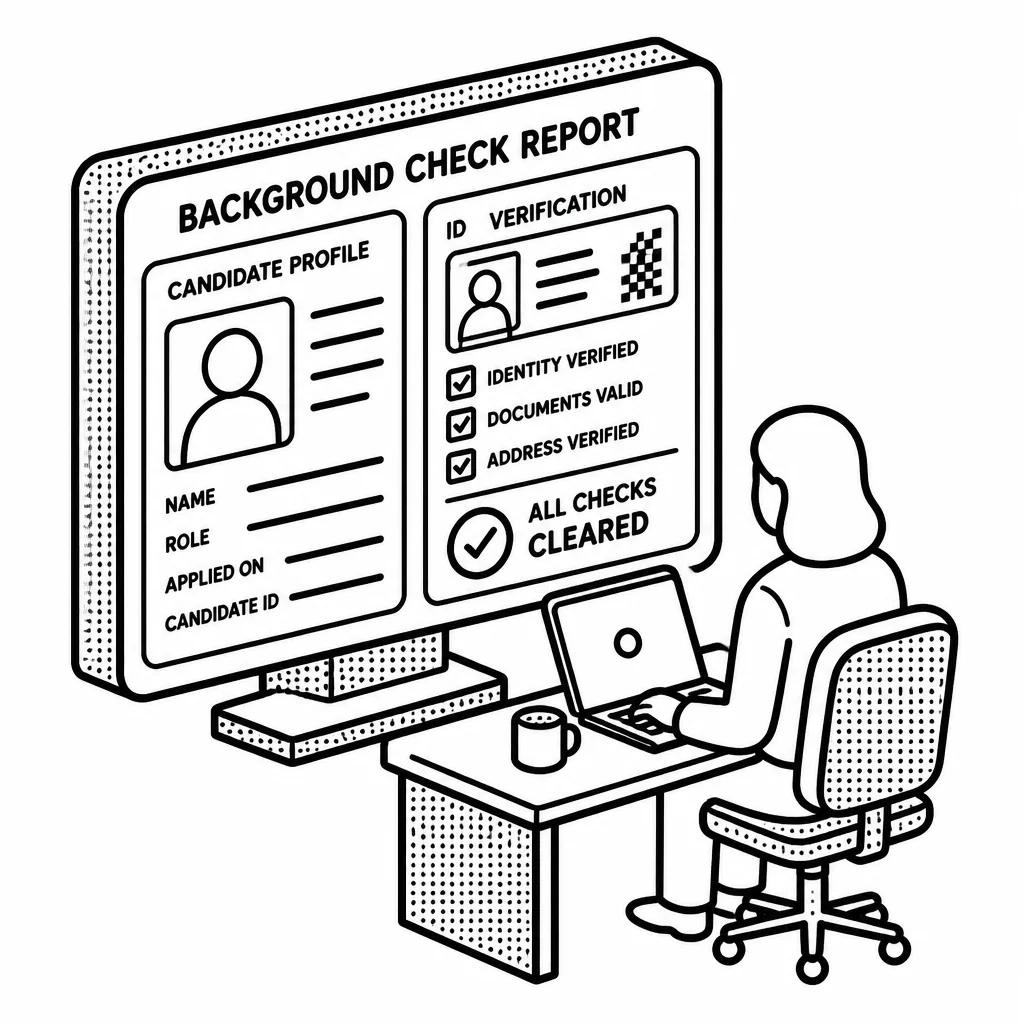
The business model is simple: employers pay per screen. A warehouse hiring hundreds of seasonal workers, a hospital checking nurses, a rideshare platform onboarding new drivers—each one needs to verify people quickly and at scale. First Advantage sells them the software and the global network to do it: it pulls records from thousands of courts and databases, packages the results into a report, and lets the employer decide whether to hire. Its pitch is speed and coverage—getting a clean check back in hours rather than weeks, and matching local record-keeping quirks across dozens of countries so a big multinational doesn't have to build that machinery itself. The industry has consolidated, and First Advantage is one of the biggest players. Its main rival is Sterling Check (Sterling Check Corp), and the market also includes big HR software suites like Workday. First Advantage bulked up through acquisitions, including its 2024 deal to buy Sterling Check, which the company framed as combining two of the largest screening firms into one—more scale, more international reach, and more data to work with.
There are real risks underneath the steady-sounding business. Screening is regulated, and mistakes are costly: suing over mixed-up records or missed convictions is a known hazard, and the company faces lawsuits over how accurately and fairly it reports people's histories. It's also tied to hiring volumes—when the job market freezes, fewer applications mean fewer paid screens—and customers are increasingly price-sensitive, especially the high-volume gig and retail clients. Still, background checks are close to mandatory in many workplaces and heavily baked into hiring workflows, which is why the business keeps chugging along even when the economy gets wobbly.
Saved answer · last researched 14 Nov 2026